When to Choose New vs Tested Used Memory for Data Center Projects
Most buyers still pay for packaging instead of proof. This guide shows when new server memory deserves the premium, when tested used memory is the smarter move, and which screening steps separate a disciplined data center buy from a cheap mistake.
I’ve sat through too many procurement calls where a team burns days arguing about whether “new” feels safer, even though the real failure point is almost never the factory seal and almost always the boring stuff they wanted to skip: exact part-number matching, ECC validation, RDIMM vs LRDIMM fit, rank layout, lot consistency, and whether anyone tested the modules before the maintenance window.
Why do smart teams still confuse unopened packaging with lower risk?
I’m blunt here.
If you are extending a mature DDR4 estate, filling a spare pool, or matching memory already deployed in production, tested used memory is often the sharper choice; if you are building a fresh DDR5 cluster, pushing denser 64GB, 96GB, or 128GB module maps, or living inside strict audit and compliance rules, new memory usually earns the premium.
So where is the real dividing line?
Table of Contents
Stop Paying for Shrink-Wrap Instead of Proof
Here’s the ugly part.
The data does not support the lazy story that “used” is the danger and “new” is the cure, because the bigger pattern in data centers is procedural failure, not mystical contamination from second-life hardware: Uptime Institute’s 2025 outage analysis and its May 2025 release summary say nearly 40% of organizations suffered a major outage caused by human error over the prior three years, and 85% of those incidents traced back to ignored or weak procedures; meanwhile, Google’s field study on DRAM errors found more than 8% of DIMMs were affected by errors per year, and a CUHK/Alibaba production data center study analyzed 250,000 servers and more than 3 million DIMMs, linking DRAM behavior to 2,137 server failures, with more than 40% of those failures showing correctable errors within one hour before the event.
That is my hard truth.
In other words, what matters is not whether a DIMM is new or tested used, but whether the supplier can prove the module class, ECC type, speed bin, rank structure, part number, screening process, and warranty behavior before your team touches a screwdriver.
Would you rather pay for validation, or pay for the postmortem?
When New Server Memory Actually Earns the Premium
New still wins.
I would choose new server memory for fresh-build platforms, dense DDR5 rollouts, standardized fleet expansions, and any project where the business case depends on uniform lots, current-generation availability, clean chain-of-custody, and paperwork that will survive finance, legal, or customer audits without a second meeting.
Why pretend otherwise?
Fresh DDR5 builds, dense nodes, and compliance-heavy procurement
This is where I stop being romantic about reuse, because once you move into current-generation DDR5, especially in high-density maps where capacity planning is tight and every maintenance window is expensive, the premium for new modules often buys you more than hardware: it buys simpler traceability, fewer lot-mixing arguments, better forward supply planning, and cleaner vendor accountability when a 96GB or 128GB ECC RDIMM program has to scale across multiple racks or regions. Reuters reported on January 5, 2026 that memory makers were diverting capacity toward AI-focused products and that prices in some segments had more than doubled since February 2025, which is exactly the kind of supply pressure that makes guaranteed current-gen sourcing worth real money. If you are building around current stock, the site’s DDR5 server memory inventory is the logical internal destination, not some vague category page.
And I’ve seen this firsthand.
When buyers start stacking risk—new CPU platform, DDR5 transition, denser virtualization host design, and a fixed go-live date—I would rather pay the premium upfront than discover that a “great deal” came from mixed pulls, partial lots, or a supplier who goes silent the minute a BIOS training issue appears. For readers who still have not done the compatibility homework, this server memory compatibility checklist should sit one click away from the quote request.
Projects where downtime costs dwarf the memory premium
Some bets are stupid.
Uptime’s 2024 outage analysis said 54% of respondents reported that their most recent significant outage cost more than $100,000, while 16% said it cost more than $1 million, and that is why I laugh when teams agonize over a few points of memory margin while ignoring the cost of one failed install window, one missed change freeze, or one emergency rollback. In that setting, new server memory is not always “better,” but it is often easier to defend.
When Tested Used Memory Is the Smarter Buy
Used is normal.
The professional question is not whether tested used memory is “acceptable.” The professional question is whether your platform, risk tolerance, installed base, and budget make it the more rational asset decision.
Why pay a new-memory tax for a legacy environment that does not need it?
Mature DDR4 estates, spare pools, and exact-match replacements
This is the sweet spot.
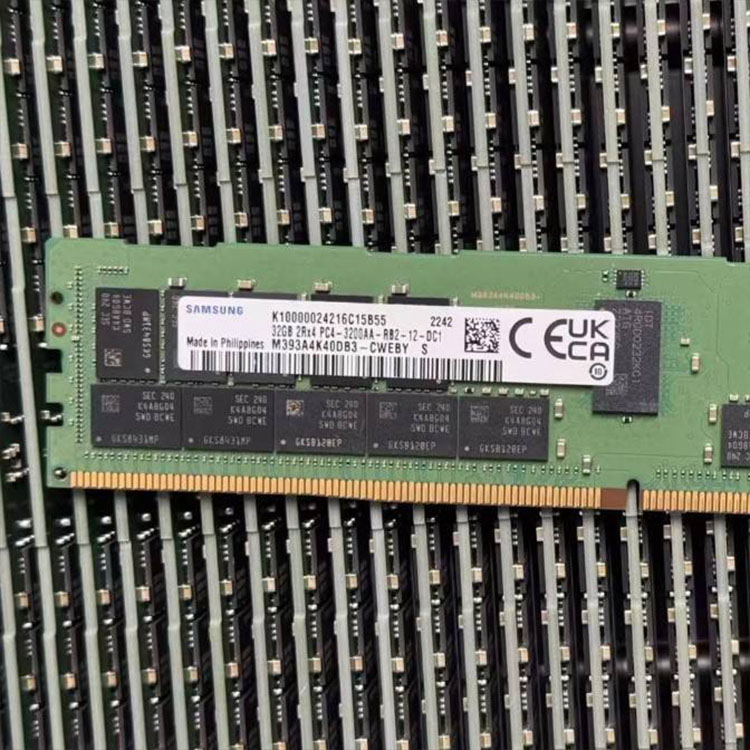
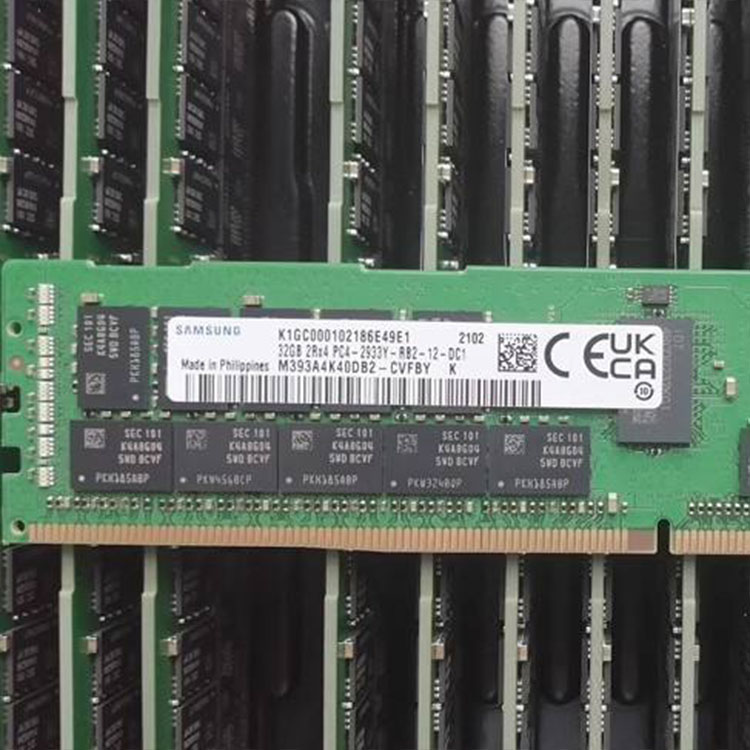
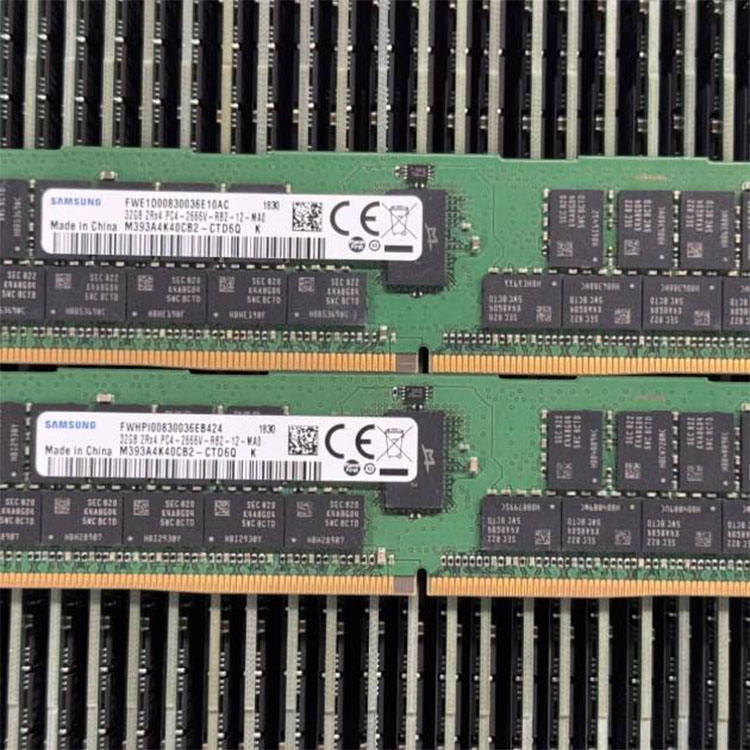
If you are maintaining older Xeon-era fleets, extending the life of stable DDR4 infrastructure, or building spare pools for known part numbers already living in production, tested used DDR4 server memory is often the better business move because the technical target is usually clear, the platform behavior is already known, and the goal is not innovation but continuity at sane cost-per-GB. For that job, I would naturally point readers toward tested used DDR4 server memory and, when the project calls for sealed stock instead, new DDR4 server memory inventory.
And the macro picture backs this up.
The U.S. Department of Energy’s 2024 data center electricity report says U.S. data centers consumed 176 TWh in 2023, or 4.4% of total U.S. electricity demand, and could rise to 325-580 TWh by 2028; at the same time, the ITU Global E-waste Monitor 2024 says the world generated 62 billion kg of e-waste in 2022 and formally recycled only 22.3% of it. I’ll say it plainly: throwing away serviceable ECC server memory just because it is not factory-fresh is bad operations wearing a clean shirt.
Hyperscalers already told you the answer
They reuse parts.
Microsoft says its Circular Centers reused more than 3.2 million components in 2024 and fulfilled 85% of demand for obsolete spare parts from harvested inventory, while Google says it harvested about 8.8 million components in 2024 and that 44% of components used for Google-managed server builds, maintenance, and upgrades came from reused inventory. That is not charity. That is cost discipline, supply resilience, and adult behavior.
So yes, I have a strong opinion.
For mature data center memory projects, tested used server RAM is not the budget fallback; it is often the insider choice, provided the supplier can show exact module identity, screening evidence, and warranty terms that mean something after the invoice is paid. If your workloads are virtualization-heavy, the site’s virtualization host memory sizing guide is worth linking because spare-pool math without real host sizing is how buyers overspend twice.
The Screening Rules That Separate Smart Reuse from Cheap Mistakes
This part matters.
I do not buy server memory—new or used—without a validation path that starts with the server model, CPU family, current DIMM label, target capacity, and population plan, then moves through ECC type, RDIMM vs LRDIMM class, rank notation like 1Rx4 or 2Rx4, and finally the supplier’s actual test, warranty, and RMA behavior. That is why the site’s quality testing and warranty support for server memory page and its server memory compatibility checklist are the two internal links I would absolutely keep inside this article.
Why do buyers still skip the boring page that saves the order?
My no-nonsense comparison table
Decision Factor
New Server Memory
Tested Used Memory
My Call
Platform generation
Best for fresh DDR5 deployments and standardized new builds
Best for mature DDR4 estates and exact-match legacy support
Match the memory condition to the platform age
Cost per GB
Higher upfront spend
Lower upfront spend, often materially lower
Used usually wins on legacy fleets
Supply consistency
Better for current-gen, high-density rollouts
Better when matching known deployed parts from established secondary stock
Depends on whether you need latest-gen or exact-match continuity
Audit trail and paperwork
Easier to defend in regulated or customer-facing procurement
Fine if validation and warranty paperwork are documented
New has the edge when procurement is compliance-heavy
Time-to-replace
Strong for planned current-gen programs
Strong for fast replacement of older installed modules
Used wins when the job is keeping old boxes alive
Technical risk
Lower only if compatibility is verified
Low enough when exact-match, tested, and warrantied
Validation beats condition
Sustainability and asset efficiency
More new manufacturing demand
Better asset recovery and lower waste pressure
Used wins if the process is disciplined
RDIMM vs LRDIMM is not a debate
It is a hard stop.
I have watched buyers spend hours negotiating price deltas on 32GB and 64GB modules, then wreck the whole deal by ignoring RDIMM vs LRDIMM, which is the sort of mistake that makes everyone look foolish because module class is a compatibility rule, not a merchandising suggestion.
Why save 12% on a PO if the server will not train memory at boot?
My rule is simple.
If the project owner cannot tell me the current module type, full part number, CPU family, and target population plan, I am not approving a buy yet; I am sending them back to the server memory compatibility checklist and asking for photos of the installed labels before we waste another minute.
FAQs
What is tested used server memory?
Tested used server memory is previously deployed ECC server RAM, usually RDIMM or LRDIMM, that has been removed from production, matched by exact part number, screened for faults, and resold with documented compatibility, test coverage, and warranty terms for another enterprise deployment. I trust it when the supplier can prove those details, not when they just say “refurbished.”
When should a data center choose new server memory?
New server memory is the better choice when a project depends on current-generation DDR5 densities, strict audit trails, uniform lot provenance, manufacturer-backed paperwork, or an uptime requirement so unforgiving that even a small increase in sourcing uncertainty would cost more than the hardware premium. That is why fresh DDR5 build-outs and compliance-heavy rollouts usually justify the higher spend.
Is refurbished server memory the same as tested used server memory?
Refurbished server memory is a sales label, while tested used server memory is a procurement description that should point to exact part numbers, validation steps, ECC status, module class, burn-in results, and warranty terms; when those details are missing, the words are mostly perfume. I care about the report, not the adjective.
Can I mix new and used ECC server memory in one server?
Mixing new and used ECC server memory can work when the exact part number, rank, speed bin, voltage, buffer type, and platform rules all line up, but I would never approve a mixed build from generic equivalents because “close enough” is how maintenance windows turn into blame sessions. Matching specification beats matching marketing language.
How do I decide between RDIMM vs LRDIMM for a data center project?
RDIMM vs LRDIMM is a platform compatibility decision, not a price decision, because the server motherboard, CPU memory controller, supported DIMM topology, and target capacity map determine which module type will train correctly, scale cleanly, and keep bandwidth predictable under full slot population. If you do not know the installed module class already, you are not ready to buy.
Your Next Move
Do this now.
Pull one installed DIMM, photograph the label, capture the full server model, CPU SKU, current population map, and target capacity, then decide whether the job is a fresh DDR5 deployment or a controlled extension of an existing DDR4 estate. After that, send the brief to a supplier who can show testing, warranty terms, and exact-match validation instead of empty reassurance.
If I were signing the PO, I would choose new memory for dense, current-gen, audit-heavy builds, and I would choose tested used memory for mature, exact-match, cost-sensitive data center upgrades every single day of the week.
ServerDimm supplies new and used branded server memory for distributors, OEM buyers, resellers, and data center teams. We support DDR4 and DDR5 sourcing with tested inventory, compatibility checks, and responsive quote service.