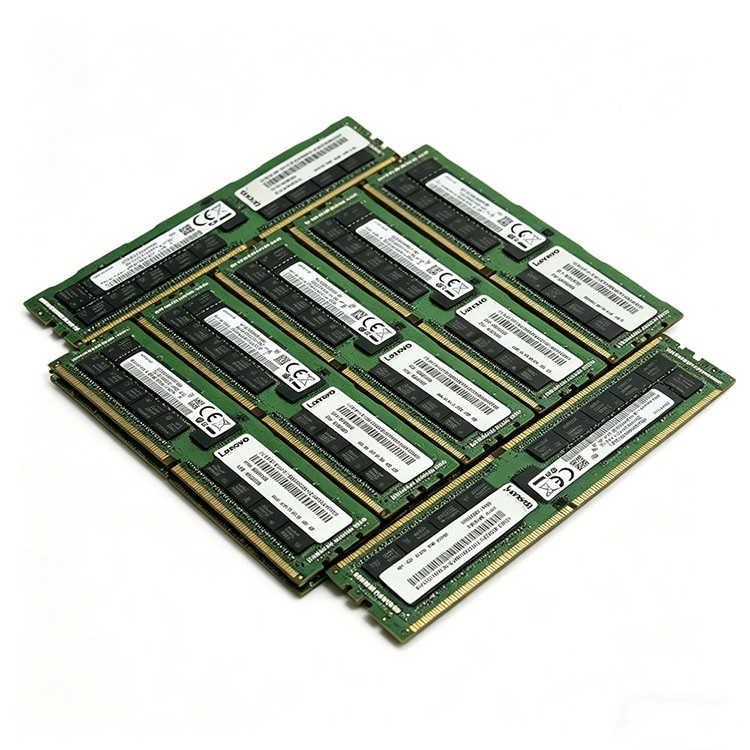
How Warranty Terms Differ Between New and Tested Used Memory
New memory usually sells certainty. Tested used memory sells proof. The warranty difference is not just the number of months on paper; it is who carries risk when ECC RDIMMs fail, mismatch, or arrive with unclear provenance.
I have watched buyers negotiate a 500-piece lot of 32GB DDR4-3200 ECC RDIMMs down by a few dollars per module, celebrate the “savings,” and then discover two weeks later that the seller’s warranty did not cover mixed-rank substitutions, return freight, advance replacement, or the one thing that mattered most: getting the same validated part number back before the maintenance window closed.
So what did they really buy?
A RAM warranty is not a polite afterthought. It is the risk contract underneath the memory. New memory, tested used memory, refurbished RAM, pull-tested ECC RDIMM, OEM-labeled Samsung, Micron, SK hynix, Kingston — all of it becomes noise if the warranty language does not say who pays, who replaces, how fast, and under what evidence standard.
The Federal Trade Commission puts the core idea plainly in its Businessperson’s Guide to Federal Warranty Law: a warranty is a promise to stand behind a product. That sounds simple. In the server memory trade, it is not.
New Memory Warranty Terms Usually Protect the Channel First
New memory has the cleaner story. Factory-sealed stock. Cleaner chain of custody. Easier serial tracking. Better alignment with manufacturer warranties.
But do not confuse “new” with “risk-free.”
A new memory warranty often depends on whether the module was purchased through an authorized channel, whether the buyer is the original purchaser, whether the module was installed within supported voltage and thermal limits, and whether the RMA claim goes through the manufacturer, distributor, or reseller. That last part matters because the party who sold you the DIMM is not always the party that will actually approve the replacement.
For enterprise buyers, new DDR4 or DDR5 inventory can be the right move when uptime exposure is high, the fleet is still under platform support, or the purchasing team needs cleaner documentation for audit. If that is the case, start with part-number discipline and compare available new DDR4 server memory or new DDR5 server memory against the approved vendor list before talking price.
The “Lifetime Warranty RAM” Trap
Lifetime sounds generous.
But whose lifetime? The original buyer’s lifetime? The product line’s lifetime? The “reasonable useful life” of the module? The lifetime of the company that issued the warranty?
This is not wordplay. The FTC specifically warns that “lifetime” warranty claims can confuse buyers unless the seller clarifies what lifetime means. In other words, “lifetime warranty RAM” is not automatically better than a 1-year or 3-year warranty if the exclusions are vague, transferability is blocked, or the seller can substitute “equivalent” memory that does not match your validated configuration.
Hard truth: I trust a boring 12-month written replacement policy more than a heroic lifetime claim with no RMA clock.
Tested Used Memory Warranty Terms Are About Evidence, Not Romance
Tested used memory is not junk by default.
In fact, I will say the unpopular thing: for legacy server fleets, tested used memory is often the smarter buy than new-old-stock memory with weak channel support and fantasy pricing. But only if the seller has a real testing process, part-number control, and a warranty that reflects the condition of the inventory honestly.
The difference is that used RAM warranty terms usually shift the proof burden. A seller may cover DOA, early failure, and functional mismatch, but not cosmetic wear, label variation, batch variation, unsupported mixed installation, buyer-caused handling damage, or compatibility mistakes caused by incomplete system information.
That is fair. But it must be written.
For buyers maintaining Dell PowerEdge R740/R750, HPE ProLiant DL380 Gen10/Gen11, Lenovo ThinkSystem SR650/SR665, or Supermicro X11/X12/X13 systems, tested used inventory can solve real problems: exact replacement matching, fast spare pools, older DDR4 availability, and lower total cost. The smart path is to request tested stock through pages like tested used DDR4 server memory or tested used DDR5 server memory while also asking for the warranty terms in writing.
The Market Is Making Warranty Language More Valuable
Prices move fast.
According to Reuters’ December 2025 reporting on the memory chip supply crunch, Counterpoint Research expected advanced and legacy memory prices to rise 30% through Q4 and possibly another 20% in early 2026. Earlier, TrendForce reported that DRAM contract prices for Q2 2024 were adjusted upward by 13% to 18%, while NAND Flash was adjusted around 15% to 20%.
That data matters because warranty behavior changes when supply tightens. When replacement stock is plentiful, weak warranty terms hide in the background. When DDR4 64GB 2Rx4 ECC RDIMMs, 96GB DDR5-5600 RDIMMs, or specific OEM-coded modules become harder to source, every vague phrase becomes expensive.
“Equivalent replacement” is the phrase I watch closest.
Equivalent by capacity? By speed? By rank? By manufacturer? By server compatibility? By firmware behavior? If your server fleet was validated around Micron MTA36ASF8G72PZ-3G2, Samsung M393A8G40AB2-CWE, SK hynix HMAA8GR7AJR4N-XN, or another exact module profile, “equivalent” may be technically acceptable on paper and operationally annoying in the rack.
New vs Tested Used Memory Warranty Comparison
Warranty Factor
New Memory Warranty Terms
Tested Used Memory Warranty Terms
What I Would Demand Before Buying
Typical coverage style
Manufacturer or reseller-backed limited warranty
Seller-backed functional warranty or replacement policy
Written coverage period, not verbal assurance
Best use case
New deployments, audit-heavy procurement, current platforms
Can be slower if routed through manufacturer chain
Can be faster if seller holds tested replacement stock
RMA response time in business days
Hidden risk
Warranty exists but is hard to use
Warranty is shorter but more practical
Ask who pays freight both ways
The Legal Shadow Behind Warranty Claims
Warranty marketing is not free speech with a shopping cart.
The FTC’s July 2024 warning letters to companies including ASRock, Zotac, and Gigabyte should make hardware sellers pay attention. The agency warned that tying warranty coverage to branded parts or using “warranty void if removed” language may violate the Magnuson-Moss Warranty Act and the FTC Act. That is directly relevant to hardware buyers because warranty language on motherboards, graphics cards, servers, and memory-adjacent components often bleeds into the same procurement culture: restrict first, explain later.
The FTC also stated in a 2022 consumer alert that companies generally cannot void warranty coverage solely because a buyer used third-party parts or independent service, unless the company provides the required part or service for free. That does not mean every server memory dispute is covered the same way, especially in B2B transactions. But it does mean vague, intimidating warranty language deserves pushback.
My opinion? In B2B server memory, the worst warranty language is not always illegal. Sometimes it is simply lazy, one-sided, and written by someone who has never had to restore a production cluster at 2:00 a.m.
What a Serious Server Memory Warranty Should Say
A serious server memory warranty should answer ugly questions before the ugly day arrives.
For both new and tested used memory, I want the seller to define the following:
Coverage Window
Is the warranty 30 days, 90 days, 1 year, 3 years, limited lifetime, or tied to a specific project agreement?
A 90-day warranty may be acceptable for tested used memory if the buyer has fast installation and validation cycles. A 12-month warranty may be better for spare-pool purchases. A lifetime warranty may look strong but still fail procurement review if it excludes transfer, batch replacement, or commercial use.
DOA Handling
Dead-on-arrival policy is where sellers reveal themselves.
If a 128GB DDR5 ECC RDIMM arrives dead, does the buyer get immediate replacement, credit, repair, or a long inspection queue? Is the DOA window 7 calendar days, 14 days, or 30 days after delivery? Does the clock start at shipment, arrival, or installation?
Exact Replacement vs Equivalent Replacement
This is the fight.
If you ordered Samsung 64GB DDR4-3200 2Rx4 ECC RDIMM, can the seller replace it with Micron 64GB DDR4-3200 2Rx4 ECC RDIMM? Maybe. If your validated server memory population allows it, fine. If your fleet standard forbids mixed vendor populations, not fine.
Before issuing a PO, use a specification-first process like ServerDIMM’s quality testing and warranty support for server memory guidance: confirm generation, ECC type, RDIMM or LRDIMM format, rank, capacity, part number, and platform fit.
Freight, Customs, and Cross-Border Reality
Nobody likes this paragraph. Good.
For international B2B buyers, replacement cost is not only the DIMM. It is freight, customs paperwork, delay, inspection time, and the internal labor cost of pulling and reinstalling modules. If the seller’s order policies do not answer these questions clearly enough, ask before payment.
Lot-Level Failure
One bad stick is an RMA. A bad lot is a supplier test.
If 3 out of 100 modules fail, does the seller replace only the failed modules? If 12 fail, does the seller accept a lot-level review? At what failure rate does the issue become a batch problem rather than isolated defects?
This is where tested used memory sellers either prove their process or expose their spreadsheet brokerage model.
My Field Checklist Before I Trust a RAM Warranty
I keep this simple because simple gets used.
Ask for the warranty document. Ask for the RMA workflow. Ask for the replacement definition. Ask who pays freight. Ask whether the warranty covers compatibility mismatch if the buyer supplied the exact server model before quotation. Ask whether the seller can support repeat buys of the same part number for 90 or 180 days.
And then ask one rude question: “What happens if this lot fails at 3% after installation?”
A competent seller will answer calmly. A weak seller will talk around it.
For larger programs, I would also read a supplier’s public thinking before sending money. A vendor that explains how to evaluate a long-term server memory supply partner is at least admitting that warranty, traceability, and continuity belong in the same conversation.
FAQs
What is the main difference between new and tested used memory warranty terms?
The main difference is that new memory warranties usually rely on manufacturer-backed or authorized-channel coverage, while tested used memory warranties usually rely on seller-backed functional validation, shorter coverage windows, and clearer RMA conditions tied to testing evidence, part-number matching, DOA handling, and replacement availability.
In plain terms, new memory sells origin confidence. Tested used memory sells validation confidence. Both can be good. Both can be bad. The warranty terms decide which risk you are actually accepting.
Is a used RAM warranty reliable for server memory buyers?
A used RAM warranty is reliable when it clearly defines the covered buyer, warranty period, DOA window, testing method, replacement standard, freight responsibility, and exclusions for mishandling, unsupported configurations, mixed populations, or buyer-caused compatibility errors after shipment.
I do not reject used RAM warranty terms because they are shorter. I reject them when they are vague. A clean 90-day tested used server memory warranty can beat a fake “lifetime” claim if the seller has stock, records, and a real RMA path.
Does lifetime warranty RAM mean the memory is covered forever?
Lifetime warranty RAM does not automatically mean the module is covered forever; it usually depends on the warranty issuer’s definition of “lifetime,” the original ownership rules, product discontinuation terms, commercial-use exclusions, proof-of-purchase requirements, and whether replacement stock remains available.
That is why I dislike lazy lifetime language. If a seller cannot explain lifetime in writing, the phrase is marketing, not protection.
Should I choose new memory or tested used memory for enterprise servers?
You should choose new memory when documentation, authorized-channel sourcing, long lifecycle planning, and audit requirements matter most; choose tested used memory when maintaining legacy fleets, matching exact installed modules, controlling cost, and building spare pools matter more than factory-sealed packaging.
The real answer depends on your platform. A new DDR5 rollout and a legacy DDR4 maintenance program should not use the same warranty logic.
Final Thoughts: Make the Warranty Earn the Purchase Order
Do not buy the cheapest DIMM. Buy the clearest risk position.
Before you approve new memory, tested used memory, or refurbished RAM for a server program, send the supplier your server model, current module part number, target quantity, required condition, and warranty expectations. Then ask for written terms before the invoice.
If the seller can explain coverage, testing, replacement, RMA timing, and freight responsibility without drama, keep talking. If they hide behind “standard warranty,” move on.
For a cleaner next step, send your DDR4 or DDR5 requirement through ServerDIMM’s server memory quality and warranty review process and ask for compatibility, testing, and warranty terms before you commit to the order.
ServerDimm supplies new and used branded server memory for distributors, OEM buyers, resellers, and data center teams. We support DDR4 and DDR5 sourcing with tested inventory, compatibility checks, and responsive quote service.