Quarterly Inventory Watch: Which Memory Specs Are Trending Up?
Memory inventory is no longer a boring back-office spreadsheet. AI servers, HBM contracts, DDR5 density upgrades, and NAND allocation pressure are changing what buyers can actually source in 2026.
The Memory Market Trends Nobody Wants to Say Out Loud
Memory inventory is talking. Loudly.
No mystery here.
When buyers ask which memory specs are trending up, they are usually asking the wrong question, because the real issue is not whether DDR5, HBM, or NAND flash is “popular”; it is whether your supplier can still quote the same density, rank structure, speed bin, and brand continuity after hyperscalers have already swallowed the best allocation. So what should we watch first: demand, pricing, or silence from suppliers?
I would watch silence.
That is the hard truth in server memory procurement. When DRAM vendors stop giving clean forward quotes, when distributors start pushing “equivalent” modules, and when 64GB or 128GB DDR5 RDIMM availability becomes oddly selective, the market has already moved. Public data now backs that up. Reuters reported that Samsung raised some memory chip prices by up to 60% in late 2025, with 16GB DDR5 and 128GB DDR5 pricing reportedly moving about 50% to $135 and $1,194 respectively in that cycle: Samsung hikes memory chip prices by up to 60%.
That is not “normal volatility.” That is allocation economics.
For anyone buying enterprise RAM, the safest starting point is still boring: confirm generation, module type, rank, capacity, speed, voltage, ECC behavior, and vendor qualification. ServerDimm’s bulk server RAM supplier page is useful here because it frames the purchase around DDR3, DDR4, DDR5, ECC, RDIMM, LRDIMM, new stock, pulled stock, and recurring procurement rather than pretending server memory is just a cart checkout item.
DDR5 Demand Is Not a Trend. It Is a Platform Migration.
DDR5 memory demand is rising because newer server platforms force the shift. Intel Xeon Scalable Gen 4/5/6 systems, AMD EPYC Genoa, Bergamo, Turin-class deployments, and AI-adjacent CPU nodes are pulling buyers away from DDR4. But the spec that matters is not simply “DDR5.”
The spec matters.
I care more about DDR5-4800, DDR5-5600, DDR5-6400, 64GB 2Rx4 RDIMM, 96GB RDIMM, 128GB RDIMM, 256GB MRDIMM, and validated server population rules than I care about the generic word “DDR5,” because a procurement sheet that says only “DDR5 RAM” is how teams end up with parts that fit the slot but fail the platform plan. Who wants to explain that to a data center manager after the shipment lands?
Micron’s DDR5 material shows why the density shift is real. Its DDR5 RDIMM page describes 128GB DDR5 RDIMMs with more than 45% improved bit density, up to 22% better energy efficiency, and up to 16% lower latency versus competing 3DS TSV products: Micron RDIMM memory. Its DDR5 DRAM page also points to DDR5 RDIMM speeds up to 9,200 MT/s and MRDIMM up to 8,800 MT/s: Micron DDR5 DRAM.
That does not mean every buyer should chase the fastest bin. In fact, I think that is one of the dumbest habits in memory buying. The better question is: what speed bin is stable, qualified, available in volume, and compatible with the CPU memory controller under full population?
If you need a practical buying path, compare your requirement against ServerDimm’s DDR5 server memory catalog before RFQ language gets too vague. A 32GB DDR5-4800 2Rx8 module and a 128GB DDR5-4800 2S2Rx4 module are not interchangeable procurement objects. They are different inventory animals.
The Specs Trending Up This Quarter
Here is my blunt read: HBM is setting the price mood, DDR5 RDIMM is taking the volume pressure, and NAND is catching the second-order shock through enterprise SSD demand.
Memory Spec
Demand Signal
Why It Is Trending Up
Buyer Risk
HBM3E / HBM4
Very High
AI accelerators, Nvidia-class GPU platforms, advanced packaging demand
This is where Memory Market Trends become less about market commentary and more about discipline. If your team is buying DDR5 RDIMM by capacity alone, you are already late. You need rank, organization, speed, original brand, server model, CPU generation, and population layout.
ServerDimm’s guide on how to read a server memory part number fits naturally into this workflow. In a tight market, the part number is not clerical detail. It is evidence.
HBM Is Eating the Room, and Commodity DRAM Pays the Bill
HBM memory demand is the loudest force in the room. I do not think that is controversial anymore.
But here is the part buyers underprice: HBM does not only affect HBM. It pulls wafer priority, packaging capacity, engineering attention, customer contract focus, and executive patience away from ordinary DRAM and NAND conversations.
Reuters reported in December 2025 that Micron planned to exit its Crucial consumer memory business and focus on advanced memory for AI data centers: Micron to exit Crucial consumer memory business. That move says more than a dozen analyst decks. When a top-three memory producer walks away from a consumer-facing memory brand during a shortage, it is not sentimental. It is math.
And the math is brutal.
The World Semiconductor Trade Statistics organization forecast the 2026 semiconductor market at roughly USD 975 billion, with Memory and Logic both projected to grow more than 30% year over year: WSTS global semiconductor market forecast. Reuters also reported that global chip sales were expected to approach $1 trillion in 2026, with memory chips rising 34.8% to $223.1 billion in 2025: global chip sales expected to hit $1 trillion.
So, yes, DRAM market trends look strong. But strong for whom?
For manufacturers, this is pricing power. For buyers, it is a narrowing window. For resellers, it is a test of whether their inventory is real, tested, and traceable.
NAND Flash Trends: Do Not Ignore the Storage Side
NAND flash trends are getting less attention than HBM, but that is a mistake. AI infrastructure is not only about GPU memory. It also creates ugly demand spikes in enterprise SSDs, checkpoint storage, vector databases, logging pipelines, and model distribution systems.
NAND feels quieter.
But quiet does not mean stable, because storage-heavy AI workflows can absorb huge quantities of TLC and QLC NAND through enterprise SSDs, while consumer SSD buyers are left wondering why 2TB and 4TB pricing no longer behaves like the old race-to-the-bottom cycle. Is NAND oversupplied, or is the good enterprise-grade allocation already spoken for?
In server builds, I would connect the NAND story directly to system memory. GPU servers still need CPU-side RAM for orchestration, preprocessing, caching, networking, and storage coordination. ServerDimm’s piece on why system memory still matters in GPU server builds is the right internal bridge here: HBM on GPUs does not remove the need for stable DDR5 RDIMM in the host system.
That is a procurement trap. Teams overfund GPUs and underplan host memory. Then they blame the supplier when the validated DDR5 configuration is no longer sitting on a shelf.
What Buyers Should Actually Do Before the Next Quote Cycle
I would not chase the “best memory specs for 2026” as if there is one universal answer. There is not.
The better question is: which specs are becoming harder to replace?
For most server buyers, I would put these into the priority watchlist:
64GB DDR5 RDIMM
This is the workhorse density. It fits many modern server refreshes without pushing too aggressively into exotic density or narrow qualification territory. Demand is broad, so availability can tighten quickly.
128GB DDR5 RDIMM
This is where the market gets more interesting. AI preprocessing, virtualization density, database servers, and memory-heavy workloads keep pulling buyers upward. The problem is that 128GB RDIMM is also where brand continuity and module organization start to matter more.
96GB DDR5 RDIMM
Odd capacity modules are no longer jokes. They can be economically attractive when platform support is clean, but they create replacement risk if your long-term supplier cannot repeat the exact spec.
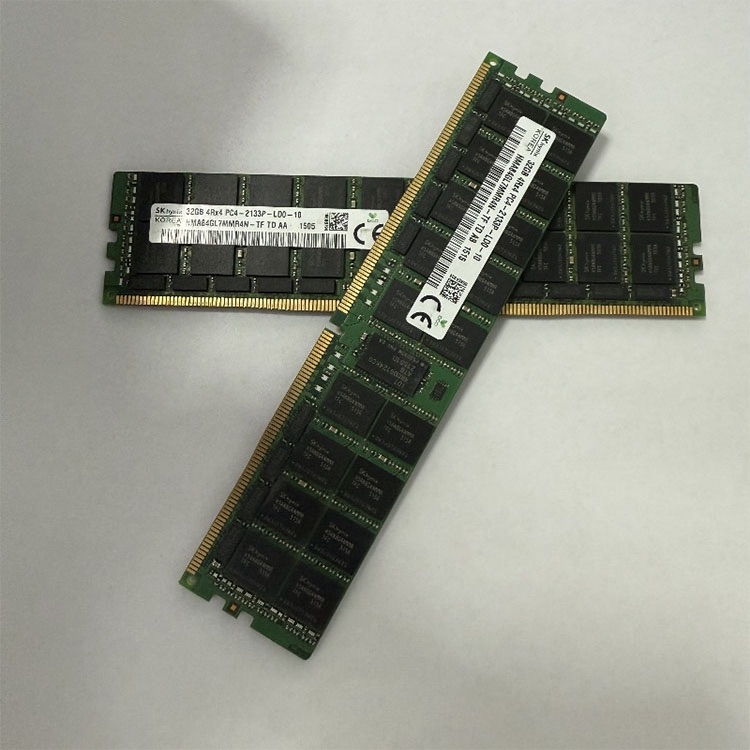
DDR4 32GB and 64GB RDIMM
Do not laugh. DDR4 is still running inside serious infrastructure. The issue is not demand growth; it is survivability. If manufacturers prioritize DDR5, HBM, and advanced nodes, DDR4 buyers may face worse sourcing conditions even without a huge demand spike.
Enterprise SSD NAND
If your server memory procurement is tied to GPU servers, storage nodes, or AI training clusters, watch enterprise SSD supply alongside RDIMM stock. Memory inventory trends and NAND flash trends are now joined at the hip.
Before mixing lots, substitutions, or pulled inventory, read ServerDimm’s warning on whether you can mix server RAM. In a tight quarter, “close enough” is how downtime enters through the side door.
The Policy Angle: Supply Is Not Fixing Itself Overnight
Governments know memory is now national infrastructure, not just a component category. The U.S. Department of Commerce awarded Micron up to $6.44 billion in CHIPS Act direct funding tied to advanced memory manufacturing in New York, Idaho, and Virginia, with the goal of lifting U.S. advanced memory manufacturing share from less than 2% to roughly 10% by 2035: NIST CHIPS for America Micron award.
That sounds big. It is big.
But it does not solve your next quarter.
Fabs take years. Packaging takes years. Talent pipelines take years. Qualification takes months even when everything goes well. Buyers who assume policy funding will rescue 2026 procurement are confusing headlines with inventory.
The practical move is simple: build a rolling memory forecast, separate “must-match” modules from flexible equivalents, document approved alternates, and push suppliers for real lot-level detail. ServerDimm’s product and inventory updates section is the kind of page buyers should monitor when timing matters, because generation transitions often show up in procurement friction before they show up in public market summaries.
FAQs
What memory specs are trending up in 2026?
The memory specs trending up in 2026 are HBM3E, HBM4, DDR5 64GB RDIMM, DDR5 96GB RDIMM, DDR5 128GB RDIMM, MRDIMM, and enterprise SSD NAND tied to AI data-center workloads. These specs are gaining momentum because AI servers need both GPU-side bandwidth and CPU-side system memory density.
The short version: HBM sets the heat, DDR5 carries the load, and NAND absorbs the storage shock. For server buyers, the safest focus is not the newest label but the most repeatable qualified spec.
Why is DDR5 memory demand rising so fast?
DDR5 memory demand is rising because current server platforms, cloud refresh cycles, AI-adjacent CPU workloads, and higher-density virtualization environments increasingly require DDR5 RDIMM instead of DDR4. DDR5 also supports higher bandwidth, larger densities, improved power behavior, on-die ECC, and newer server architecture requirements.
But the real driver is platform gravity. Once an OEM fleet moves to DDR5 servers, DDR4 pricing no longer matters for that deployment. Buyers must source compatible DDR5 modules or delay the build.
How is HBM memory demand affecting ordinary DRAM?
HBM memory demand affects ordinary DRAM by pulling manufacturing priority, wafer allocation, advanced packaging, and long-term customer commitments toward AI accelerator memory. This can restrict the supply of conventional DDR5, DDR4, LPDDR, and server RDIMM products even when demand for those products remains steady.
That is why HBM is not a separate niche anymore. It is the premium product steering the rest of the DRAM market.
Are NAND flash trends connected to server memory procurement?
NAND flash trends are connected to server memory procurement because AI infrastructure needs high-capacity enterprise SSDs for checkpoints, datasets, vector search, logs, and warm storage, while the same server builds also require large DDR5 RDIMM pools. Storage and memory budgets now compete inside the same deployment cycle.
I would treat NAND and DRAM as one planning conversation. If the GPU cluster is real, both sides of the bill of materials will feel pressure.
What are the best memory specs for 2026 server buyers?
The best memory specs for 2026 server buyers are the specs their platforms officially validate, especially DDR5 RDIMM at 64GB or 128GB densities, correct rank structure, supported speed bins, ECC behavior, and brand-qualified part numbers. The “best” choice is the one that balances performance, availability, compatibility, and repeatable sourcing.
A fast module that cannot be repeated across a fleet is not a good procurement decision. It is a future ticket queue.
Final Thoughts: Build a Spec Watchlist Before the Market Builds One for You
Do not wait for a shortage email.
Build a quarterly memory watchlist now: DDR5 64GB RDIMM, DDR5 128GB RDIMM, HBM-linked server platforms, enterprise SSD NAND, and legacy DDR4 modules still running in production. Then pressure-test every line against server compatibility, rank structure, speed, supplier availability, and replacement risk.
If you are sourcing for resale, repair, upgrade, or data-center expansion, start with your real bill of materials and request a quote from ServerDimm’s server memory procurement team. Send the server model, CPU generation, memory type, target capacity, quantity, preferred brands, and destination country. The market is not getting more forgiving. Your RFQ should not be vague.
ServerDimm supplies new and used branded server memory for distributors, OEM buyers, resellers, and data center teams. We support DDR4 and DDR5 sourcing with tested inventory, compatibility checks, and responsive quote service.