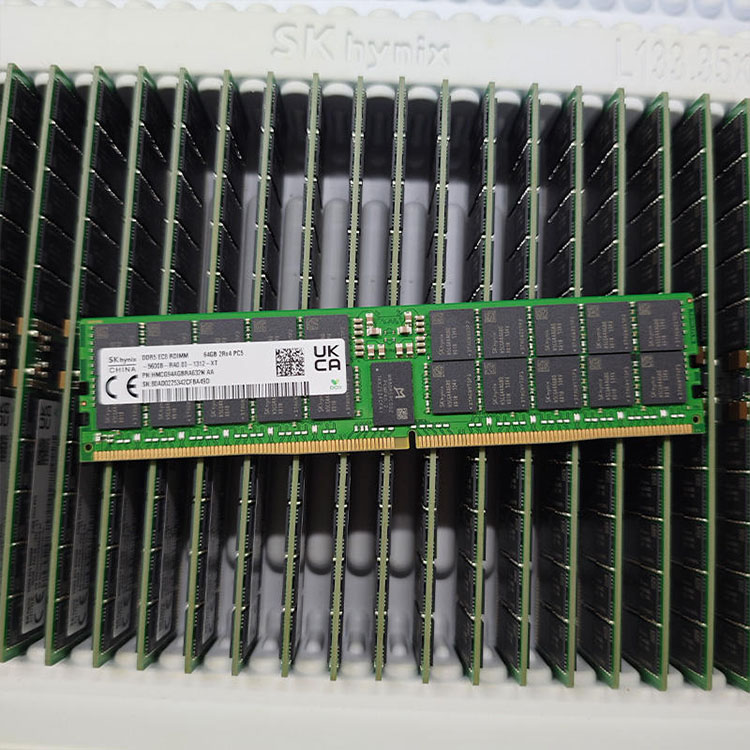
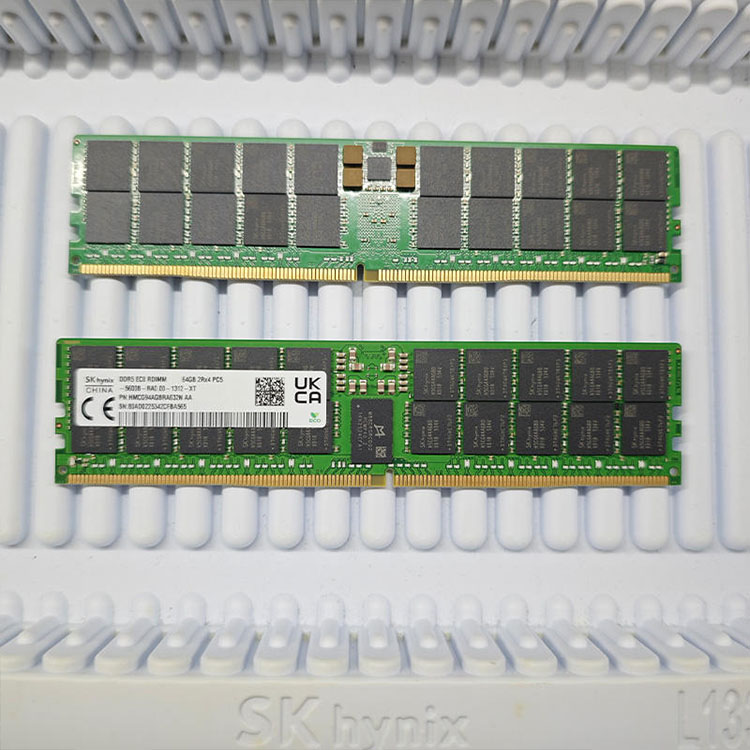
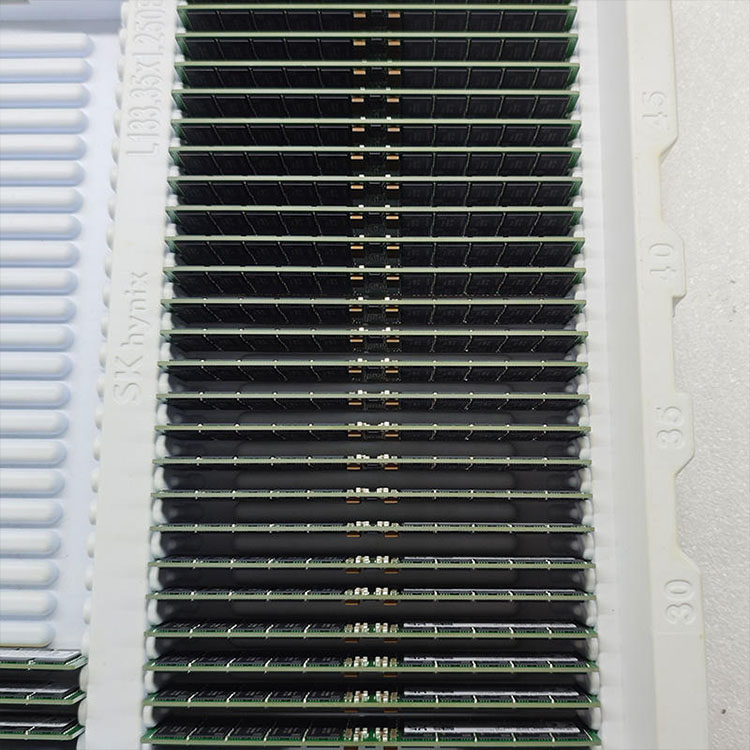
New vs Tested Used Server Memory: Which Should Enterprises Choose?
Most enterprises are asking the wrong question. The real choice is not “new or used?” but “validated or wishful thinking?” Here’s when tested used server memory beats new on economics and availability, and when new memory still deserves the premium.
They see “tested used server memory” on a quote, picture a dusty pull from a dead rack, and then talk themselves into paying a premium for factory-sealed DIMMs, even when the real enterprise question has nothing to do with shrink-wrap and everything to do with part-number accuracy, ECC support, RDIMM or LRDIMM fit, lot consistency, pre-shipment screening, and warranty behavior when something goes sideways.
Should they?
My view is blunt: if you’re maintaining DDR4 estates, building spare pools, extending virtualization clusters, or keeping older HPE, Dell, Lenovo, and Supermicro platforms alive, tested used server memory is often the better enterprise decision; if you’re standing up fresh DDR5 infrastructure, chasing higher-density 96GB and 128GB modules, or operating inside a rigid audit trail, new memory still earns the premium.
Table of Contents
Stop Worshipping the Sealed Box
Here’s the hard truth.
The outage data should embarrass lazy procurement logic, because the expensive failures inside data centers are not neatly explained by “we bought used parts,” and the much uglier story is process failure: Uptime Institute’s 2025 Annual Outage Analysis says more than half of respondents reported their most recent significant outage cost over $100,000, one in five said it cost more than $1 million, and nearly 40% of organizations suffered a major outage caused by human error over the prior three years, with 85% of those incidents tied to ignored or weak procedures.
So why are so many buyers still acting as if invoice condition matters more than validation discipline?
And the energy math is getting nastier.
The U.S. Department of Energy’s 2024 data center energy report says U.S. data centers used 176 TWh in 2023, equal to 4.4% of national electricity demand, and could climb to 325-580 TWh by 2028, or 6.7%-12.0% of total U.S. electricity use; at the same time, the ITU’s Global E-waste Monitor 2024 says the world generated 62 billion kg of e-waste in 2022 and formally recycled only 22.3% of it.
Does that sound like a market where throwing away perfectly serviceable enterprise RAM is the smart default?
Hyperscalers Already Answered This
They reuse parts.
That is not a theory, and it is not sustainability theater dressed up for a keynote, because Microsoft says its Circular Centers reused more than 3.2 million components in 2024 and fulfilled 85% of demand for obsolete spare parts from harvested inventory, while Google says it harvested about 8.8 million components from decommissioned hardware in 2024 and that 44% of components used for Google-managed server builds, maintenance, and upgrades came from reused inventory.
If the companies running hyperscale fleets treat reclaimed components as normal operating practice, why are mid-market buyers still pretending tested used ECC server memory is some fringe gamble?
I’ll say the quiet part.
“Refurbished server memory” is often a marketing phrase, not a technical standard, and if the seller cannot show exact part numbers, module type, speed bin, rank, capacity, ECC status, burn-in workflow, and post-sale terms, then the word “refurbished” is just cologne on a risk problem.
Where New Server Memory Still Deserves the Premium
New still wins.
I would steer enterprise buyers toward new branded server memory and current-generation DDR5 server memory when the deployment is net-new, the memory map is dense, and the business case depends on current-gen consistency more than capital efficiency, especially for DDR5-4800 and DDR5-5600 ECC RDIMM or LRDIMM rollouts in 64GB, 96GB, and 128GB capacities where supply continuity, clean documentation, and predictable warranty handling matter.
Why pay up here? Because this is the zone where continuity beats thrift.
I also lean new when the environment is audited to death.
Banks, defense-adjacent contractors, large healthcare groups, and enterprise programs with ugly approval chains often care less about whether the DIMM will function and more about whether every line on the paper trail is pristine, boring, and easy to defend six months later in front of legal, procurement, and internal audit.
That’s not engineering purity. It’s organizational survival.
Where Tested Used Server Memory Beats New on Actual ROI
Used wins often.
The current ServerDimm site architecture already separates tested used server memory inventory from new stock, and it also breaks out DDR4 server memory for legacy platforms, which is exactly how enterprise buyers should think, because an extension purchase for an aging DDR4 fleet is not the same commercial problem as a fresh DDR5 build.
Why would you shop them the same way?
This is where tested used server memory shines: exact-match spares, maintenance-driven upgrades, EOL or near-EOL servers, and budget-controlled expansions where finding the right 16GB, 32GB, or 64GB DDR4-2400, DDR4-2666, DDR4-2933, or DDR4-3200 ECC RDIMM module from Micron, Samsung, Kingston, or SK Hynix matters more than bragging that the label says “new.” In that corner of the market, the biggest real risk is not that the module had a prior life; it is that you buy a wrong or loosely matched part from a broker who treats compatibility like a suggestion.
Isn’t an exact match with proof better than a shiny mismatch?
My unpopular view is simple.
For a lot of enterprise server RAM buying, tested used memory is not the “cheap option.” It is the adult option, because it acknowledges the truth that legacy estates do not disappear just because vendors want to sell fresh platforms, and stable operations often depend on boring, exact, validated components rather than fashionable procurement narratives.
The Buying Framework That Actually Works
Process beats condition.
ServerDimm’s own quality testing and warranty support for server memory page points in the right direction: compatibility review first, part-number validation second, pre-shipment screening third, then warranty and RMA coordination after delivery. That is the sequence I would demand from any supplier, whether the quote says new, used, or “refurbished.”
If a seller skips that order, why trust the rest?
Decision Factor
New Server Memory
Tested Used Server Memory
My Read
Upfront spend
Highest
Usually lower for like-for-like legacy expansion
Used usually wins on cost discipline
Exact-match availability for older platforms
Often weak once OEM focus shifts
Often stronger in DDR4 and EOL maintenance markets
Buying anonymous pulls dressed up as “refurbished”
Avoid lazy buying on both sides
The table looks obvious.
And yet teams keep getting this wrong because they buy based on fear, or worse, on habit, instead of asking a short brutal list of questions: What is the exact server model? What DIMM type is supported? ECC RDIMM or LRDIMM? What part numbers are already installed? Is this for production expansion, cold spare, or break-fix? What warranty clock matters more, the calendar or the speed of replacement?
That is how you choose. Not by superstition.
FAQs
Is tested used server memory reliable for enterprise use?
Tested used server memory is previously deployed enterprise RAM—usually ECC RDIMM or LRDIMM from OEM or hyperscale environments—that has been visually inspected, part-number matched, electrically screened, and sold with compatibility review and post-sale support, which makes it very different from anonymous pulls sold on price alone. If the supplier can validate platform fit, lot consistency, and warranty handling, it can be entirely appropriate for enterprise spare pools, maintenance programs, and legacy fleet expansion.
What is the difference between refurbished server memory and tested used server memory?
Refurbished server memory is a broad resale label, while tested used server memory should mean the seller can show exact part numbers, module type, rank, capacity, ECC status, and some documented screening workflow before shipment, instead of hiding behind cosmetic language that tells a procurement team almost nothing. In practice, I trust the seller that explains the test path, the compatibility path, and the RMA path, not the one that leans on adjectives.
Can you mix new and used ECC RDIMM in one server?
Mixing new and used server memory is only safe when generation, capacity, speed bin, rank, voltage, ECC type, and platform rules all match exactly, because servers care about technical symmetry far more than whether the DIMM is fresh from a factory box or pulled from a decommissioned chassis. If the configuration is unsupported, the machine may fail to boot or behave unpredictably under load, so “close enough” is not a real policy.
When should enterprises choose new server memory instead?
New server memory is the better choice for net-new DDR5 rollouts, high-density AI or HPC nodes, heavily audited environments, and projects where pristine chain-of-custody, vendor-backed documentation, and consistent supply of current-generation high-capacity modules matter more than squeezing the last dollar out of capex. That premium is easier to defend when the platform is current, the rollout is large, and the enterprise wants fewer exceptions in procurement and compliance review.
How do you choose server memory for enterprise servers without making an expensive mistake?
Choosing server memory for enterprise servers means matching the exact platform requirement—DDR4 or DDR5, ECC RDIMM or LRDIMM, speed, rank, capacity, vendor approval, and spare strategy—to the workload and risk tolerance, then buying only from suppliers that can prove testing, paperwork, and post-sale accountability. Start with the server model, current DIMM map, target capacity, and approved part number list, because procurement gets much easier once the specification is nailed down.
Because in this business, the smartest enterprises do not buy “new” or “used.” They buy memory that fits, memory that was tested, and memory backed by a supplier willing to be accountable when the rack goes live.
ServerDimm supplies new and used branded server memory for distributors, OEM buyers, resellers, and data center teams. We support DDR4 and DDR5 sourcing with tested inventory, compatibility checks, and responsive quote service.