How to Compare Server Memory Quotes from Different Suppliers
Most Server Memory quotes look comparable until you inspect the details. This guide shows procurement teams how to separate real supplier value from risky low-price bait.
A server memory quote can look clean on page one, with a neat unit price, a familiar Samsung, Micron, SK Hynix, or Kingston brand name, and a delivery promise that sounds harmless, but the real cost is often buried in missing part numbers, vague condition notes, weak RMA terms, unverified ECC RDIMM compatibility, freight surprises, or a supplier quietly substituting a different rank, speed, or lot when stock gets tight.
So what are you actually comparing?
I’ll say the unpopular thing first: most buyers compare server RAM quotes like amateurs. They look at 32GB, 64GB, or 128GB pricing and treat every line item as equal. But Server Memory is not office stationery. DDR4-3200 2Rx4 ECC RDIMM, DDR5-4800 2Rx8 RDIMM, DDR5-5600 96GB 2Rx4, and LRDIMM stock are not interchangeable simply because a seller writes “compatible” in a spreadsheet.
The U.S. Department of Commerce exposed how thin semiconductor buffers can get when it reported that median inventory for certain semiconductor products fell from 40 days in 2019 to less than 5 days in 2021; that matters because a supplier with no real inventory discipline can turn one missed shipment into a deployment problem. Read the U.S. Commerce semiconductor supply chain findings before assuming “in stock” means anything.
And the market still bites. Reuters reported in November 2025 that Samsung memory chip prices rose by up to 60%, with 32GB DDR5 modules moving to $239 from $149 in September, while 16GB and 128GB modules jumped about 50%. That is not a rounding error; that is a procurement knife fight. See the Reuters report on Samsung memory price hikes.
If you need a faster baseline before sending an RFQ, start with a structured server memory quote checklist instead of asking five suppliers for “best price 64GB RAM.” That phrase wastes everyone’s time.
Quote Anatomy: What a Serious Supplier Must Put in Writing
A usable server memory quote should identify the module, prove the fit, explain the condition, state the warranty, and expose the real landed cost. If it does not do those five things, it is not a quote. It is bait.
Here is the part that makes weak suppliers uncomfortable: the brand name alone is not enough. I do not care if the quote says Samsung, Micron, SK Hynix, or Kingston unless the supplier also gives the module class, generation, speed, capacity, rank, quantity, condition, warranty, and replacement rule.
Names are cheap.
A professional quote should show whether the offer is DDR4 or DDR5, ECC RDIMM or LRDIMM, 1Rx8 or 2Rx4, new or tested used, single-lot or mixed-lot, ready stock or brokered stock. If you are buying for Dell PowerEdge, HPE ProLiant, Lenovo ThinkSystem, Supermicro, Inspur, or Cisco UCS fleets, the supplier should also ask for your server model and CPU generation before pretending to know the answer.
Kingston’s own guidance says different memory types such as UDIMM, RDIMM, LRDIMM, and MRDIMM cannot be mixed in the same system, and DDR4 and DDR5 are not socket-compatible. That means a quote that does not state module type is not merely incomplete; it is technically reckless. Read Kingston’s server memory type guidance.
Before comparing supplier A and supplier B, run the proposed module against a server memory compatibility guide. Compatibility is not a courtesy. It is the first filter.
The Quote Comparison Table I Actually Trust
Use this table before you let any supplier win on price.
Quote Factor
What Good Looks Like
What Bad Looks Like
Why It Changes the Real Cost
Exact part identity
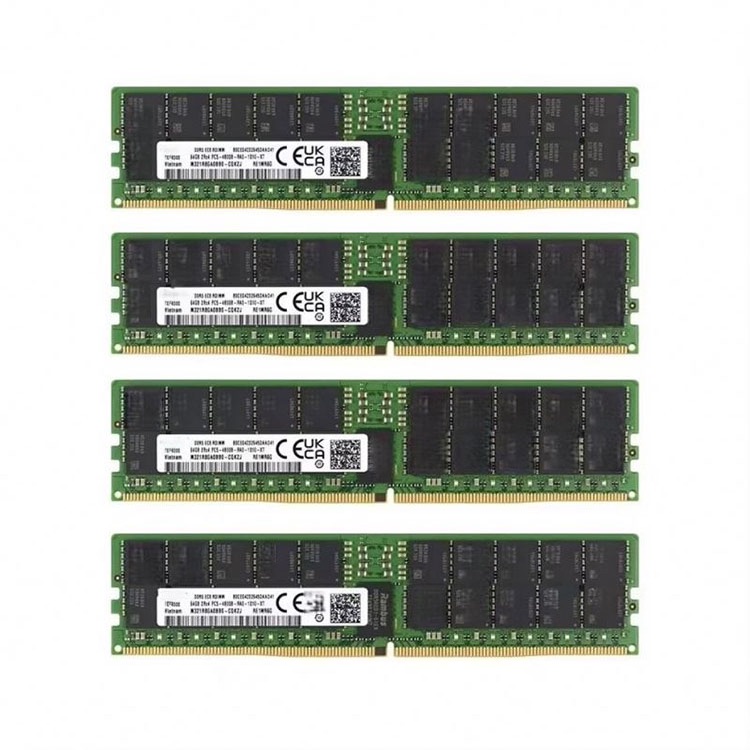
Brand, manufacturer PN, capacity, speed, rank, ECC type, RDIMM/LRDIMM class
“64GB server RAM compatible”
Prevents wrong-family substitutions
Platform fit
Server model, CPU generation, channel layout, population rule reviewed
Supplier never asks for server model
Avoids non-booting installs and downclocked builds
Condition
New, tested used, pulled, refurbished, or mixed-lot clearly stated
“Original” with no condition detail
Changes price, risk, warranty, and repeatability
ECC RDIMM pricing
Quote separates DDR4, DDR5, RDIMM, LRDIMM, capacity, and lot size
One blended unit price
Shows whether the supplier understands the real module class
Testing evidence
SPD readout, capacity check, platform-relevant screening, lot matching
“100% tested” with no method
Testing claims without evidence are decoration
Warranty/RMA
DOA period, replacement process, freight responsibility, turnaround time
“Warranty included”
Bad RMA terms convert savings into downtime
Availability
Quantity on hand, lead time, hold period, forecast support
The most dangerous quote is usually not the highest one. It is the one that looks 8% cheaper because it excludes shipping, hides mixed stock, avoids warranty language, or quotes a “compatible” part without showing the manufacturer part number. I have no patience for that trick. Neither should you.
Google’s field study, DRAM Errors in the Wild, found 25,000 to 70,000 errors per billion device hours per Mbit and more than 8% of DIMMs affected by errors per year. That does not mean every module is bad; it means validation, ECC behavior, and supplier discipline matter more than tidy quote formatting.
This is why I want testing and warranty language right beside the price. If a supplier sells enterprise RAM but cannot explain validation, read their quality testing and warranty support page before moving the quote forward.
The Part-Number Trap: OEM Labels, DRAM Maker Labels, and Supplier Fog
Part numbers confuse smart people.
OEM part numbers and DRAM manufacturer part numbers often point to the same physical module family through different commercial systems, and that creates a perfect opening for quote confusion, especially when a buyer sends a blurred label photo, an incomplete Dell or HPE spare number, or a capacity-only request and expects five different server memory suppliers to interpret the estate the same way.
Why gamble?
A clean quote should separate three layers:
OEM Identity
This is the Dell, HPE, Lenovo, Cisco, or Supermicro-facing number used for approved configurations, support contracts, and procurement workflows. It matters for warranty-sensitive environments.
DRAM Manufacturer Identity
This is the Micron, Samsung, SK Hynix, or Kingston technical identity. It usually tells you more about speed, rank, density, generation, and module design.
Supplier Commercial Identity
This is the seller’s SKU or internal warehouse reference. Useful for ordering, but not enough for technical validation.
I get suspicious when the supplier only gives its internal SKU. That usually means the buyer has to trust the seller’s interpretation instead of auditing the module itself. Trust is nice. Evidence is better.
NIST is pushing the industry toward stronger semiconductor traceability for a reason. Its January 2026 Semiconductor Traceability and Provenance Workshop notes that counterfeit components, malicious tampering, and opaque sourcing threaten the security, reliability, and resilience of key systems. See the NIST Semiconductor Traceability and Provenance Workshop.
That warning applies cleanly to server RAM procurement. Not because every broker is crooked. Most are not. But when a quote has no provenance, no test path, and no substitution rule, you are buying fog.
DDR4 DDR5 Server Memory Quotes: Stop Comparing Different Eras
DDR4 and DDR5 quotes should not sit in the same mental bucket.
DDR4-2400, DDR4-2666, DDR4-2933, and DDR4-3200 still dominate many installed enterprise estates. DDR5-4800, DDR5-5600, and newer high-density options belong to current-generation platforms and heavier bandwidth requirements. Different CPU generations, memory channels, DIMM population rules, and BIOS support all change the answer.
But buyers still ask, “Can I get DDR5 pricing too?”
Maybe. But why?
If the platform is DDR4, DDR5 is irrelevant. If the platform is DDR5, DDR4 is physically wrong. If the buyer is planning a mixed refresh, then the quote should be split by project, not blended into one messy spreadsheet.
For current-generation projects, browse actual DDR5 server memory sourcing options and force suppliers to state capacity, speed, rank, brand, and condition. For mature estates, the better question is whether new stock or tested used stock makes more operational sense.
This is where I think many enterprise buyers posture instead of think. New memory is clean and often preferred for fresh builds. Tested used server memory can be rational for spare pools, maintenance projects, and older DDR4 fleets where exact-match continuity matters more than factory packaging. The real issue is not “new good, used bad.” The real issue is evidence.
That is why a practical buyer should compare new vs tested used server memory before assuming the most expensive option is automatically the safest.
Supplier Behavior Reveals More Than Supplier Pricing
Watch how the supplier answers.
A real server memory supplier asks annoying questions early. Server model? CPU SKU? Current DIMM label? Target capacity? Installed layout? ECC RDIMM or LRDIMM? Preferred brands? New only or tested used acceptable? Ship-to country? Incoterm? Quantity now and forecast later?
A weak supplier answers fast because they are guessing.
And yes, fast feels good. It feels efficient. It feels like progress. But a fast wrong quote is still wrong.
The Department of Energy reported that U.S. data centers consumed 176 TWh in 2023, about 4.4% of total U.S. electricity, and projected 325 to 580 TWh by 2028. That tells me compute environments are getting denser, more expensive, and less forgiving of sloppy hardware decisions. Read the DOE data center electricity demand report.
Uptime Institute’s 2025 outage analysis says 54% of respondents reported their most recent serious outage cost more than $100,000, and one in five put the cost above $1 million. That should kill the fantasy that hardware procurement is just a clerical function. See the Uptime Institute Annual Outage Analysis 2025.
So yes, I care about a $6 difference on ECC RDIMM pricing. But I care more about whether the supplier can ship matched modules, document the lot, support the RMA, and repeat the order in 90 days without changing the story.
My Hard Rules for Comparing Server Memory Suppliers
Here is the blunt scorecard I would use.
Rule 1: Reject Capacity-Only Quotes
If the quote says “64GB DDR4 RAM” and nothing else, send it back. A professional server RAM quote should say DDR4-3200, ECC RDIMM, 2Rx4, brand, condition, quantity, warranty, and lead time.
Rule 2: Demand the Substitution Policy Before Payment
“Equivalent” can mean harmless. It can also mean wrong rank, mixed lot, different brand, or a module that technically fits but breaks standardization across the fleet. Get the replacement rule in writing.
Rule 3: Separate Unit Price From Landed Cost
A supplier with lower unit pricing can lose once you include freight, customs, duties, wire fees, return shipping, and delayed delivery. Procurement teams love unit-price wins because they are easy to show. Operations teams inherit the mess.
Rule 4: Make Testing Specific
“100% tested” is not enough. Ask whether the supplier checks SPD data, capacity, ECC behavior, physical labels, lot consistency, and platform relevance. If they cannot explain it clearly, they probably cannot control it consistently.
Rule 5: Score Communication Under Pressure
Ask one awkward question: “What happens if 3% of the lot fails or mismatches after installation?” Good suppliers answer calmly. Bad suppliers start dancing.
FAQs
What is the best way to compare server memory quotes from different suppliers?
The best way to compare server memory quotes is to score each offer by exact module identity, platform compatibility, condition, testing evidence, warranty terms, availability, landed cost, and supplier replacement policy before looking at unit price. This method prevents buyers from choosing a cheaper quote that hides technical risk, logistics cost, or weak post-sale support.
After that, compare ECC RDIMM pricing only inside the same technical family. DDR4-3200 RDIMM should not be compared against DDR5-4800 RDIMM as if both solve the same platform requirement.
Why do server RAM quotes vary so much between suppliers?
Server RAM quotes vary because suppliers may be pricing different module classes, stock conditions, brands, ranks, lot sizes, warranty obligations, freight terms, and availability risks under similar-looking descriptions. A quote for new Micron DDR5 RDIMM ready stock is not the same as a quote for mixed-lot tested used DDR4 inventory.
When the quote lacks part numbers, condition, rank, and warranty terms, the price difference may not be market efficiency. It may be missing information.
Should I choose the lowest ECC RDIMM pricing?
The lowest ECC RDIMM pricing is only worth choosing when the module identity, compatibility, testing process, warranty terms, condition, and landed cost match or beat the competing offers. If the cheaper quote omits part numbers, shipping terms, RMA policy, or substitution rules, the apparent savings can become rework, downtime, or failed deployment cost.
My view is simple: cheap RAM is fine. Mystery RAM is not.
How do I verify a server memory supplier before buying?
You verify a server memory supplier by asking for manufacturer part numbers, label photos, stock condition, quantity by lot, testing method, warranty process, replacement policy, lead time, and shipping terms, then checking whether the supplier asks enough technical questions to confirm platform fit before pricing. Serious suppliers behave like validators, not order takers.
If they never ask for the server model or CPU generation, assume the quote is incomplete.
What should I include when requesting DDR4 DDR5 server memory quotes?
A DDR4 or DDR5 server memory quote request should include server brand and model, CPU SKU, current DIMM part number, installed layout, target capacity, required module type, preferred brands, new or tested used condition, quantity, buying schedule, destination country, incoterm preference, and warranty expectations. The cleaner the brief, the cleaner the quote.
Send photos when possible. A clear DIMM label can save three rounds of email.
Final Thoughts: Make Suppliers Prove the Quote
Do not reward vague pricing.
Before you approve the next Server Memory order, build a comparison sheet with exact part numbers, DDR4 or DDR5 generation, ECC RDIMM or LRDIMM class, rank, speed, condition, testing evidence, warranty terms, lead time, and landed cost. Then ask every supplier to fill the same fields.
If they cannot do it, they are not being fast. They are being incomplete.
Your next step is simple: pull one installed DIMM, photograph the label, record the server model and CPU SKU, define your target capacity and quantity, then request a quote that includes compatibility confirmation, testing notes, warranty terms, and total delivered cost. That is how you compare server memory suppliers like a professional instead of shopping blind.
ServerDimm supplies new and used branded server memory for distributors, OEM buyers, resellers, and data center teams. We support DDR4 and DDR5 sourcing with tested inventory, compatibility checks, and responsive quote service.