Red Flags When Buying Server Memory from the Spot Market
The spot market is where serious buyers find hard-to-source DDR4, DDR5, ECC RDIMM, LRDIMM, Samsung, Micron, SK hynix, and Kingston inventory. It is also where weak paperwork, counterfeit risk, pulled modules, and “compatible” substitutions hide in plain sight.
The Spot Market Is Not Evil. But It Is Unforgiving.
Price hides risk.
A server memory spot market deal may look harmless when the quote says “64GB DDR4 ECC RDIMM” or “96GB DDR5 5600 2Rx4,” but unless the seller proves exact manufacturer part number, module class, rank structure, condition, testing method, and replacement policy, the buyer is not comparing Server Memory; the buyer is comparing stories.
Why reward that?
I have seen good spot-market buys save real money. I have also seen teams lose three maintenance windows because someone accepted “same spec” as proof. That phrase should make you nervous. “Same spec” often means same capacity, not same module.
The spot market is useful when OEM channels are slow, DDR4 supply is uneven, older platforms need continuity, or a data center team needs bulk replacement stock without waiting through official distribution. But the hard truth is simple: if a seller cannot document what the module is, where it came from, and how it was tested, you are not buying discounted server RAM. You are buying uncertainty with pins.
This matters more now because memory pricing has been unstable. Reuters reported that average DRAM inventory fell to eight weeks in 2025 from 31 weeks in early 2023, while AI demand tightened supply across advanced and legacy memory categories in its report on AI-driven memory chip pressure. When supply gets tight, weak brokers get louder.
And desperate buyers get sloppy.
Before approving any buy, I would start with the basics: compare live module families in a structured DDR4 server memory catalog or DDR5 server memory catalog, then force the supplier to match the technical identity line by line. Not by vibe. Not by logo. By proof.
Red Flag #1: The Seller Quotes Capacity, Not Identity
The laziest quote in this market says “32GB server RAM” or “64GB ECC memory” and stops there.
Walk away slowly.
A professional Server Memory quote should include capacity, DDR generation, speed grade, ECC status, module type, rank notation, manufacturer part number, condition, quantity, warranty period, and substitution rule. If the seller cannot tell you whether the module is RDIMM or LRDIMM, 1Rx8 or 2Rx4, DDR4-2666 or DDR4-3200, PC4 or PC5, the quote is not mature enough for production hardware.
I know buyers hate this because it slows purchasing. Good. It should.
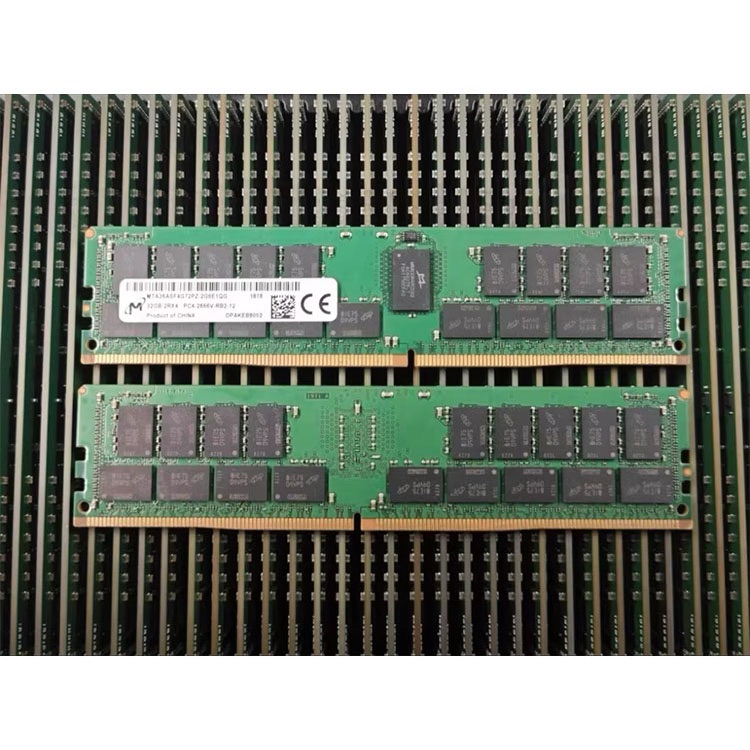
Server memory part numbers exist because enterprise DIMMs are not generic sticks with nicer labels. A Micron MTA36ASF4G72PZ-2G6, Samsung M393A4K40CB2-CTD, SK hynix HMA84GR7AFR4N-VK, and Kingston KSM32RD8/32 are not interchangeable merely because a listing says “32GB DDR4 ECC.”
If your team still reads only the capacity line, use this server memory part number guide before approving another PO. It will save you from the most boring kind of failure: the preventable one.
What I Want Written on the Quote
I want the quote to show:
Exact manufacturer part number
Brand: Samsung, Micron, SK hynix, Kingston, or another named maker
Module class: ECC RDIMM, LRDIMM, UDIMM, MRDIMM where applicable
Rank and organization: 1Rx8, 2Rx4, 4Rx4, 2S2Rx4
Condition: new, tested used, pulled, refurbished, mixed lot
Warranty and DOA terms
Whether substitutions are allowed
Tiny details. Big bill.
Red Flag #2: “Tested” Means Nothing Without the Test Method
Every seller says tested.
So what?
A real test claim should describe the process. Did the supplier read SPD data? Did they check capacity? Did they test on server-grade platforms? Did they screen for ECC behavior? Did they inspect labels, solder joints, contacts, heat spreaders, and date codes? Did they test the lot or only a sample? Did they separate mixed pulls from same-lot inventory?
I am blunt about this because “100% tested” has become marketing confetti. It sounds serious. It proves nothing.
Google’s large-scale field study, DRAM Errors in the Wild, analyzed memory errors across a large server fleet over 2.5 years and found error rates of 25,000 to 70,000 errors per billion device hours per Mbit, with more than 8% of DIMMs affected by errors per year. That does not mean spot-market memory is automatically bad. It means memory reliability is measurable, and serious buyers should demand measurable validation.
There is a reason I prefer suppliers that publish a real quality and warranty process for ECC RDIMM procurement. Warranty language is not decoration. It tells you who carries the pain when a module fails after receiving.
Red Flag #3: The Price Is Too Smooth
Cheap is not the issue. Suspiciously smooth pricing is.
A seller offering every capacity, every speed, every brand, every quantity, and every generation at perfect availability is either sitting on a miracle warehouse or selling from a spreadsheet that outruns reality. In the DRAM spot market, stock changes fast. DDR4 3200 RDIMM supply can tighten. DDR5 5600 96GB modules can disappear. Certain Samsung, Micron, and SK hynix part numbers can become ugly to source in volume.
Reuters reported in November 2025 that Samsung raised prices of some memory chips by up to 60%, with 32GB DDR5 modules moving from $149 in September to $239 in November, in its coverage of Samsung memory chip price hikes. That kind of price movement creates a perfect environment for bait quotes.
I do not care how polite the salesperson sounds. If the price is far below the market and the seller cannot hold the lot, show inventory photos, confirm MPNs, or define substitutions, the low price is not a discount. It is a trap with a PDF attached.
The Spot-Market Risk Table I Actually Use
Red Flag
What It Looks Like
Why It Matters
What I Would Demand Before Buying
Capacity-only quote
“64GB DDR4 server RAM”
Capacity does not prove compatibility
Full MPN, rank, speed, ECC, RDIMM/LRDIMM class
Vague condition
“Original,” “bulk,” or “A grade”
These words can hide pulls, mixed lots, or remarking
Written condition: new, tested used, refurbished, pulled
No testing detail
“100% tested”
Testing without method is a slogan
SPD readout, platform test, ECC validation, visual inspection
Mixed lots hidden
Same capacity from multiple batches
Can complicate population, reorder, and RMA control
Lot disclosure and approval before shipment
No substitution policy
Seller may ship “compatible” alternates
Wrong rank or class can fail POST
“No substitution without written approval”
Weak warranty
DOA only, buyer pays all freight
Downtime cost moves to buyer
Clear DOA window, RMA process, replacement timing
Unreal price
Far below current DRAM spot market
May indicate old pulls, relabeled stock, or fake availability
Server model, CPU generation, slot plan, BIOS considerations
Red Flag #4: The Supplier Treats Used and Refurbished Server Memory as the Same Thing
They are not the same.
Used server memory may be a clean pull from a working enterprise system, tested and resold with documentation. Refurbished server memory may involve cleaning, inspection, relabeling, or other handling before resale. The word “refurbished” is not automatically bad, but it should trigger more questions, not fewer.
Ask what was refurbished. The contacts? The label? The heat spreader? The packaging? The seller’s confidence?
I have no issue buying tested used server memory for the right platform. In fact, for DDR4 fleets such as Dell PowerEdge R740, HPE ProLiant DL380 Gen10, Lenovo ThinkSystem SR650, Cisco UCS C-Series, or Supermicro X11/X12 systems, tested used ECC RDIMMs can make financial sense. But the supplier must prove compatibility, part identity, test process, and warranty support.
For deeper due diligence, I would send any procurement team to this guide to buying used server memory before letting them negotiate bulk stock. Used is not the enemy. Unverified is.
Red Flag #5: The Parts Look Too Clean
This one sounds strange until you have handled enough modules.
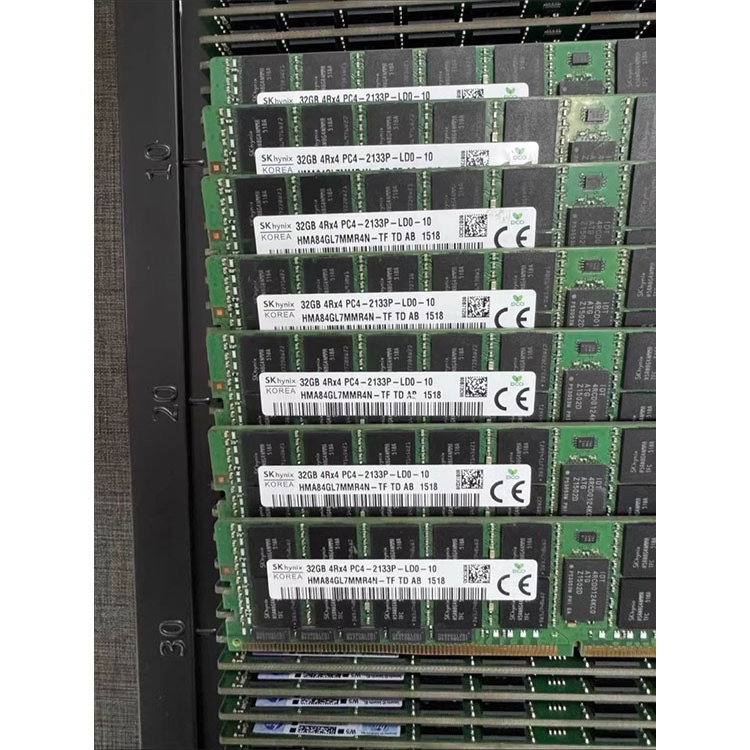
Perfect labels can be suspicious. Fresh stickers on old bodies can be suspicious. Laser markings that do not match date codes can be suspicious. Contact wear that contradicts “new” condition can be suspicious. A mixed tray of modules with inconsistent PCB tone, font weight, country markings, and date codes deserves closer inspection.
Counterfeit electronics are not a conspiracy theory. The U.S. Department of Justice announced that Stephanie McCloskey of VisionTech Components was sentenced to 38 months in prison for her role in selling counterfeit integrated circuits to the U.S. Navy, defense contractors, and other industries; the DOJ said the company generated about $15.8 million in gross receipts from counterfeit IC sales between 2007 and 2009 in its VisionTech counterfeit integrated circuits case. Different component category, same procurement lesson.
The DOJ also reported that Orange County electronics distributor PRB Logics sold counterfeit integrated circuits, including parts believed to be for the B-1 Lancer bomber, in its counterfeit IC sentencing announcement. Again, this is not a server RAM case. But if counterfeit components can enter defense and industrial channels, nobody buying gray-market Server Memory should act smug.
Bad actors follow shortage, margin, and urgency.
That is the whole game.
Red Flag #6: The Seller Cannot Explain Compatibility Beyond “It Works”
“It works” is not a compatibility policy.
Server memory compatibility depends on platform, CPU memory controller, BIOS version, slot population order, DDR generation, ECC requirement, module class, rank, speed, voltage, and channel balance. A module can be genuine and still be wrong.
That is the part people forget.
For example, RDIMMs and LRDIMMs are both server-class modules, but they are not casually mixed. DDR4 and DDR5 are physically and electrically different. A 2Rx4 module can behave differently from a 1Rx8 module. A server may downclock when mixed speeds appear. Dual-socket systems may require mirrored population across CPU sockets.
This is where I stop trusting sellers who only know the brand logo. Brand matters less than platform fit. A genuine Samsung module in the wrong slot plan is still a problem. A genuine Micron RDIMM in a system that expects LRDIMM density behavior may still cause pain. A genuine SK hynix module with the wrong rank profile can still create a support mess.
Before buying mixed or replacement stock, read Can You Mix Server RAM?. Then read the platform manual. Then ask the supplier to confirm the exact configuration in writing.
Yes, it takes longer.
So does a failed maintenance window.
Red Flag #7: No Warranty Math
A seven-day return policy, 30-day DOA window, one-year replacement warranty, and “supplier will help” are not the same thing.
Procurement people sometimes treat warranty as a checkbox. I think that is reckless. Warranty defines who pays when memory fails, who covers freight, how fast replacements move, whether cross-shipment is allowed, and whether the seller has enough stock continuity to replace the same part family.
The warranty matters more on spot-market buys because the supply may not be repeatable. If you buy a batch of 200 × 64GB DDR4-3200 2Rx4 ECC RDIMMs and 12 fail validation, can the seller replace the same MPN? Or will they offer a “compatible” mix that starts the whole problem again?
The cheapest quote is often not the cheapest landed decision.
Red Flag #8: The Supplier Has No Position on Provenance
Provenance is not fancy language. It means: where did this inventory come from, what path did it take, and what proof follows it?
The OECD and EUIPO estimated that counterfeit and pirated goods accounted for up to 2.3% of global trade in 2021, with fake goods representing up to 4.7% of EU imports, in the 2025 report Mapping Global Trade in Fakes. That is not specific to server RAM, but it shows the scale of counterfeit trade across global channels.
And server hardware buyers operate inside those channels.
When I evaluate a spot-market Server Memory supplier, I want a straight answer on sourcing. Is it new branded stock? OEM surplus? Data center pulls? Tested used inventory? RMA returns? Mixed brokered lots? International redistribution? I do not need a bedtime story. I need a chain of custody that makes sense.
A supplier who refuses provenance questions is telling you something.
Believe them.
How to Buy Server Memory Safely From the Spot Market
Here is my workflow. It is not glamorous, but it works.
Start with the server platform. Confirm the exact server model, CPU generation, BIOS level, current installed DIMMs, target capacity, and slot population rules. If the target platform is Dell PowerEdge R740, HPE DL380 Gen10, Lenovo SR650 V2, Cisco UCS C240, or Supermicro X13, name it in the RFQ.
Then specify the module, not the dream. Ask for exact MPNs, acceptable alternates, rank profile, speed grade, ECC support, RDIMM or LRDIMM class, condition, warranty, and lot size.
Next, compare quotes like a skeptic. A strong quote should be easy to audit. A weak quote forces you to trust the seller’s interpretation. I would rather use a server memory quote comparison framework than pretend five messy spreadsheets are equivalent.
Finally, pilot before bulk installation. Test a sample in the real target platform. Check POST behavior, BIOS recognition, trained speed, ECC status, channel balance, and workload stability. Then buy volume.
Not before.
FAQs
What are the biggest red flags when buying Server Memory from the spot market?
The biggest red flags when buying Server Memory from the spot market are vague part numbers, missing testing details, unclear condition, hidden substitutions, weak warranty terms, unrealistic pricing, no platform compatibility review, and no provenance trail showing whether modules are new, tested used, refurbished, pulled, or brokered inventory.
If one of those appears, slow down. If three appear together, I would not approve the purchase without management accepting the risk in writing. Spot-market server RAM can be useful, but undocumented memory is not a bargain.
Is used server memory safe for enterprise servers?
Used server memory can be safe for enterprise servers when the module identity, ECC behavior, RDIMM or LRDIMM class, rank structure, platform compatibility, test process, lot condition, and warranty terms are verified before purchase by a supplier that can support replacement, documentation, and repeat-order continuity.
I would use tested used DDR4 ECC RDIMMs in many maintenance scenarios. I would not use mystery pulls with vague labels in a production estate and call that cost control.
How do I verify ECC server memory before buying?
You verify ECC server memory before buying by confirming the exact server model, supported DDR generation, RDIMM or LRDIMM requirement, capacity limit, rank layout, speed behavior, manufacturer part number, SPD data, ECC support, condition, supplier test method, warranty coverage, and written substitution rules before payment.
The most common mistake is checking only “ECC” and capacity. That is not enough. ECC tells you the module belongs in server territory, not that it belongs in your specific machine.
What is the difference between spot-market and authorized-channel server RAM?
Spot-market server RAM is inventory sourced outside normal authorized distribution, often including surplus, brokered, pulled, tested used, or hard-to-find modules, while authorized-channel server RAM usually comes through official manufacturer or distributor routes with stronger traceability, more predictable warranty handling, and cleaner commercial documentation.
The trade-off is speed, price, and availability versus documentation, predictability, and support. Neither channel is perfect. But the spot market punishes lazy buyers faster.
Should I buy refurbished server memory?
Refurbished server memory may be worth buying when the seller clearly explains what refurbishment means, proves the original module identity, validates ECC and platform compatibility, documents testing, separates it from untested pulls, and provides warranty terms that protect the buyer from DOA failures, mismatched substitutions, and unclear return handling.
I would never reject refurbished memory only because of the word. I reject it when the seller uses the word to avoid details.
How can I avoid fake or relabeled server RAM?
You can avoid fake or relabeled server RAM by buying from suppliers that provide exact manufacturer part numbers, label photos, lot information, condition disclosure, testing evidence, warranty terms, provenance details, and no-substitution commitments, while rejecting suspiciously cheap offers that hide identity behind generic “compatible server memory” descriptions.
Counterfeit risk is rarely solved by one check. It is reduced by layered friction: documentation, inspection, testing, supplier accountability, and payment discipline.
Final Thoughts: Make the Seller Prove the Memory Before You Pay
I do not hate the server memory spot market. I hate lazy buying inside it.
The best spot-market suppliers can help you source DDR4 ECC RDIMMs for legacy fleets, DDR5 server memory for newer platforms, tested used modules for maintenance pools, and branded Samsung, Micron, SK hynix, or Kingston inventory when normal channels are slow. But the bad suppliers know exactly how to exploit urgency.
So here is the call-to-action: before your next Server Memory purchase, send the supplier a real RFQ that demands exact MPN, DDR generation, speed, rank, ECC status, module class, condition, quantity, test method, warranty, provenance, and substitution policy. Then compare the response against ServerDimm’s bulk server RAM sourcing support and ask for compatibility confirmation before buying volume.
ServerDimm supplies new and used branded server memory for distributors, OEM buyers, resellers, and data center teams. We support DDR4 and DDR5 sourcing with tested inventory, compatibility checks, and responsive quote service.