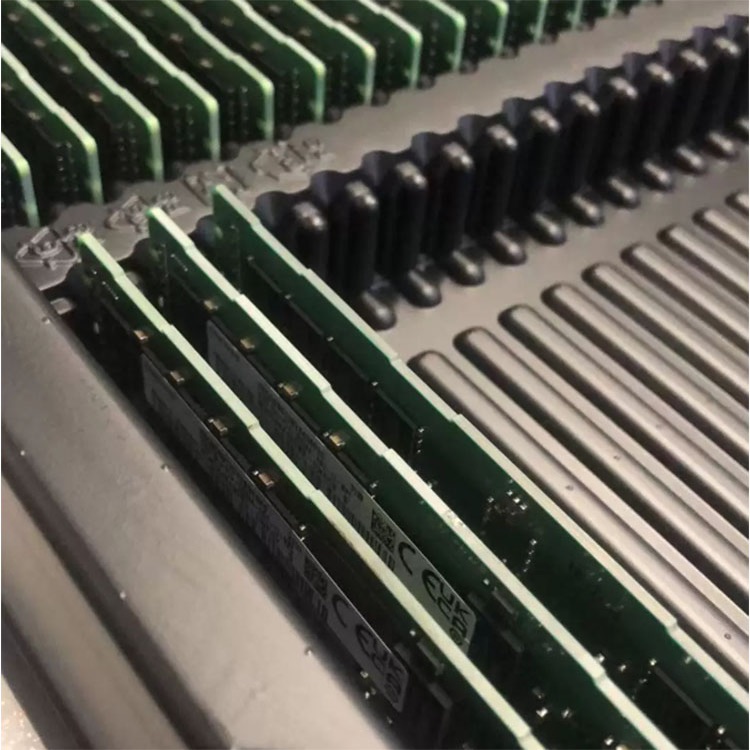
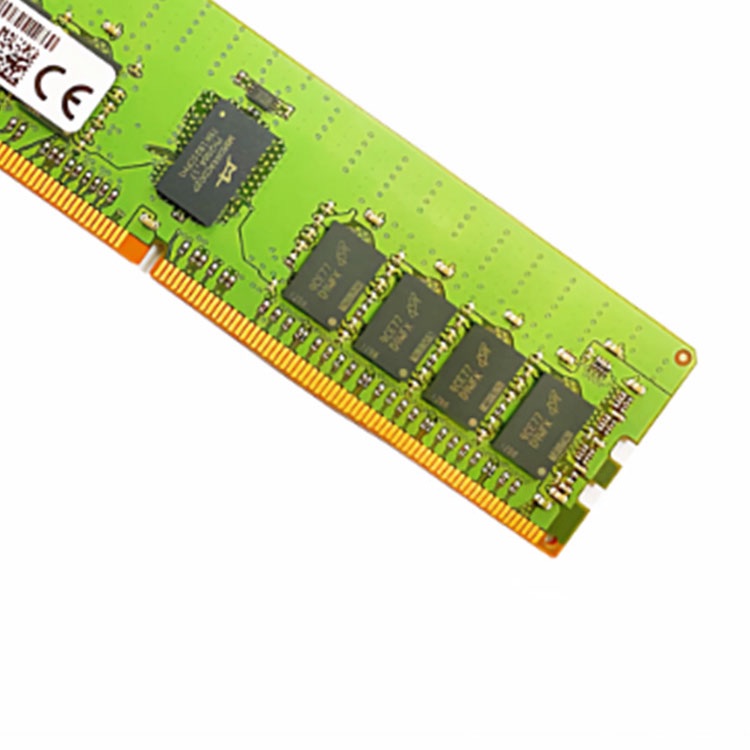
Can ECC memory prevent all errors? No. ECC RAM is powerful, but single-bit correction, double-bit detection, DDR5 on-die ECC, Rowhammer exposure, and bad DIMM sourcing all prove one thing: ECC is protection, not magic.
It is not a force field, not a substitute for tested server memory, not a warranty against bad firmware, and definitely not a permission slip to buy whatever “compatible ECC RAM” a reseller throws into a spreadsheet at 4:58 p.m. on a Friday. So why do buyers still ask whether ECC memory can prevent all errors?
Because the phrase sounds bigger than it is.
ECC memory, short for error correcting code memory, exists to detect and correct certain memory errors before they become visible corruption, crashes, or silent bad data. In normal server language, that usually means correcting single-bit memory errors and detecting some double-bit memory errors. That is valuable. I would not build serious server infrastructure without it.
But all errors? No.
Not even close.
Table of Contents
The Hard Truth: ECC Memory Reduces Risk, It Does Not Abolish Physics
I have a blunt view on this: if a supplier sells ECC memory as “error-proof RAM,” they are either careless or trying to close the sale before the buyer asks better questions.
ECC RAM works because extra check bits travel with the data. A common server-side design is SECDED, meaning Single Error Correction, Double Error Detection. One flipped bit can often be corrected automatically. Two flipped bits may be detected, but not corrected. Wider failures may need stronger protection schemes, such as Chipkill-style approaches, memory mirroring, sparing, patrol scrubbing, or platform-level RAS features.
That distinction matters.
According to Intel’s guidance on ECC correctable errors, correctable ECC errors are cases where memory detects and automatically fixes single-bit data corruption, while frequent errors can point to failing DIMMs or environmental problems. That is the part some buyers miss. A corrected error is not always “nothing happened.” Sometimes it is the server whispering, “Watch this DIMM.”
Quietly.
Then loudly.
Then expensively.
A serious buyer should connect this topic to platform compatibility, not just keyword matching. If you are sourcing for enterprise systems, start with ServerDimm’s bulk server RAM supplier page because it frames ECC memory, RDIMM, LRDIMM, DDR3, DDR4, and DDR5 as procurement categories, not toy specs. Then pressure-test the details against the quality testing and warranty support workflow before approving a purchase order.
What ECC Memory Actually Handles
ECC memory is excellent at a narrow and important job: catching certain bit-level memory faults before they become bad data.
That does not make it universal.
The famous Google DRAM Errors in the Wild study analyzed memory errors across a large fleet of commodity servers over 2.5 years and many millions of DIMM-days. The conclusion I take from it is not “panic.” It is worse, and more useful: memory errors are ordinary enough that professional infrastructure must plan for them.
The later CMU and Facebook field study on production data centers showed the same operational lesson with different numbers. Correctable errors affected 2.08% of servers per month on average, around 9.62% of servers experienced correctable memory errors over the measured year, and uncorrectable errors affected 0.03% of servers per month on average. The paper also describes a repair policy where servers crossing more than 100 correctable errors per week were flagged, and about 46% of machines with errors were repaired each month.
That is the industry hiding in plain sight.
ECC does not make the memory problem disappear. It gives you a signal before the problem gets uglier.
Error or Failure Type
What ECC Memory Usually Does
Can ECC Prevent It Completely?
What I Would Do in a Server Environment
Single-bit memory errors
Corrects them automatically in many ECC systems
No, it corrects after detection
Monitor counts through BMC, iDRAC, iLO, IPMI, or OS logs
Double-bit memory errors
Often detects them but may not correct them under SECDED
No
Treat as a serious failure signal and review DIMM replacement
Multi-bit faults across a chip or rank
Depends on platform RAS, Chipkill, lockstep, mirroring, and DIMM layout
No
Validate the server’s supported ECC/RAS mode before rollout
Rowhammer-style bit flips
May mitigate some patterns, but not all attack paths
No
Track firmware, DRAM vendor advisories, and platform mitigation guidance
Wrong DIMM type, such as RDIMM vs LRDIMM mismatch
ECC does not fix procurement mistakes
No
Confirm exact module class, rank, speed, and part number
CPU, memory controller, bus, firmware, storage, or application corruption
ECC memory may not see the fault at all
No
Use end-to-end integrity checks, backups, monitoring, and validation testing
DDR5 on-die ECC inside DRAM chips
Helps internal chip-level reliability
No
Do not confuse on-die ECC with full server-grade ECC DIMM protection
ECC Memory vs Non-ECC Memory: The Difference Is Not Academic
Here is where I get opinionated: non-ECC memory belongs in casual systems, not in machines where corrupted data can hurt money, uptime, logs, virtual machines, or customer trust.
A desktop crash is annoying. A database server silently writing bad state is a different animal.
ECC memory vs non-ECC memory is not just a “stability” comparison. It is a data integrity comparison. Non-ECC RAM may never tell you that a bit flipped. ECC RAM can detect and correct many common bit errors, and it can give administrators a record of recurring memory problems.
But the module has to be correct.
This is where many purchasing teams embarrass themselves. They search “ECC server RAM,” see DDR4 or DDR5, then ignore RDIMM, LRDIMM, 3DS RDIMM, UDIMM, rank layout, 1Rx8, 2Rx4, 4Rx4, speed bin, and OEM part number. Then they call it a memory failure when the platform refuses to train.
It was not a memory failure. It was a buying failure.
ServerDimm’s guide on how to read a server memory part number is worth using here because ECC is only one field in the label. Capacity, generation, speed, rank, chip width, module class, and manufacturer part number all matter. And the server memory buying guide makes another point buyers should tattoo onto their quote process: ECC is about error detection and correction, while RDIMM and LRDIMM are about buffering and scale.
Different terms.
Different risks.
Different failure modes.
The DDR5 Trap: On-Die ECC Is Not the Same as Full ECC RAM
DDR5 made this conversation messier.
Every serious buyer has now seen marketing copy implying that DDR5 “has ECC.” That statement is incomplete enough to be dangerous. DDR5 on-die ECC works inside the DRAM chip to improve internal reliability as densities rise. It is not the same as server-grade ECC memory protection across the full module and memory channel.
Do not let anyone blur that line.
On-die ECC can correct some internal cell-level issues before data leaves the DRAM chip. Full ECC memory, used with a compatible CPU, chipset, motherboard, BIOS, and server platform, protects data at the system level with additional check bits visible to the memory controller.
That difference matters in 2026 procurement, especially with DDR5 ECC RDIMM modules, 4800 MT/s, 5600 MT/s, 6400 MT/s platform targets, 96GB and 128GB DIMM densities, and high-density virtualization hosts.
And then there is Rowhammer.
The NIST National Vulnerability Database entry for CVE-2025-6202 describes a vulnerability affecting SK Hynix DDR5 DIMMs produced from 2021-01 through 2024-12, where a local attacker can trigger Rowhammer bit flips impacting hardware integrity and system security. ETH Zürich’s Phoenix research page goes further, arguing that on-die ECC does not stop Rowhammer and that end-to-end Rowhammer attacks remain possible on DDR5.
That should make every infrastructure buyer slower, not scared.
Fear buys the wrong thing. Slowness checks the right thing.
Where ECC Memory Errors Become a Procurement Problem
A lot of ECC memory errors begin before the server ever boots.
Bad sourcing discipline creates operational noise. I have seen quote sheets that say “64GB DDR4 ECC” and nothing else. No rank. No 2Rx4 or 4Rx4. No RDIMM or LRDIMM. No MPN. No tested condition. No receiving plan. That is not a quote. That is a future support ticket wearing a price tag.
This is why the internal link between technical education and procurement is not optional. Buyers comparing ECC RDIMM lots should read ServerDimm’s Can You Mix Server RAM? because mixing ECC and non-ECC, RDIMM and LRDIMM, or DDR4 and DDR5 is not a “maybe it works” strategy in real server environments. It is a controlled exception at best, and a bad habit at worst.
If the server fails to detect memory, do not blame ECC first. Review module family. ServerDimm’s article on why server memory is not detected points directly at a common mistake: buyers order “ECC server RAM” but ignore whether the module is RDIMM, LRDIMM, 3DS RDIMM, or ECC UDIMM. A DDR4 ECC UDIMM and DDR4 ECC RDIMM can both look plausible in a lazy listing and still be wrong for the target server.
That is the dirty little procurement truth.
Compatibility is not a vibe.
Does ECC Memory Prevent Data Corruption?
ECC memory can prevent many cases of data corruption caused by correctable memory faults, especially single-bit memory errors, but it cannot prevent every corruption path in a server. The phrase “does ECC memory prevent data corruption” needs a careful answer because memory corruption can come from DRAM cells, buses, controllers, firmware, CPU logic, storage, software bugs, power instability, or malicious disturbance attacks.
So the honest answer is: ECC helps prevent some memory-origin data corruption and helps detect other memory-origin faults before they become silent.
It does not protect the entire system.
If your workload matters, combine ECC memory with:
Server-grade CPU and motherboard ECC support
Validated ECC RDIMM or LRDIMM configurations
BIOS and firmware updates
Patrol scrubbing or memory scrubbing where supported
BMC alerting for correctable and uncorrectable ECC events
Application-level checksums for databases and file systems
RAID, replication, backups, and restore testing
Supplier-side part-number verification and pre-shipment screening
That last point is less glamorous than a spec sheet, but it saves money. Before a bulk rollout, use ServerDimm’s quality testing and warranty support process to align generation, module type, part number, capacity, platform fit, testing, warranty, and RMA expectations.
Boring paperwork beats heroic troubleshooting.
Every time.
My Buying Rule: Treat ECC Errors as Signals, Not Trivia
I do not like the phrase “correctable error” because it makes people relax too soon.
A corrected ECC event means the system survived the incident. Good. But when the same DIMM, channel, rank, socket, or memory controller keeps reporting errors, the pattern matters more than the first correction. Occasional correctable errors may be normal; repeated correctable errors are intelligence.
This is where I separate professional teams from casual buyers.
Professional teams track ECC event rates. They know the platform. They correlate logs with DIMM serials and slots. They remove noisy parts before the uncorrectable event arrives. They understand that a 32GB DDR4 2666 2Rx4 ECC RDIMM and a 64GB DDR5 4800 2Rx4 ECC RDIMM are not just capacities and speeds; they are platform decisions.
Casual buyers ask, “But is it ECC?”
Wrong question.
Ask this instead: “Is this exact ECC memory correct for my server model, CPU generation, DIMM population order, module class, rank layout, BIOS support, warranty path, and deployment risk?”
That question gets fewer cheap answers.
Good.
FAQs
Can ECC memory prevent all errors?
ECC memory cannot prevent all errors; it is a server memory technology that detects and corrects many memory faults, especially single-bit memory errors, while flagging or failing on error patterns that exceed its correction design, such as some double-bit, multi-bit, bus, controller, firmware, and Rowhammer-related failures. In practical terms, ECC lowers risk rather than eliminating it.
What errors can ECC RAM correct?
ECC RAM commonly corrects single-bit data corruption by using extra check bits stored with memory data, while many standard SECDED implementations can detect, but not always correct, double-bit memory errors that occur within the protected word or transfer path. Stronger server RAS designs may handle more, but support depends on platform architecture.
What is the difference between ECC memory and non-ECC memory?
ECC memory includes error detection and correction capability designed for systems where data integrity matters, while non-ECC memory usually lacks the extra check-bit protection needed to identify and repair many bit-level memory faults during operation. That difference is why ECC RAM is common in servers, databases, virtualization hosts, and enterprise storage systems.
Does DDR5 on-die ECC replace full server ECC memory?
DDR5 on-die ECC does not replace full server ECC memory because it operates inside the DRAM chip to improve chip-level reliability, while traditional server ECC protects data at the module and memory-controller level using platform-visible error checking. A DDR5 consumer DIMM with on-die ECC is not automatically a server-grade ECC RDIMM.
Should I replace a DIMM after correctable ECC memory errors?
A DIMM should not always be replaced after one correctable ECC error, but repeated correctable errors on the same module, slot, channel, socket, or time window should be treated as a warning pattern that may justify replacement. The smarter move is to monitor error thresholds, compare vendor guidance, and act before uncorrectable errors cause downtime.
Can ECC memory prevent Rowhammer attacks?
ECC memory cannot reliably prevent all Rowhammer attacks because Rowhammer abuses repeated DRAM row activation to create bit flips that may bypass or overwhelm normal correction assumptions, especially when attack patterns are engineered around the protection scheme. ECC may raise the difficulty, but research on DDR5 and earlier ECC systems shows it is not a complete defense.
Final Thoughts: Buy ECC Memory Like Uptime Depends on the Details
Can ECC memory prevent all errors?
No.
And that answer should make you more confident, not less. ECC memory is still one of the smartest choices in enterprise hardware because it corrects common memory faults, exposes failing DIMMs early, reduces silent corruption risk, and gives administrators data they can act on. But it only works inside a disciplined system: correct platform, correct module class, correct population order, correct monitoring, correct supplier, correct testing.
Here is the practical next step.
Before buying ECC RAM in bulk, document your server model, CPU generation, DDR4 or DDR5 requirement, RDIMM or LRDIMM support, target capacity, current DIMM population, exact part numbers, condition requirements, warranty expectations, and shipping destination. Then request a compatibility-focused quote instead of a capacity-only quote.
If your rollout matters, do not ask for “cheap ECC memory.”
Ask for verified ECC memory that belongs in the server.
ServerDimm supplies new and used branded server memory for distributors, OEM buyers, resellers, and data center teams. We support DDR4 and DDR5 sourcing with tested inventory, compatibility checks, and responsive quote service.