Why Lowest Price Alone Leads to Bad Server Memory Purchases
A hard-nosed server memory buying guide for procurement teams, resellers, and data center buyers who are tempted by cheap server RAM but cannot afford installation failures, mixed-lot surprises, or fake savings.
The Cheapest DIMM Is Usually Selling You a Missing Fact
Price lies loudly.
A lowest-price server memory quote can look harmless in a spreadsheet, especially when the capacity and brand name appear familiar, but the real buying risk often sits in the fields procurement teams skip: exact MPN, RDIMM versus LRDIMM, ECC behavior, rank, lot status, test evidence, and RMA language.
So what are you really buying?
I’ll say the hard part first: bad server memory purchases usually begin with a buyer who thinks “64GB DDR4 ECC” is a complete description. It is not. It is the start of a conversation. A Samsung 64GB DDR4-3200 2Rx4 ECC RDIMM, a Micron 96GB DDR5-5600 RDIMM, and an SK Hynix 128GB DDR5 LRDIMM can all sound respectable in isolation, but servers do not care about respectable language. They care about electrical fit, firmware rules, CPU memory-controller support, population order, rank structure, and whether the module was actually tested.
That is why I would start with a real server memory buying guide before I start arguing over cents per GB. Cheap server memory becomes expensive when it fails after receiving, during burn-in, or worse, after a maintenance window with tired engineers and a production cluster waiting to come back online.
The Data Is Meaner Than the Price Sheet
Memory failures are not folklore. They are measured.
In the Google field study DRAM Errors in the Wild: A Large-Scale Field Study, researchers analyzed Google’s server fleet across more than two years and reported DRAM error rates far higher than many older lab assumptions, including 25,000 to 70,000 FIT per Mbit and more than 8% of DIMMs affected per year. That number should make any serious buyer pause before treating ECC server memory as a commodity line item.
And the later Facebook/CMU work, Revisiting Memory Errors in Large-Scale Production Data Centers, was not kinder. It analyzed Facebook’s server fleet over fourteen months, covering billions of device-days, and found that workload type could influence failure rate by up to 6.5x. The same paper also reported that page offlining could reduce memory error rate by 67%.
Here is the uncomfortable translation: the module is not just “working” or “not working.” It may be stable in one machine, unstable under one workload, noisy in one channel, or perfectly fine until a weak supplier mixes lots and turns a clean deployment into a troubleshooting swamp.
We have all seen the cheap-quote pattern. A buyer saves 4% on unit price. Then 3% of the lot fails, mismatches, or does not train correctly. Suddenly the “saving” is buried under extra labor, delayed shipment, return freight, angry customers, and a second emergency buy at a worse price.
This is why the tested used server memory validation process matters. Refurbished server memory is not automatically bad. Untested, unlabeled, mixed, undocumented memory is bad.
Where Cheap Server RAM Actually Fails
Part-number fog
The first failure is usually identity.
A quote that says “64GB DDR4 ECC RAM” is not enough for Dell PowerEdge R740, HPE ProLiant DL380 Gen10, Lenovo ThinkSystem SR650 V2, or a Supermicro dual-socket build. I want the exact manufacturer part number. I want the module class. I want 1Rx8, 2Rx4, 4Rx4, speed bin, ECC status, and condition. I want to know whether the seller is shipping Samsung M393A8G40AB2-CWE, Micron MTA36ASF8G72PZ, SK Hynix HMAA8GR7AJR4N-XN, or “something compatible” from a bin nobody wants to describe.
“Compatible” is often where weak suppliers hide.
ECC theater
ECC server memory is supposed to protect data integrity by detecting and correcting certain memory errors. But ECC is not a magic sticker. A server can require ECC RDIMM, reject ECC UDIMM, refuse LRDIMM mixing, downclock a mismatched configuration, or fail POST if the memory population rules are wrong.
So yes, ECC matters. But exact ECC implementation and platform support matter more.
Mixed-lot roulette
Mixed lots are where cheap server RAM turns into a warehouse problem. One tray has modules from three sources. Another tray has the same capacity but different rank. A third tray has label wear, inconsistent SPD data, or prior deployment history nobody can prove.
At small scale, maybe you survive that. At 200, 500, or 2,000 DIMMs, you are not buying memory anymore. You are buying a probability curve.
RMA math nobody puts in the quote
Lowest price often excludes the real question: what happens after failure?
If a supplier cannot tell you the warranty length, replacement process, test method, packing standard, and substitution policy before payment, the supplier is not giving you a price. They are giving you a gamble.
Written RMA path, replacement terms, failure threshold, support contact
Savings vanish during returns
Logistics
Unit price only
Landed cost, lead time, packing, documentation, destination
Freight, delay, customs, and damage costs appear late
Supply continuity
One-off cheap lot
Repeatable sourcing plan by part number and acceptable alternates
Second purchase cannot match first deployment
A buyer who ignores this table is not being aggressive. They are being lazy with better language.
The Counterfeit and Gray-Market Problem Nobody Wants in the Meeting
Counterfeit electronics are not a paranoid fantasy.
In 2012, the U.S. Senate Armed Services Committee reported more than 1,800 cases involving over 1 million suspect counterfeit electronic parts in the defense supply chain, including parts tied to aircraft and military systems. Read the Senate counterfeit electronic parts report summary and then tell me supply-chain proof is “just paperwork.”
It gets uglier. The U.S. Department of Justice announced Operation Network Raider in 2010, reporting 30 felony convictions and more than 700 seizures of counterfeit Cisco network hardware and labels with an estimated retail value above $143 million. The DOJ counterfeit network hardware case was about network gear, not server RAM, but the procurement lesson is the same: enterprise infrastructure attracts counterfeiters because buyers chase trusted labels at suspicious prices.
No, I am not saying every cheap DIMM is fake. That would be sloppy.
But I am saying a suspiciously cheap server RAM quote deserves hostile reading. Ask who made it. Ask where it came from. Ask how it was tested. Ask whether the seller understands anti-static packing, lot control, and replacement handling. You do not need to inspect silicon dioxide, SiO₂, passivation layers yourself, but you do need a supplier process that makes identity and condition harder to fake.
The 2026 Market Makes Bad Buying More Expensive
Server memory buying used to be forgiving. Not anymore.
Reuters reported in December 2025 that AI demand had pushed memory makers toward high-bandwidth memory, HBM, for data center accelerators, squeezing broader memory supply and pushing prices in some segments to more than double since February 2025. Read the Reuters report on AI-driven memory supply pressure.
That changes buyer behavior. In a tight market, weak suppliers get more creative. Substitution risk rises. Lead times stretch. Buyers accept vague quotes because they are afraid stock will disappear. And that is exactly when professionals should slow down and verify the basics.
The smarter move is not always buying new. Sometimes tested used enterprise RAM is the right answer for legacy DDR4 fleets, spare pools, maintenance contracts, and reseller demand. But the word “tested” must mean something. It should mean inspection, exact identity, SPD validation, stress testing, compatibility review, warranty support, and sane packaging.
ServerDimm’s server memory quality and warranty support page is the kind of page I would use to frame the questions before placing an order, especially when the purchase involves DDR4, DDR5, ECC RDIMM, LRDIMM, or mixed deployment schedules.
My Buying Rules for Server Memory
Rule 1: Never approve a capacity-only quote
A quote that stops at “32GB,” “64GB,” “96GB,” or “128GB” is unfinished. Push for exact manufacturer part number, module type, rank, speed, and condition. The quote should survive a receiving inspection without someone calling sales for translation.
Rule 2: Treat RDIMM and LRDIMM as separate species
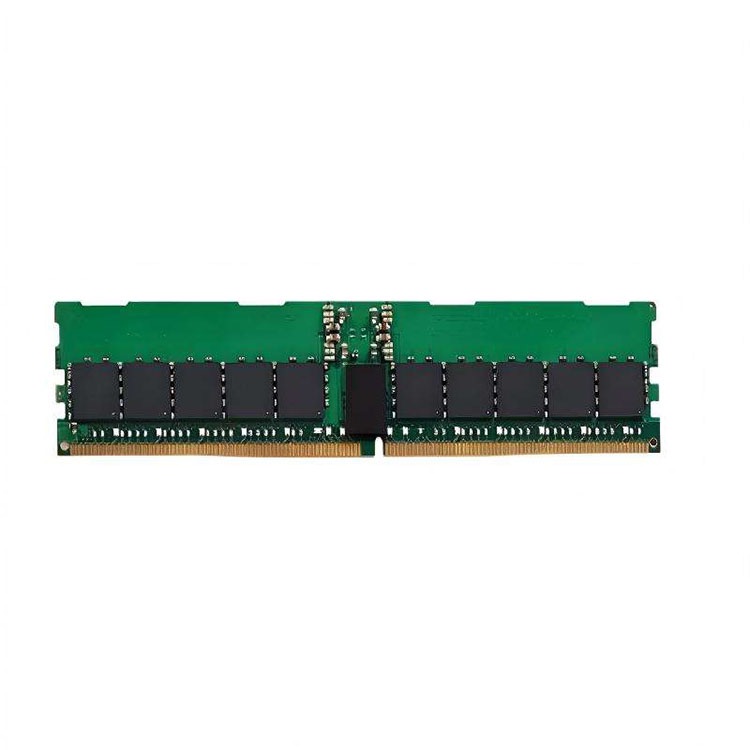
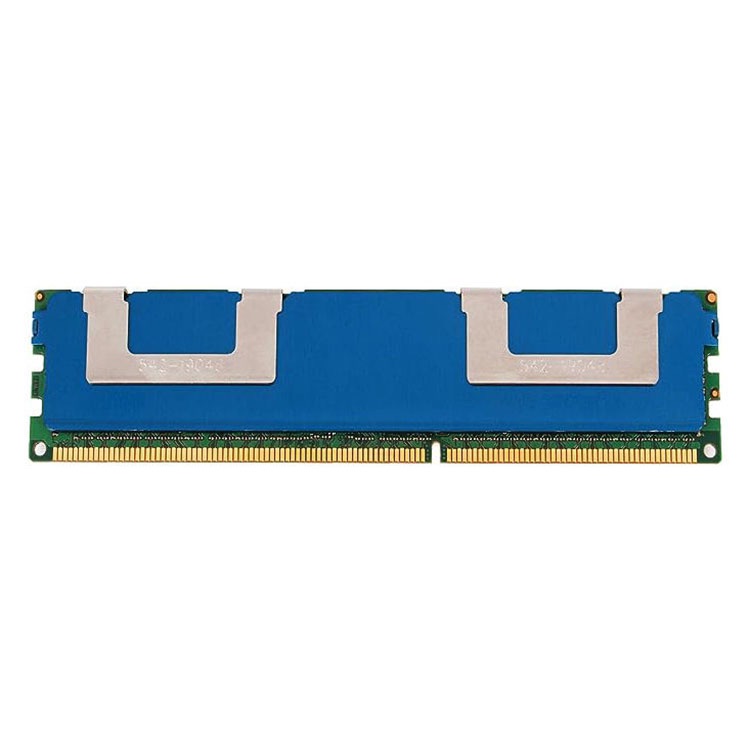
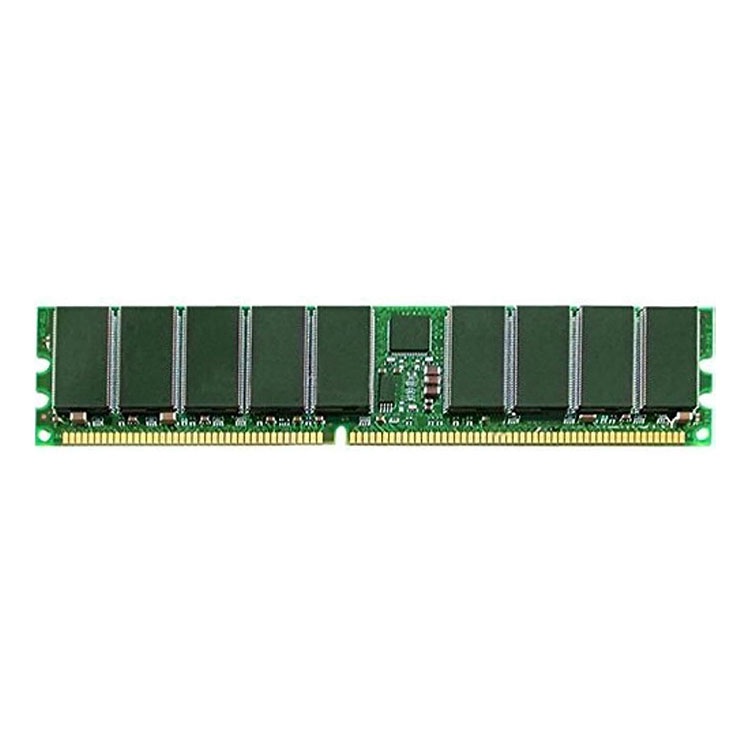
RDIMM and LRDIMM are not casual substitutes. DDR4 and DDR5 are not interchangeable. ECC and non-ECC do not belong in the same serious server conversation. If anyone tells you “same capacity, same thing,” get another supplier.
Read the server RAM mixing rules before you approve a mixed configuration that will later be blamed on the hardware, the BIOS, the motherboard, or the engineer who installed it.
Rule 3: Demand test evidence before bulk rollout
For a small replacement order, a practical supplier checklist may be enough. For a large lot, I want test logic: inspection, SPD check, module identity, platform review, burn-in or stress evidence, and a written RMA process.
Not vibes. Evidence.
Rule 4: Separate unit price from landed cost
A $2 cheaper DIMM can become a $20 problem after freight, damage, delay, return handling, rework, downtime, and emergency replacement. Procurement teams love unit price because it is clean. Operations teams hate it because it hides the mess.
Rule 5: Make substitution rules explicit
If the seller cannot ship the exact part, what happens? Can they substitute another brand? Another rank? Another speed? Another lot? Can they mix Samsung and SK Hynix in the same shipment? Who approves it?
Write it down before the purchase order.
Rule 6: Pilot before you brag
If the order is large enough to hurt, test a sample in the actual platform. Dell PowerEdge, HPE ProLiant, Lenovo ThinkSystem, Cisco UCS, Supermicro, Inspur, and white-box platforms can each punish assumptions differently. A pilot is cheaper than a public failure.
FAQs
What makes lowest-price server memory risky?
Lowest-price server memory is risky when the discount hides incomplete module identity, unsupported RDIMM or LRDIMM type, mixed-lot inventory, missing ECC test evidence, weak packaging, vague warranty terms, or no compatibility check against the target server platform before shipment and installation. The danger is not the discount itself; it is the missing proof behind the discount.
Is cheap server memory always bad?
Cheap server memory can be worth buying when the supplier proves exact part number, ECC class, rank, speed, condition, test results, platform fit, packing method, and RMA terms before payment, because a lower unit price may reflect surplus supply rather than technical neglect. The buyer’s job is to separate clean value from undocumented risk.
How should I verify ECC server memory before buying?
You verify ECC server memory by matching the exact manufacturer part number to the server model, confirming RDIMM or LRDIMM support, checking rank and speed rules, reading SPD data, running stress tests, reviewing ECC error logs, and demanding written warranty coverage before deployment. A title that says “ECC compatible” is not enough for enterprise procurement.
Is refurbished server memory the same as tested used server memory?
Refurbished server memory is a broad resale label, while tested used server memory should mean a documented workflow that confirms physical condition, exact identity, platform fit, ECC behavior, stress-test performance, lot consistency, anti-static packing, and replacement terms before the modules reach your rack. Trust the process, not the adjective.
What should a serious server RAM quote include?
A serious server memory quote should include exact MPN, capacity, generation, speed, ECC type, RDIMM or LRDIMM class, rank, chip width where available, condition, quantity, lot status, warranty length, RMA path, shipping terms, destination, and substitution policy in writing. If the supplier omits those fields, the price is not fully comparable.
Why is server memory compatibility more important than price?
Server memory compatibility is more important than price because servers enforce electrical, firmware, CPU memory-controller, DIMM-type, rank, channel, and population rules that a cheap module cannot negotiate around, even when the capacity sticker looks correct and the seller claims generic compatibility. A wrong module is not a bargain; it is inventory with an argument attached.
Final Thoughts: Buy the Evidence Before the Discount
Here is the move.
Before you request pricing, build a one-page server memory brief. Include server brand and model, CPU generation, current memory layout, target capacity, module type, preferred brands, exact part numbers if available, new or tested-used preference, quantity, destination, rollout date, warranty requirement, and acceptable substitution rules.
Then send it to a supplier that can answer clearly.
If the reply is just a low number, push back. Ask for identity. Ask for compatibility. Ask for test evidence. Ask for warranty terms. Ask what happens if 3% of the lot fails after installation.
Lowest price is not strategy. Lowest verified risk is.
For your next server memory purchase, stop asking, “Who is cheapest?” Start asking, “Who can prove this lot belongs in my servers before I pay for it?”
ServerDimm supplies new and used branded server memory for distributors, OEM buyers, resellers, and data center teams. We support DDR4 and DDR5 sourcing with tested inventory, compatibility checks, and responsive quote service.