Why Lead Times Vary So Much for Similar Memory Modules
Two memory modules can look identical on a quote sheet and still ship weeks apart. The reason is not magic. It is allocation, validation, binning, part-number control, and supplier honesty.
I have watched buyers compare two 64GB ECC RDIMMs as if the line items were interchangeable, when one part was a standard DDR4 3200 2Rx4 module sitting in tested channel stock and the other was a DDR5 5600 2Rx4 module tied to allocation, platform qualification, supplier batch control, and a manufacturer roadmap that had already been hijacked by AI demand. Why does procurement still pretend “64GB server memory” is a complete specification?
Here is the hard truth: Memory Module Lead Times are not controlled by capacity alone. They are controlled by the entire chain behind the module: DRAM die supply, PCB availability, register clock driver availability, PMIC availability on DDR5, test flow, lot matching, supplier inventory discipline, and whether the part number is actually approved for the customer’s platform.
That is why similar memory modules can have wildly different delivery times. One is easy inventory. The other is a sourcing project wearing a simple product name.
Reuters reported in December 2025 that memory-chip shortages were spreading across AI infrastructure, consumer electronics, smartphones, PCs, and data centers, with prices in some segments more than doubling since February and DRAM supplier inventory falling from 13–17 weeks in late 2024 to only 2–4 weeks in October 2025. Read the full Reuters memory chip supply crisis report before assuming your next module quote is protected from macro pressure.
And that is the first uncomfortable answer: lead time is often a market signal, not a warehouse signal.
Why Two DIMMs With the Same Capacity Do Not Ship the Same
Capacity is cheap language. Part numbers are expensive truth.
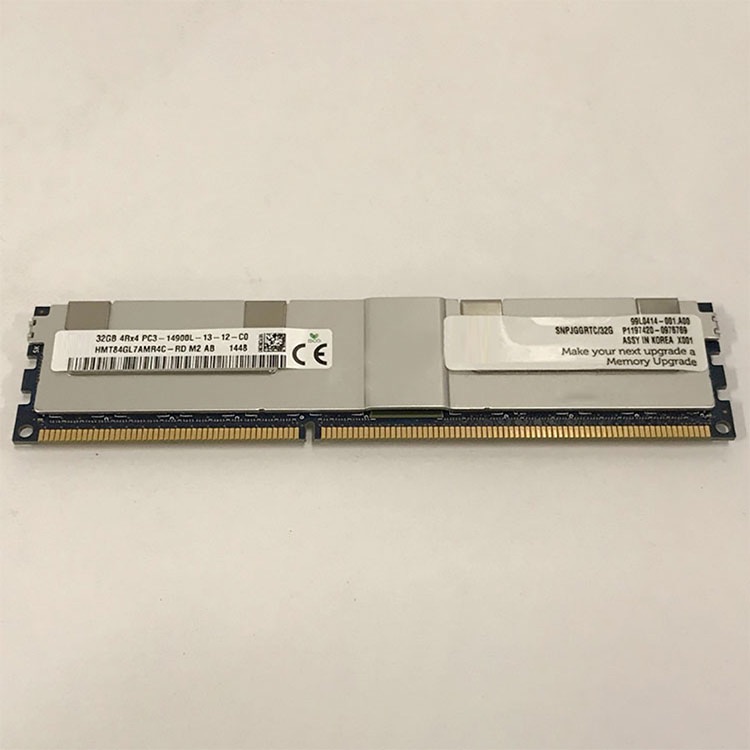
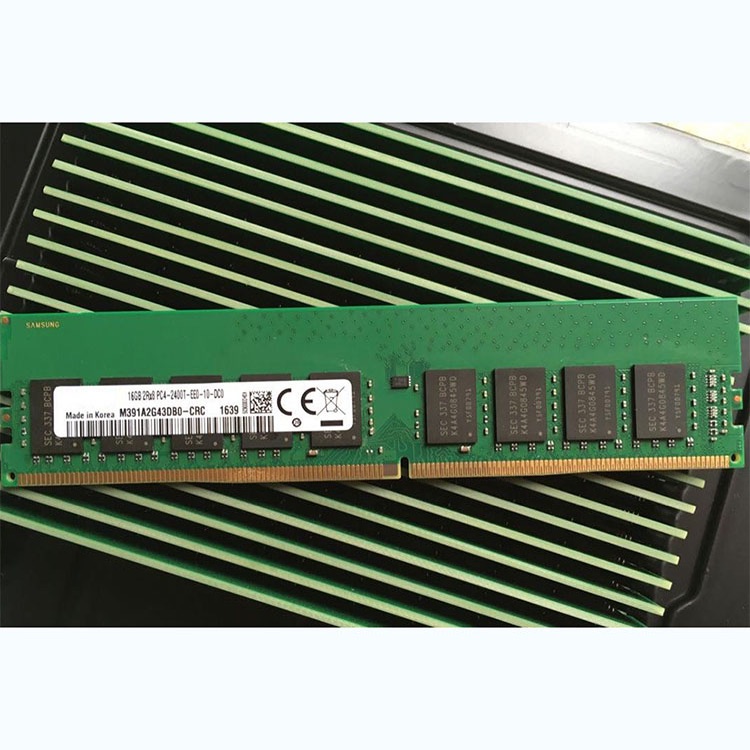
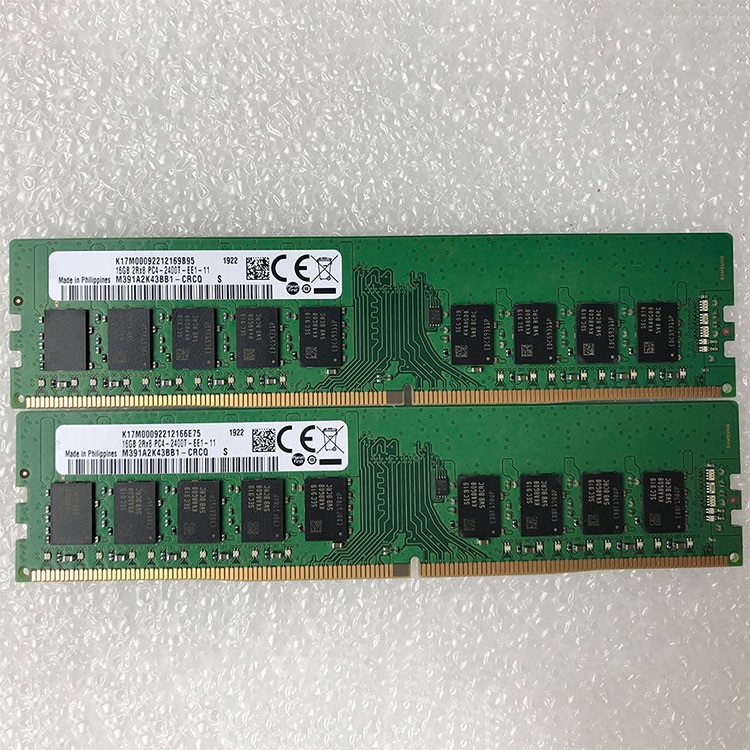
A buyer may see two quotes that both say “32GB DDR4 ECC RDIMM” or “64GB DDR5 server RAM,” but the procurement risk sits in the details: 1Rx8 versus 2Rx4, RDIMM versus LRDIMM, Samsung versus Micron versus SK hynix, OEM part number versus DRAM manufacturer part number, new versus tested used, and whether the module belongs to a fast-moving commodity bucket or a slow-moving approved-vendor-list requirement.
This is why I tell teams to read a server memory part-number guide before they argue about lead time. The suffix matters. The rank matters. The generation matters. The manufacturer code matters.
But nobody likes that answer.
If a seller has generic DDR4 server RAM in quantity, a buyer may see short lead times. If the buyer needs exact MPN matching for a mixed installed base, the quote becomes slower because the supplier has to confirm label, revision, source condition, testing status, and sometimes batch consistency. That is not bureaucracy. That is how you avoid a failed maintenance window.
ServerDimm’s DDR4 server memory category shows why DDR4 can still move quickly in common enterprise sizes such as 16GB, 32GB, and 64GB, while the DDR5 server memory category includes newer 64GB, 96GB, and 128GB-class modules that are more exposed to density, allocation, and platform-timing issues.
The Supply Chain Is Not One Chain. It Is Several Bottlenecks Pretending to Be One
DRAM module lead times do not begin when a buyer asks for a quote. They begin upstream, where wafer starts, die yields, substrate supply, register components, PMICs, SPD hubs, thermal requirements, testing capacity, and allocation politics all fight for priority.
DDR5 made this more obvious. Samsung’s DDR5 module architecture note explains that DDR5 moves PMICs onto the module and adds more active management elements around host-to-DIMM communication. In plain terms, DDR5 modules are not just “faster DDR4.” They carry more module-level complexity, and every added dependency can become a lead-time drag when supply tightens. See Samsung’s explanation of DDR5 DIMM PMIC and SPD/TS architecture.
This is where the industry gets dishonest. Sales teams say “available.” Procurement hears “ready.” Engineering assumes “validated.” Logistics discovers the truth.
Not the same.
A module can be technically available but not available in the correct lot, brand, condition, rank, or documentation package. A supplier may have 500 pieces of a “similar” module and zero pieces of the exact module needed for a controlled enterprise refresh. That difference is where memory module sourcing delays are born.
Lead Time Drivers Buyers Usually Miss
Lead Time Driver
Why It Changes Delivery Time
Example Failure Mode
My Blunt Read
Exact manufacturer part number
Matching Samsung, Micron, SK hynix, or Kingston codes may require controlled sourcing
“Equivalent” module arrives but does not match installed fleet
Similar is not equal
DDR4 vs DDR5 generation
DDR5 depends on newer platform demand and more module-level components
DDR5 order waits while DDR4 ships immediately
Newer can mean slower
Rank and density
2Rx4, 4Rx4, 3DS, 96GB, and 128GB-class modules may have tighter supply
Capacity matches, organization does not
Read the label
RDIMM vs LRDIMM
Platform rules may block substitution
Server refuses mixed module classes
No, you cannot guess
New vs tested used
Tested used stock can be faster for legacy fleets; new stock can be slower for exact models
Buyer insists on new for an old platform and waits
Condition is strategy
Testing and validation
Screening, labeling, and compatibility checks add time but reduce deployment risk
Fast shipment creates slow RMA
Fast is not always cheap
Export documentation
Commercial invoice, HS code, destination rules, and shipping lane issues can delay release
Goods sit after pickup
Paperwork is inventory too
The AI Memory Squeeze Is Rewriting Ordinary RAM Availability
The uncomfortable part is that ordinary RAM availability is now linked to extraordinary AI demand.
World Semiconductor Trade Statistics projected the global semiconductor market to grow 22% in 2025 to USD 772 billion, with Memory expected to grow 28%, then forecast 2026 market growth of more than 25% to USD 975 billion, with Memory and Logic both projected above 30% year over year. That is not a quiet market. That is a market where allocation decisions move downstream into every quote. See the WSTS Autumn 2025 semiconductor forecast.
So when a buyer asks, “Why do similar memory modules have different lead times?” my answer is simple: because suppliers are no longer merely filling orders. They are triaging demand.
AI buyers want HBM. Data centers want DDR5. Legacy fleets still need DDR4. Smartphone makers need LPDDR. PC builders still consume commodity DRAM. And manufacturers do not magically add clean capacity overnight. Reuters reported that new memory capacity can take at least two years to build, while SK hynix told analysts the memory shortfall could last through late 2027.
That pressure hits “boring” modules too. A 32GB DDR4 RDIMM may not look like an AI component, but if the upstream supplier shifted wafer capacity toward higher-margin products, DDR4 lead times can stretch. A DDR5 96GB RDIMM may be technically modern, but it may sit behind hyperscale allocation. A custom memory module manufacturing lead time can become ugly because “custom” really means “not already sitting in the exact verified form you need.”
The OEM Rulebook Still Wins, Even When the Market Is Tight
A shortage does not cancel compatibility.
Dell’s PowerEdge memory guidance tells buyers to use the server’s Service Tag, documentation, and system memory section to identify supported memory configuration details. Dell also defines server DIMM types such as UDIMM, RDIMM, and LRDIMM, which matters because these are not casual substitutes. See Dell’s PowerEdge supported memory configuration guide.
This is where I get opinionated: if a supplier cannot ask for your server model, current DIMM layout, target capacity, preferred brand, and deployment schedule, that supplier is not selling enterprise memory. They are selling hope.
And hope has terrible RMA terms.
A stronger sourcing path starts with a server memory sourcing checklist, then moves into a server memory quality testing and warranty workflow before price gets treated as the winning argument. ServerDimm’s own site frames this correctly: generation, module type, part number, capacity, platform fit, and testing status should be reviewed before the order moves forward.
The fastest quote is not always the safest quote. Sometimes the supplier who asks more questions is the one protecting your rollout.
How to Reduce Memory Module Lead Times Without Buying Garbage
You reduce memory module lead times by removing ambiguity before the supplier starts sourcing.
That sounds boring because it is. But boring wins.
Send the exact server model. Send the CPU generation. Send current module photos. Send the existing part number. Send target total capacity. State whether you accept Samsung/Micron/SK hynix equivalents. State whether tested used memory is acceptable. State whether the shipment must match a single lot. State destination, incoterms, and deadline.
Do this before you demand “best lead time.”
I would also separate projects into three buckets:
Fast-Moving Standard Orders
These are common DDR4 or DDR5 server memory orders where the buyer accepts equivalent branded modules, standard testing, and normal documentation. Lead times are usually shorter because the supplier has more substitute paths.
Controlled Compatibility Orders
These require exact part numbers, approved brands, matched specs, or documented testing. The lead time is longer because the supplier is not just shipping memory. They are removing risk.
Custom or Allocation-Sensitive Orders
These include high-density DDR5, unusual rank structures, large quantity rollouts, region-specific documentation, or tight delivery windows. This is where buyers need to stop pretending the supplier can bend physics.
If your deployment is in bucket two or three, use the bulk server RAM supplier page as the intake path and send enough detail for a real answer. A vague RFQ gets a vague lead time. A clean RFQ gets a sourcing plan.
FAQs
Why do similar memory modules have different lead times?
Similar memory modules have different lead times because capacity alone does not define the product; generation, rank, density, RDIMM or LRDIMM type, manufacturer part number, testing status, allocation pressure, and platform-compatibility requirements all decide whether a supplier can ship from stock or must source, verify, and prepare the module first. In practice, “similar” often means “not identical.”
That is why a 64GB DDR4 module may ship quickly while a 64GB DDR5 RDIMM with a specific brand, rank, and batch requirement takes longer.
What affects DRAM module lead times the most?
DRAM module lead times are most affected by upstream memory-chip supply, manufacturer allocation, exact part-number demand, DDR4 versus DDR5 generation, module density, validation requirements, and whether the buyer accepts equivalent branded inventory or requires a specific OEM-approved module for an installed server platform. The tighter the specification, the fewer sourcing paths remain.
In 2025 and 2026, AI-driven demand added another layer because HBM and DDR5 capacity pressure spilled into broader RAM module availability.
Are DDR5 server memory lead times longer than DDR4 lead times?
DDR5 server memory lead times can be longer than DDR4 lead times when the order involves high-density RDIMMs, newer platform qualification, allocation-sensitive brands, or exact part numbers, although common DDR5 modules may still ship quickly when channel stock exists and the buyer accepts equivalent validated inventory. The generation alone does not decide timing.
The real issue is whether the module is common, verified, and available in the required quantity.
How can buyers reduce memory module sourcing delays?
Buyers can reduce memory module sourcing delays by sending a complete RFQ with server model, CPU family, current DIMM layout, exact part number, target capacity, acceptable brands, required condition, quantity, destination, warranty needs, and deadline before asking for price or lead time. Better data gives the supplier more accurate sourcing options.
I would also approve alternates in advance. Nothing slows a memory project like discovering too late that procurement refuses the only technically valid substitute.
Is tested used server memory faster to source than new memory?
Tested used server memory can be faster to source than new memory when the project supports legacy DDR4 platforms, spare-pool planning, or exact replacement needs, because pulled enterprise inventory may exist in the market while new production has moved toward newer, higher-margin memory products. The tradeoff is validation discipline.
Used does not mean risky by default. Untested, unlabeled, poorly matched memory is risky.
Final Thoughts: Treat Lead Time as a Technical Signal, Not a Sales Promise
Here is my final advice: stop asking, “How fast can you ship similar memory modules?” and start asking, “What exact module can you verify, test, document, and deliver for this platform by this date?”
That one sentence changes the entire buying conversation.
If you are sourcing DDR4, DDR5, ECC RDIMM, LRDIMM, or high-density server memory for a real deployment, send your server model, current memory layout, target capacity, acceptable brands, quantity, destination, and deadline through the ServerDimm contact page. Ask for lead time with the exact part number, testing status, warranty terms, and substitute policy included in the quote.
Because in server memory, the cheapest fast answer is often the most expensive slow problem.
ServerDimm supplies new and used branded server memory for distributors, OEM buyers, resellers, and data center teams. We support DDR4 and DDR5 sourcing with tested inventory, compatibility checks, and responsive quote service.