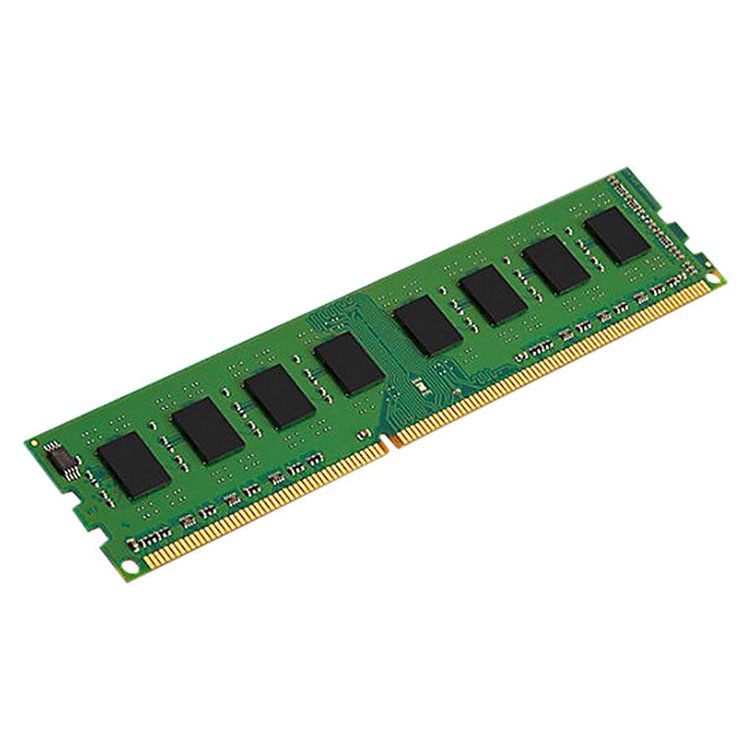
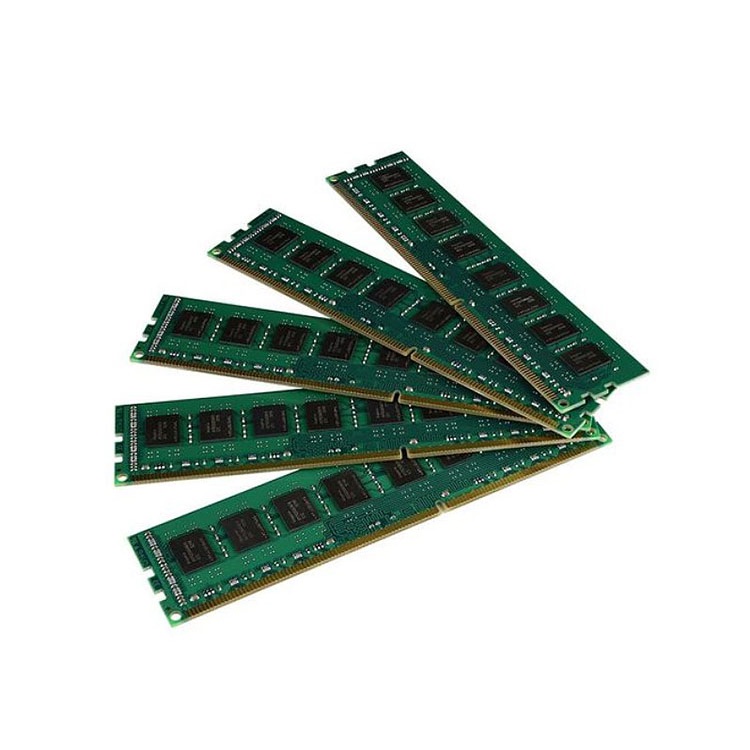
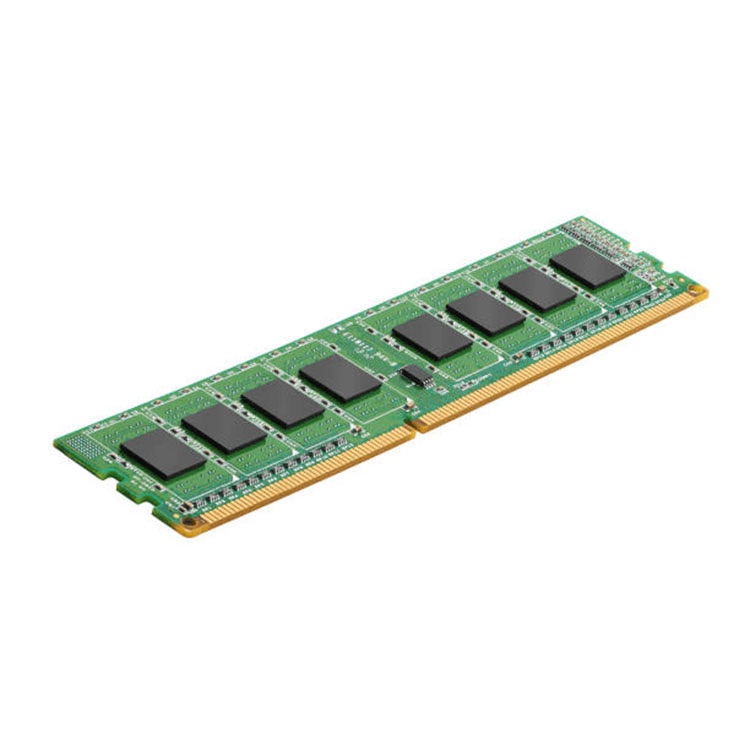
Why Lot Consistency Matters in Server Memory Projects
Lot consistency in server memory is not a warehouse detail. It is a risk-control discipline that protects compatibility, traceability, testing accuracy, warranty handling, and rollout predictability across DDR4, DDR5, ECC RDIMM, and LRDIMM projects.
The Quiet Failure Pattern Most Buyers Notice Too Late
Cheap RAM lies.
I do not mean the silicon prints false numbers on the label; I mean the quote can look clean, the capacity can match, the brand can be familiar, and the purchase order can still hide a mess of mixed manufacturing dates, rank structures, SPD revisions, firmware quirks, and undocumented substitutions that only show themselves when the installation crew is already on-site.
Who pays for that night?
In server memory projects, lot consistency is the boring control that keeps a rollout from turning into a forensic exercise. It matters because server memory is not bought one stick at a time in serious environments. It is bought as a deployment set: 32 modules, 96 modules, 400 modules, sometimes more, all expected to behave like one predictable population inside servers that are not forgiving.
I have a hard opinion here: procurement teams obsess over unit price because unit price is easy to defend in a spreadsheet. Lot consistency is harder. It forces buyers to ask uncomfortable questions about traceability, test grouping, RMA boundaries, and whether the supplier actually knows what is inside the cartons.
That is why I would rather pay a little more for a controlled lot than save a few dollars per DIMM and inherit a mystery batch.
Lot Consistency Is Not Cosmetic — It Is Operational Control
Lot consistency in server memory means the modules in a project share controlled sourcing characteristics such as part number, memory generation, module type, rank layout, DRAM supplier, production batch, SPD behavior, tested condition, and documentation path. In plain English, it means the batch can be traced, tested, staged, installed, and supported as one known group.
That sounds dry.
But it is where server RAM procurement either becomes disciplined or sloppy. If a buyer orders 64GB DDR4 ECC RDIMM modules for a virtualization cluster, “same capacity” is not enough. If another buyer orders DDR5 RDIMM for a newer platform, “same generation” is not enough either. The exact mix matters: 2Rx4 versus 4Rx4, RDIMM versus LRDIMM, 2933 MT/s versus 3200 MT/s, 4800 MT/s versus 5600 MT/s, and the platform’s tolerance for mixed populations.
ServerDimm’s own complete guide to buying server memory makes the same practical distinction buyers often blur: ECC is about error detection and correction, while RDIMM and LRDIMM are about buffering electrical load and supporting larger server configurations. That distinction is not trivia. It affects what can be installed together.
So here is the industry truth: the phrase “compatible server memory” is too vague until someone proves compatibility at the batch level.
What a Good Lot Should Prove
A serious lot record should answer these questions before shipment:
Are all modules the same exact part number or approved equivalent?
Are module type, rank, capacity, and speed aligned?
Are SPD fields reviewed for consistency?
Are the modules tested as a batch, not just as scattered individual sticks?
Are labels and cartons separated by lot, condition, and project?
Is the supplier able to support RMA by shipment group, not by memory chaos?
That last point is underrated. When a project fails, buyers do not need poetry. They need evidence.
The Data Says Memory Errors Are Not Rare Enough to Ignore
Memory errors are not folklore.
A large-scale Google production-cluster study analyzed DRAM errors over 2.5 years across multiple vendors, capacities, and technologies. The study reported more than 8% of DIMMs affected by errors per year and found DRAM error rates far higher than many older assumptions suggested. That does not mean every server memory problem is caused by bad lot discipline. It means pretending memory behavior is perfectly uniform is amateur thinking.
Now add supply pressure.
According to Reuters reporting on the 2025 memory chip supply crisis, DRAM supplier inventories dropped to two to four weeks in October 2025 from 13 to 17 weeks in late 2024, while prices in some memory segments more than doubled since February. When supply gets tight, the temptation to accept partial lots, substitutions, pulled inventory, and “close enough” configurations gets stronger.
And that is when mistakes become expensive.
We also have to talk about security and failure physics. Google’s 2025 note on Rowhammer research and DRAM ecosystem protection describes Rowhammer as a hardware vulnerability where repeated access to a DRAM row can cause bit flips in adjacent rows, potentially leading to corruption, privilege escalation, or denial of service. ECC and DDR5 mitigation features help, but Google also states that the resilience of those mitigations against sophisticated attackers remains an open question.
So no, ECC does not give procurement teams permission to buy random server memory.
Mixed Lots Create Problems That Look Like “Bad Luck”
I dislike the phrase “intermittent issue.”
Most of the time, it means nobody has found the pattern yet. In server memory, that pattern may be hidden across module labels, SPD data, rank structures, age, thermal behavior, or a quiet supplier substitution made during fulfillment.
A mixed lot may boot. That is the trap. The server may pass a short diagnostic run, take production load, and only fail later under memory pressure, temperature shifts, NUMA-heavy workloads, database caching, AI inference jobs, or virtualization density that fills more channels.
That is why ServerDimm’s article on how a mixed-lot memory issue was caught before rollout is worth reading before a buyer signs off on a large order. The lesson is not that every mixed lot explodes. The lesson is that mixed lots demand proof, not optimism.
For enterprise server memory, the cost of a mismatch is rarely just the module. It is the remote-hands charge, the maintenance window, the engineer hours, the customer apology, the return delay, and the second procurement cycle while the original cluster sits half-finished.
That is ugly math.
The Lot Consistency Risk Table I Use Before Approval
Risk Area
What Buyers Often Accept
What I Would Require Instead
Why It Matters
Part number control
“Same capacity and speed”
Exact part number or documented approved equivalent
Prevents silent module-type and rank mismatches
ECC RDIMM compatibility
“ECC server RAM”
ECC RDIMM/LRDIMM confirmation by platform, CPU generation, and vendor support list
Reduces no-boot and instability risk
DRAM lot traceability
Supplier says stock is “available”
Batch records, label photos, carton separation, and test grouping
Speeds receiving, staging, and RMA evidence
DDR4/DDR5 sourcing
Mixed pulls from different batches
Project-specific allocation locked before PO
Reduces substitution risk during tight supply
Testing
Random sample testing
Batch-level diagnostics plus identity verification
Finds pattern failures before rollout
Warranty handling
Generic warranty promise
Lot-aware RMA process tied to shipment records
Avoids disputes after partial deployment
Documentation
Invoice only
Packing list, part-number map, condition notes, and shipment photos
Gives IT and procurement the same evidence file
If a supplier cannot answer these points, I treat the quote as incomplete.
Not bad. Incomplete.
There is a difference.
ECC RDIMM Compatibility Starts Before the Carton Leaves the Supplier
ECC RDIMM compatibility is not a checkbox. It is a chain.
The server platform has to support the memory generation. The CPU memory controller has limits. The motherboard BIOS has preferences. The DIMM population rules matter. RDIMM and LRDIMM usually should not be mixed. DDR4 and DDR5 are physically and electrically different generations. Rank loading affects supported speed. And server vendors often publish memory support lists that procurement teams read too casually.
ServerDimm’s quality testing and warranty support for server memory page emphasizes specification review, module type, part number, platform fit, and pre-shipment screening. That is the right frame. In my view, the quality process should begin before quotation, not after the warehouse has already packed the boxes.
If the project is built around mainstream DDR4 server memory, the buyer should confirm speed bins such as DDR4-2666, DDR4-2933, or DDR4-3200, plus 1Rx4, 2Rx4, 2Rx8, or 4Rx4 organization where relevant. If the project is built around DDR5 server memory, the buyer should be even more disciplined because DDR5 introduces newer platform behavior, higher capacities such as 64GB, 96GB, 128GB, and 256GB modules, and wider variation across early-generation server deployments.
Here is the hard truth: the server does not care that the invoice says “compatible.” It only cares what the electrical and firmware reality is.
DRAM Lot Traceability Protects the Buyer After Something Goes Wrong
Traceability is not bureaucracy. It is leverage.
When a DIMM fails, the buyer needs to know whether the problem is isolated, lot-wide, platform-specific, installation-related, or caused by a bad substitution. Without DRAM lot traceability, the investigation starts with guessing. With traceability, the buyer can separate affected modules, compare error logs, check serial groups, review shipping records, and force a cleaner warranty conversation.
This matters even more for tested used server memory. I am not against used memory. I am against unverified memory. Those are not the same thing.
A well-run used memory program should identify condition, test method, part number, lot grouping, and warranty path. A weak program throws modules into anti-static bags and hopes the buyer is too busy to ask questions. That is not procurement. That is gambling with uptime.
ServerDimm’s guide on assessing risk in a server memory project purchase gets one thing right: the real risk is not price alone. It is ambiguity. I would add this: ambiguity compounds. One vague line item becomes three receiving questions, then five staging exceptions, then one emergency call at 02:17.
And nobody remembers the discount then.
The Procurement Mistake Nobody Wants to Admit
The buyer asked for “128 pieces of 64GB DDR4 RDIMM.”
The supplier replied with a price.
Everyone moved too fast.
That is the classic failure path. The buyer should have asked for exact part number, rank, speed, brand, condition, lot consistency, test method, replacement terms, lead time, and documentation. The supplier should have disclosed whether the order would be filled from one lot, multiple lots, or compatible mixed stock. Instead, both sides treated the line item like a commodity.
Server memory is not always a commodity in project quantities. It becomes a controlled component.
That distinction matters more during supply shortages, when allocation pressure pushes distributors to assemble orders from whatever inventory they can access. Sometimes that is fine. Sometimes it is reckless. The difference is disclosure and validation.
I do not trust “same spec” unless the evidence supports it.
Why ECC Helps, But Does Not Save a Bad Batch
ECC is protection.
It is not forgiveness.
ServerDimm’s article Can ECC Memory Prevent All Errors? makes the point plainly: ECC memory can detect and correct certain errors, but it cannot prevent every failure mode. A buyer who treats ECC as a magic shield will eventually learn the lesson the expensive way.
ECC may correct single-bit errors and detect some multi-bit errors depending on the implementation. But recurring correctable errors are still signals. Uncorrectable errors are alarms. A pattern across a shipment group is evidence. A pattern across one server model is a compatibility question. A pattern across one lot is a supplier conversation.
This is why lot consistency improves troubleshooting. If all modules came from a controlled lot and only one server reports errors, the investigation goes one direction. If the shipment was mixed across unknown batches and multiple servers behave differently, the investigation becomes mud.
And mud costs money.
My Server Memory Lot Consistency Checklist
Before approving a server memory project, I would ask the supplier to confirm:
Identity and Specification
Exact manufacturer part number
Capacity per module, such as 32GB, 64GB, 96GB, 128GB, or 256GB
DDR generation: DDR3, DDR4, or DDR5
Module type: ECC RDIMM, LRDIMM, or another supported type
Rank and organization, such as 1Rx4, 2Rx4, 2Rx8, or 4Rx4
Rated speed, such as 2666 MT/s, 2933 MT/s, 3200 MT/s, 4800 MT/s, or 5600 MT/s
Lot and Traceability
Whether the order is single-lot or mixed-lot
Label photos for representative modules
Serial or batch grouping where available
Condition: new, pulled, tested used, refurbished, or mixed
Packing separation by lot and condition
Testing and Deployment
Visual inspection
SPD review
Batch-level memory diagnostics
Platform compatibility check
Burn-in or extended test plan where required
Clear DOA and RMA process
Commercial Protection
Lead time
Replacement stock availability
Warranty period
Documentation requirements
Shipping destination and customs paperwork
Named contact for post-sale support
If that sounds excessive, good. Excessive questions before shipment prevent emergency questions after installation.
FAQs
What does lot consistency mean in server memory?
Lot consistency in server memory means a deployment batch shares controlled specifications, sourcing records, testing history, and traceable identity markers so every DIMM can be validated as part of the same approved project group. It reduces uncertainty across ECC RDIMM compatibility, DRAM lot traceability, installation planning, and warranty handling.
In practice, it covers part number, rank, speed, module type, condition, label records, SPD behavior, and test grouping. It does not always require one factory batch, but it does require honest disclosure and controlled validation.
Why does lot consistency matter for ECC RDIMM compatibility?
Lot consistency matters for ECC RDIMM compatibility because server platforms are sensitive to memory generation, rank structure, module type, speed, firmware behavior, and supported population rules across channels. A batch that looks identical by capacity can still behave differently if sourcing, SPD data, or physical organization varies.
ECC RDIMM compatibility is not proven by saying “server RAM.” Buyers should verify DDR4 or DDR5 generation, RDIMM versus LRDIMM type, rank layout, supported speed, and system vendor guidance before approving a large project.
Can mixed-lot server RAM work safely?
Mixed-lot server RAM can work safely when every subgroup is disclosed, tested, documented, and approved against the target server platform before deployment. The danger is not mixing by itself; the danger is hidden mixing, vague equivalency claims, weak diagnostics, and no traceability when errors appear later.
For small lab use, buyers may tolerate more variation. For enterprise server memory projects, I would require subgroup testing and separated packing at minimum.
How should procurement teams verify DRAM lot traceability?
Procurement teams should verify DRAM lot traceability by requiring exact part numbers, label photos, serial or batch grouping, module condition, test records, packing separation, and a lot-aware RMA path before issuing the purchase order. This turns server RAM procurement from a price quote into an evidence-backed sourcing decision.
The goal is simple: if something fails, you should know what failed, where it came from, what else shipped with it, and how fast it can be replaced.
Is DDR5 server memory less sensitive to lot consistency than DDR4?
DDR5 server memory is not less sensitive to lot consistency; it often needs stricter control because newer platforms, higher capacities, on-die ECC behavior, BIOS maturity, and speed negotiation can make undocumented variation harder to troubleshoot. DDR5 improves many design areas, but it does not remove procurement discipline.
Buyers should still confirm RDIMM type, speed, rank, capacity, platform support, and batch-level testing. DDR5 is newer. Newer does not mean immune.
What should be included in a server memory project plan?
A server memory project plan should include target server models, CPU generation, memory population rules, capacity goals, exact DIMM specifications, lot requirements, testing steps, documentation needs, warranty terms, shipping schedule, and fallback stock. The plan should make compatibility, traceability, and replacement behavior clear before the maintenance window.
A weak plan says “buy RAM.” A strong plan says exactly what memory, for which platform, from which lot, tested how, packed how, and replaced how.
Your Next Steps Before the Maintenance Window
Do not approve a server memory project from a one-line quote.
Ask for the lot story. Ask for the part-number evidence. Ask whether the order is single-lot, mixed-lot, tested used, new, pulled, or substituted. Ask how the modules were checked. Ask what happens if correctable ECC errors start appearing across a shipment group after deployment.
Then put the answer in writing.
If you are planning a DDR4, DDR5, ECC RDIMM, or LRDIMM rollout and you need controlled sourcing instead of mystery stock, contact ServerDimm with your server model list, target capacity, preferred brands, required quantity, destination market, and timing. The earlier the lot is controlled, the less expensive the rollout becomes.
ServerDimm supplies new and used branded server memory for distributors, OEM buyers, resellers, and data center teams. We support DDR4 and DDR5 sourcing with tested inventory, compatibility checks, and responsive quote service.