How to Evaluate a Supplier’s Memory Testing Process
A supplier’s memory testing process is not a sales line. It is a chain of evidence: part-number control, electrical screening, compatibility validation, burn-in logic, lot traceability, RMA discipline, and proof that the vendor knows what fails in real data center hardware.
The Dirty Secret: Most Memory Testing Claims Are Too Pretty
Start with distrust.
I have watched buyers approve 256-piece and 1,000-piece server memory orders based on three weak phrases: “tested,” “compatible,” and “original.” Those words sound reassuring, but unless the supplier can show exactly how the memory testing process works across receiving, part-number inspection, electrical screening, platform validation, aging behavior, and RMA feedback, those words are basically perfume sprayed over risk.
What did they actually test?
A serious supplier memory testing process should answer six questions without flinching: What was tested, on what platform, for how long, under what conditions, against which pass/fail thresholds, and with what traceability back to the shipped lot? If the answer is vague, I assume the supplier is not running a quality process. I assume they are running inventory theater.
This matters more in 2026 than it did a few years ago. Reuters reported on January 5, 2026 that memory prices in some segments had more than doubled since February 2025, while AI infrastructure demand pulled capacity toward high-bandwidth memory and squeezed supply elsewhere. Read the market context from Reuters on the memory-chip supply crunch. When pricing gets wild, bad suppliers get creative. Old stock gets renamed. Pulls become “new open box.” Mixed lots get pushed as “same spec.”
And buyers pretend not to see it.
For server memory buyers, I would start with ServerDimm’s own quality testing and warranty support for server memory because that is where the conversation should begin: compatibility review, DDR4 and DDR5 screening, shipment preparation, and post-sale support. Then I would cross-check the supplier’s claims against the specific module family, whether ECC RDIMM, LRDIMM, DDR4-2666, DDR4-3200, DDR5-4800, DDR5-5600, 2Rx4, 1Rx8, 4Rx4, 64GB, 96GB, or 128GB.
No shortcuts here.
What a Real Memory Testing Process Should Include
A real memory testing process is not one pass through a generic tester. It is a layered inspection system that catches cosmetic fraud, part-number mismatch, electrical instability, platform incompatibility, thermal weakness, SPD inconsistency, and lot-level drift before the buyer discovers the problem during deployment.
I want paperwork.
I want photos.
I want boring evidence.
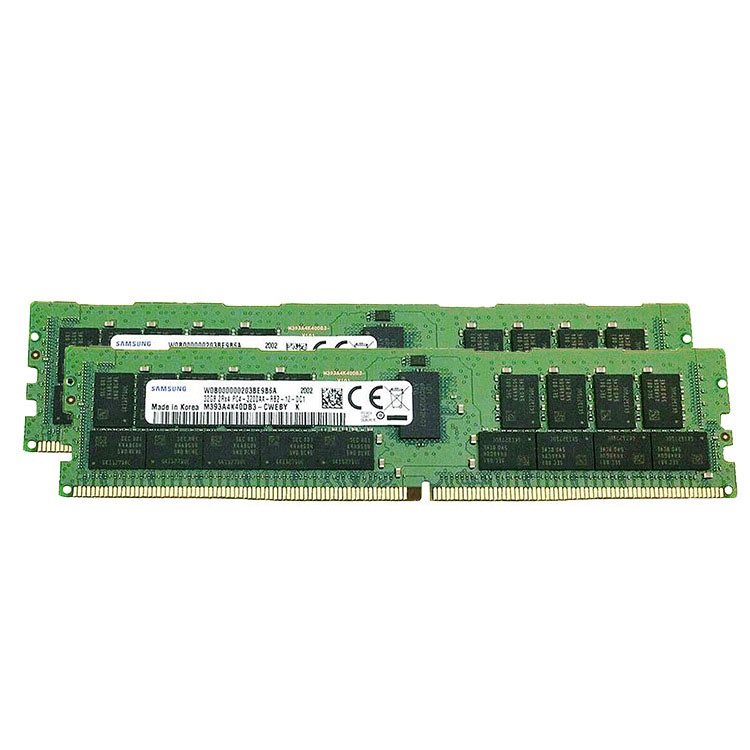
The first layer is visual inspection. Labels, laser marks, date codes, vendor logos, PCB condition, contact wear, scratches, epoxy marks, oxidation, barcode consistency, and manufacturer part number alignment all matter. If the supplier cannot explain the difference between a commercial description and an exact manufacturer part number, stop the conversation and read this guide on how to read a server memory part number. Capacity alone is not identity. “64GB DDR4 ECC” is not enough. “Samsung 64GB DDR4-3200 2Rx4 RDIMM M393A8G40AB2-CWE” is closer to a real procurement line.
The second layer is electrical screening. This is where the supplier should test the module’s ability to operate under expected voltage, speed, rank, and ECC behavior. For DRAM testing process work, I want to know whether they test only basic recognition or run extended stress patterns. Walking ones. Walking zeros. Address-line tests. Random data patterns. Block move. Modulo patterns. Row hammer sensitivity if the environment warrants it. ECC event monitoring. Reboot loops. Cold start behavior. Warm start behavior.
The third layer is platform validation. A DIMM that passes a standalone tester can still behave badly in a Dell PowerEdge R740, HPE ProLiant DL380 Gen10, Lenovo ThinkSystem SR650 V2, or Supermicro X12 board if the rank structure, BIOS rules, CPU memory controller, or population pattern is wrong. That is why I like internal buying paths that point buyers toward server memory compatibility checks before price negotiation gets loud.
The fourth layer is lot control. If 480 modules arrive from three different pulls, two OEM labels, and mixed date codes, I want that declared. Not hidden. Not softened. Declared.
The Evidence Nobody in Sales Wants to Discuss
Memory fails in the field.
That sounds obvious, but the industry still talks as if memory failures are rare little ghosts that only haunt unlucky buyers. The better evidence says otherwise. Google’s large-scale field study, DRAM Errors in the Wild, analyzed a large fleet over 2.5 years and reported 25,000 to 70,000 errors per billion device hours per Mbit, with more than 8% of DIMMs affected by errors per year. That is not a bedtime story. That is production reality.
So why do suppliers still sell testing like a checkbox?
The counterfeit problem is uglier. In a U.S. government hearing on counterfeit electronic parts in the defense supply chain, investigators described authentication work involving visual, chemical, x-ray, and microscopic testing; all three obsolete or rare parts tested in one category were suspected counterfeits. The record is public at GovInfo’s counterfeit electronic parts hearing. Different industry, same lesson: if the part’s identity is not verified, functional testing alone may only prove that a fake can survive long enough to ship.
NIST says the quiet part clearly. Its supply chain risk guidance warns that organizations face risks from products that may be counterfeit, contain malicious functionality, or suffer from poor manufacturing and development practices. That is the procurement-grade version of what many engineers already know in their stomach. See NIST SP 800-161 Rev. 1 on supply chain risk management.
Now bring that back to server memory. If a supplier says “all modules are tested” but cannot show traceability, platform fit, inspection method, and RMA behavior, the buyer is not evaluating quality. The buyer is evaluating confidence tricks.
My Supplier Scorecard for Memory Module Quality Assurance
Use a scorecard.
I do not trust supplier charm, and I do not trust perfect sample photos, because a supplier’s real memory module quality assurance shows up when you ask for exact MPNs, test coverage, compatibility evidence, lot separation, warranty handling, and what happens when 3% of a batch starts throwing correctable ECC errors after two weeks in production.
Here is the blunt version I would use before approving a bulk order.
Tested or checked against target server model and population rules
“Should work”
Server BIOS and CPU memory controllers can reject technically similar modules
Burn-in or aging logic
Time-under-load method, temperature awareness, repeated cycles
No stated duration
Weak modules often fail after heat, time, or repeated power cycles
Lot control
Lot grouping, date-code awareness, condition separation
Mixed inventory with no disclosure
Bulk buyers need repeatability, not surprise
RMA feedback loop
Defect categories tracked and fed back into sourcing
Replacement only, no root-cause review
A supplier that does not learn from failures will repeat them
Do not let the table become paperwork art.
Ask for a sample report. Ask for the tester model or at least the method. Ask whether the supplier separates new branded memory from tested used server memory. Ask whether DDR4 and DDR5 go through the same workflow or different workflows. Ask whether NAND flash memory testing is handled separately from DRAM testing, because NAND has program/erase behavior, bad-block handling, retention concerns, and controller interactions that do not map neatly onto DRAM-style validation.
Different silicon. Different traps.
For procurement teams working with both current and legacy platforms, ServerDimm’s complete guide to buying server memory is useful because it separates ECC, RDIMM, and LRDIMM instead of mashing them together like retail RAM listings often do. I would also compare supplier maturity against the stricter framework in how to evaluate a long-term server memory supply partner, because testing is not just a lab activity. It is a commercial behavior.
DRAM, NAND, ECC RDIMM: Stop Using One Test Story for Every Memory Type
DRAM is not NAND.
That sentence should not need to be written, but I have seen quote sheets blur server RAM, SSD parts, flash components, and memory modules under one lazy “memory tested” line. That is amateur hour. Semiconductor memory testing must match the failure modes of the device type, not the supplier’s favorite marketing paragraph.
For DRAM testing process evaluation, focus on address integrity, data retention under operating conditions, row behavior, ECC event patterns, SPD correctness, speed-bin behavior, and compatibility with server population rules. For ECC RDIMM and LRDIMM validation, the supplier must understand register chips, load reduction, rank topology, and platform rules. A 2Rx4 RDIMM and a 4Rx4 LRDIMM may both look normal to a non-technical buyer. They are not interchangeable purchasing objects.
For NAND flash memory testing, the concerns shift. Bad-block management, program/erase cycles, read disturb, retention behavior, controller firmware, and endurance categories matter more. If a supplier uses the same testing language for DDR5 RDIMM and NAND flash without explaining the difference, I mark them down immediately.
Wouldn’t you?
This is where specific inventory context helps. If you are sourcing current-generation capacity, browse the site’s DDR5 server memory supply and pay attention to the exact visible fields: 4800, 5600, 2Rx4, 1Rx8, 64GB, 96GB, 128GB, Samsung, Micron, SK Hynix. Those are not decoration. They are procurement controls.
The Questions I Ask Before I Trust a Supplier
I ask ugly questions early.
A good supplier does not get offended by them, because good suppliers know that professional buyers are trying to prevent downtime, not win a personality contest. A bad supplier rushes to price, changes the subject, or says “friend, no problem” five times.
Here are the questions I would put in writing before approving a supplier memory testing process:
Can you provide the exact manufacturer part number before shipment?
Do you separate new, pulled, refurbished, and tested used inventory?
What test patterns do you run for DRAM modules?
Do you test ECC event behavior or only basic pass/fail status?
Do you validate against the target server model or only a generic test platform?
How long is the stress test or burn-in period?
Do you group shipments by lot, date code, and condition?
What happens if correctable ECC errors appear after deployment?
Is RMA replacement exact-MPN, equivalent-MPN, or “available stock”?
Can you support repeat orders over 90 days, 180 days, and 12 months?
Tiny question. Big answer.
If a supplier cannot explain its memory validation testing process in that level of detail, the buyer should not approve a large deployment. Maybe buy a pilot lot. Maybe buy spares. But do not pretend an unproven process becomes professional because the quote has a logo.
The Pilot Test: Where Supplier Claims Go to Die
Run a pilot.
I like pilot lots because they turn marketing into evidence. Take 8, 16, or 32 modules from the proposed batch. Install them in the actual platform. Match the intended memory population. Use the intended BIOS branch. Run workload-relevant stress. Track ECC correctable errors, uncorrectable errors, boot behavior, training time, speed negotiation, thermal behavior, and whether the modules behave consistently across cold and warm starts.
Then be merciless.
If the supplier claims DDR5-5600 but the server trains down due to population or CPU rules, that is not always the supplier’s fault. But the supplier should have warned you. If the supplier ships mixed rank structures without disclosure, that is absolutely a supplier problem. If the supplier cannot replace a failed unit with the same part number, that is a continuity problem. If the supplier argues that “server accepted it once” means validation is complete, that is a professional disqualifier.
This is why internal procurement content should not end at product pages. A buyer should move from compatibility checks to quality workflow to quote request with full technical context. For a live sourcing conversation, use the site’s bulk server RAM quote path only after you have the server model, current installed MPNs, target capacity, quantity, preferred brand, and whether the order requires new branded memory or tested used inventory.
Price comes later.
FAQs
What is a supplier memory testing process?
A supplier memory testing process is the documented workflow used to inspect, authenticate, electrically test, stress, validate, and trace memory modules before shipment, including checks for part-number accuracy, ECC behavior, DRAM stability, platform compatibility, lot consistency, and warranty accountability across both new and tested used inventory. It should produce evidence, not just a pass label.
In practical terms, that means the supplier can tell you how a DDR4 RDIMM, DDR5 RDIMM, LRDIMM, or NAND flash component was checked, what failed, what passed, and how the shipped lot connects back to the test result.
How do you evaluate memory testing process quality?
You evaluate memory testing process quality by checking whether the supplier can prove exact part identity, testing coverage, platform validation, stress duration, ECC monitoring, lot traceability, and post-sale failure handling before you approve the purchase order or deploy the modules into production servers. The process should be repeatable across batches.
I would not score a supplier highly unless they can provide exact manufacturer part numbers, test workflow details, compatibility review, and a clear RMA policy. Cheap memory with vague testing is not cheap after a failed maintenance window.
What should be included in DRAM testing process documentation?
DRAM testing process documentation should include module identity, capacity, speed, ECC type, RDIMM or LRDIMM format, rank structure, test platform, test patterns, stress duration, pass/fail threshold, ECC event review, lot information, visual inspection notes, and shipment-level traceability tied to the modules actually delivered. Generic “tested OK” language is weak evidence.
For enterprise server memory, I also want the target server model and intended population pattern included. A module can pass a tester and still be the wrong choice for a specific platform.
Is NAND flash memory testing the same as DRAM testing?
NAND flash memory testing is not the same as DRAM testing because NAND validation must consider program/erase cycles, bad-block behavior, retention, read disturb, endurance category, and controller interaction, while DRAM validation focuses more on volatile data integrity, addressing, ECC behavior, speed, rank, and platform compatibility. One test story cannot cover both.
If a supplier sells both DRAM and NAND but cannot explain this difference, I would treat the supplier’s technical maturity as unproven. The memory type should drive the test method.
Why does ECC memory still need supplier testing?
ECC memory still needs supplier testing because error correction can detect and correct certain memory faults, but it does not prove the module is authentic, correctly matched, stable under load, compatible with the server platform, or safe for a bulk deployment with mixed lots. ECC is protection, not procurement due diligence.
In other words, ECC reduces operational risk after deployment. It does not replace supplier inspection, part-number control, compatibility validation, or stress testing before shipment.
How many modules should I pilot before a bulk server memory order?
A pilot test should usually include enough modules to mirror the real deployment pattern, such as 8, 16, or 32 DIMMs across the target server models, memory channels, CPU sockets, and BIOS versions before a larger 128-piece, 512-piece, or 1,000-piece purchase is approved. The goal is exposure, not symbolism.
For mixed fleets, test more than one platform. Dell, HPE, Lenovo, and Supermicro systems may enforce different rules around speed, rank, and supported DIMM populations.
Final Thoughts: Make the Supplier Prove It Before You Pay
Here is my hard rule: never approve a serious server memory order until the supplier can explain the memory testing process better than the salesperson can explain the discount.
Ask for exact MPNs. Demand compatibility review. Require testing evidence. Separate DRAM testing process from NAND flash memory testing. Treat ECC RDIMM and LRDIMM as technical procurement categories, not interchangeable capacity blocks. Run a pilot before the bulk order. And when the supplier gives you vague answers, believe the vagueness.
Your next step is simple: prepare your server model list, installed memory part numbers, target capacity, quantity, preferred brands, and deployment deadline, then request a technical quote through ServerDimm’s bulk server memory inquiry page and ask for the testing workflow before you ask for the final price.
ServerDimm supplies new and used branded server memory for distributors, OEM buyers, resellers, and data center teams. We support DDR4 and DDR5 sourcing with tested inventory, compatibility checks, and responsive quote service.