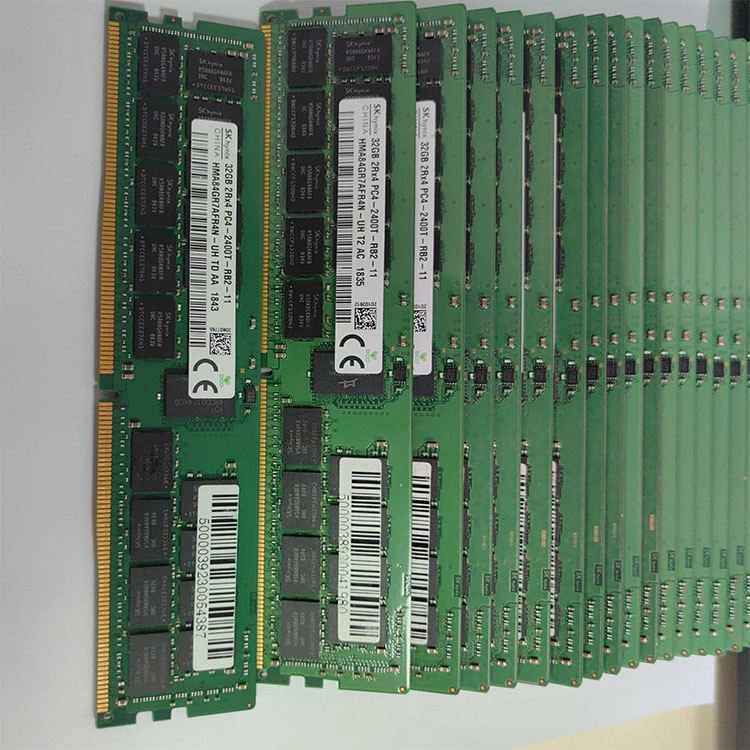
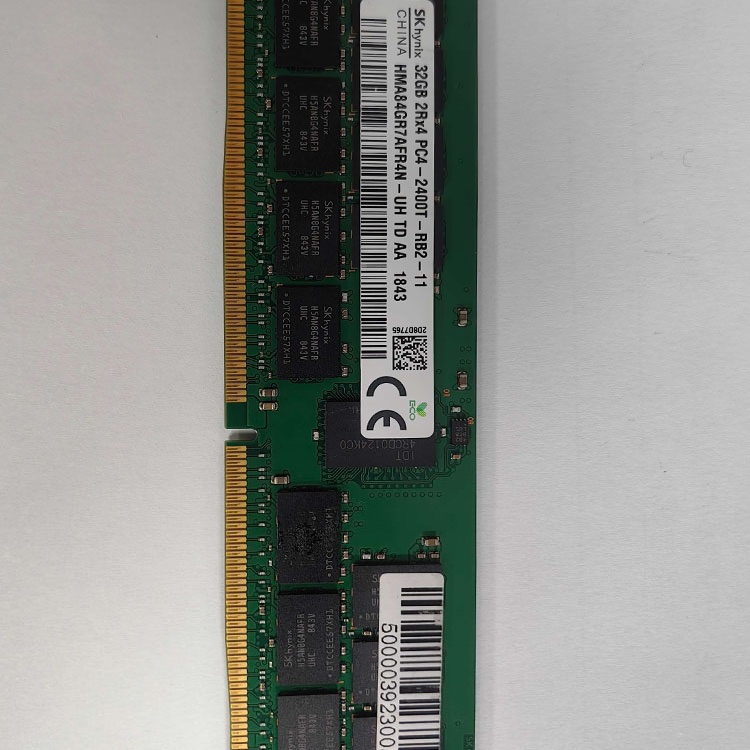
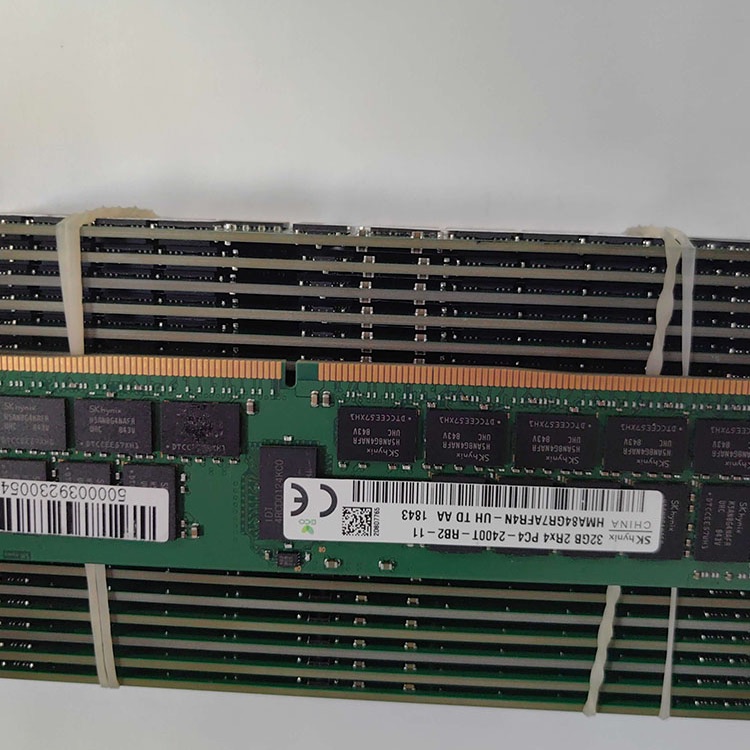
How to Avoid Relabeled, Mixed-Lot, or Unclear-Origin Memory
Counterfeit Memory is not just fake branding. In the server RAM trade, the real danger often hides in sanded IC markings, mixed production lots, vague “OEM compatible” claims, missing SPD screenshots, and suppliers who cannot prove where DDR4 or DDR5 RDIMM stock came from.
A polished Samsung, Micron, SK Hynix, or Kingston label can make a buyer feel safe, but when the same module arrives with mismatched SPD data, inconsistent date codes, recycled chips, or suspicious rank behavior under load, that label stops being a brand signal and becomes evidence. Who owns the failure then?
I have a hard opinion here: most Counterfeit Memory problems are not caused by one cartoon villain selling fake chips in a back room. The bigger problem is boring. It is procurement laziness, weak supplier questions, vague quote sheets, and buyers who think “32GB DDR4 ECC RDIMM” is a complete identity.
It is not.
A safe memory buy needs manufacturer part number, capacity, rank, speed, generation, ECC behavior, PCB layout, chip markings, lot consistency, condition, test record, warranty path, and substitution rules. That is why I would start any serious procurement team with a basic internal education pass through The Complete Guide to Buying Server Memory before approving volume DDR4 or DDR5 stock.
The ugly part? Relabeled memory chips often look cleaner than honest used modules. A seller who wants to hide age, origin, grade, or mixed sourcing has every incentive to make the outside look boring.
Counterfeit Memory Is a Supply-Chain Problem, Not a Cosmetic Problem
Counterfeit Memory is server RAM or DRAM sold with false identity, false condition, false brand marking, false origin, altered date code, suspicious lot identity, or undocumented substitution. That includes counterfeit memory chips, relabeled memory chips, mixed-lot memory modules, and unclear-origin DRAM.
The U.S. government has been dealing with this for years. The U.S. Senate Armed Services Committee reported 1,800 cases of suspect counterfeit electronic parts in defense supply chains, including parts tied to major aircraft and military systems. This was not a “cheap online marketplace” story. It was institutional procurement failure.
And the methods are painfully relevant to memory sourcing. In a 2019 Department of Justice case, the owner of PRB Logics was sentenced after selling counterfeit integrated circuits obtained from China; court documents described old, used, or discarded ICs that were repainted, remarked, and altered with false date codes, lot codes, or countries of origin. That is the same fraud pattern buyers should fear when inspecting unclear-origin DRAM. The DOJ described the process as “blacktopping,” and the case involved 169,148 seized counterfeit integrated circuits. Read the DOJ case summary.
So no, this is not paranoia.
It is paperwork meeting physics.
Where Relabeled Memory Chips Hide in Plain Sight
Relabeled memory chips usually enter the conversation through one of three doors: price pressure, obsolete stock pressure, or “compatible replacement” pressure.
Price pressure is obvious. A buyer wants 500 pieces of 32GB DDR4-3200 2Rx4 ECC RDIMM at a number that barely makes sense. The supplier says yes too fast. Nobody asks whether the lot is single-source, whether the DRAM chips match, whether the modules are new pull, tested used, factory-new, OEM-labeled, or manufacturer-original.
Obsolete stock pressure is nastier. When Dell PowerEdge, HPE ProLiant, Lenovo ThinkSystem, Supermicro, Intel Xeon Scalable, or AMD EPYC platforms need older DDR4 configurations, procurement teams often chase discontinued or tight-supply part numbers. That is when “same spec” becomes dangerous language.
And “compatible replacement”? That phrase needs a leash.
If you are buying for an installed DDR4 fleet, start with a controlled category like DDR4 server memory and demand exact quote identity, not just capacity and speed. If you are moving into current-density DDR5 projects, review DDR5 server memory with the same discipline: module type, 1Rx4, 2Rx4, 2Rx8, 3DS RDIMM, speed grade, capacity, voltage behavior, CPU support, and platform population rules.
The part number is not paperwork. It is the fingerprint.
ServerDimm’s own guide on how to read a server memory part number makes the right point: a DDR4 model number alone is not enough for safe reordering when rank notation, RDIMM or LRDIMM class, server model, CPU family, and approved alternates can all change the risk profile.
The Procurement Table I Would Use Before Trusting Any Memory Lot
Risk Pattern
What It Looks Like
Why It Matters
What I Would Demand Before Buying
Relabeled memory chips
Sanded, polished, reprinted, or unusually clean IC markings
May hide old, downgraded, rejected, or different-origin DRAM
High-resolution IC photos, manufacturer part number, date code consistency, and visual inspection evidence
Mixed-lot memory modules
Same capacity but different chip dates, PCB revisions, rank structures, or SPD profiles
Can cause training failures, downclocking, ECC errors, and inconsistent replacement behavior
Lot-level photos, SPD screenshots, sample validation, and written no-substitution policy
Unclear-origin DRAM
Seller cannot explain whether stock is factory-new, OEM pull, tested used, refurbished, or brokered
No traceability means weak warranty and higher fraud risk
Chain-of-custody statement, condition disclosure, invoice identity, and RMA terms
Capacity-only quotes
Quote says “64GB DDR4 ECC” with no manufacturer PN or rank
Buyer cannot compare real technical equivalence
Full manufacturer PN, speed, rank, generation, ECC, RDIMM/LRDIMM type, and brand
Fake “OEM compatible” claims
Supplier hides substitution behind vague compatibility language
May ship technically different modules after payment
Written approved alternatives list before PO approval
No test evidence
Seller says “tested” but cannot define the test
“Tested” may mean powered on once, not validated under platform load
Test method, platform reference, failure threshold, and warranty process
The Hard Difference Between Cheap Memory and Mystery Memory
Cheap memory is not the enemy.
Mystery memory is.
I will defend a clean used server memory purchase all day if the seller states the condition honestly, keeps the lot consistent, verifies the part number, discloses the brand and module type, runs pre-shipment testing, and gives a real RMA process. In fact, tested used DDR4 RDIMM can be perfectly rational for lifecycle maintenance, lab infrastructure, virtualization clusters, and repair stock.
But I would reject a cheap quote instantly if the supplier hides behind these phrases:
“Same performance.”
“Original quality.”
“Compatible with all servers.”
“Mixed brands, no problem.”
“Label may vary.”
That last one is where the bodies are buried.
If you need a cleaner way to judge quotes, use a scoring mindset like the one in How to Compare Server Memory Quotes from Different Suppliers: exact module identity, compatibility, condition, test evidence, warranty, landed cost, and replacement policy should come before unit price. ServerDimm’s quote guide says the cheap quote often hides missing part numbers, vague condition notes, weak RMA terms, and quiet substitutions. That matches what careful buyers should fear.
Here is the line I use: cheap RAM is acceptable when it is documented; mystery RAM is just downtime with a discount.
What the U.S. Defense Rules Teach Commercial Buyers
Commercial data center buyers should steal one idea from defense procurement: build a counterfeit avoidance system, not a counterfeit panic ritual.
The current DFARS clause on contractor counterfeit electronic part detection and avoidance defines suspect counterfeit evidence through visual inspection or testing, treats used parts represented as new as a false identity problem, and requires systems for inspection, testing, traceability, reporting, quarantine, supplier control, and screening of counterfeiting information. See DFARS 252.246-7007.
That sounds bureaucratic.
It is also practical.
A buyer sourcing 1,000 pieces of 64GB DDR4-3200 2Rx4 ECC RDIMM does not need military-grade paperwork, but they do need the same habits: do not return suspect parts blindly into circulation, do not accept unknown substitutions, do not trust a supplier who cannot explain origin, and do not let one person approve technical equivalence from a spreadsheet cell.
The Defense Systems Information Analysis Center has also summarized the scale of counterfeit component exposure, citing FBI estimates of $200 billion to $250 billion in annual U.S. product counterfeiting losses and survey data showing 46% of component manufacturers and 55% of IC manufacturers had encountered counterfeit versions of their products. Read the DSIAC overview.
Those numbers are old enough to be uncomfortable and large enough to remain useful.
And the direction has not improved. A 2023 counterfeit electronics supply-chain report noted that ERAI recorded a 35% increase in reported counterfeit parts from 2021 to 2022 despite flat global semiconductor sales in the same period. See the 2023 counterfeit electronics report.
How to Identify Relabeled Memory Chips Before the Invoice Becomes a Problem
Start with photographs. Not marketing photos. Actual lot photos.
Ask for front and back images of the module, close-ups of DRAM IC markings, label photos, anti-static packaging, carton labels, and any QR, barcode, or serial evidence. A supplier who cannot provide lot photos before payment is asking you to buy a rumor.
Then compare the visible markings against the quote.
For DDR4 and DDR5 server memory, I want the quote to show:
Manufacturer name: Samsung, Micron, SK Hynix, Kingston, or another stated brand
Manufacturer part number, not only OEM part number
Type: ECC RDIMM, LRDIMM, 3DS RDIMM, or another exact class
Rank and organization: 1Rx4, 1Rx8, 2Rx4, 2Rx8, 4Rx4, 2S2Rx4
Condition: factory-new, OEM new, pulled, tested used, refurbished, or open-box
Lot rule: single lot, mixed lot disclosed, or no lot control
Substitution policy: approved alternates only, no silent replacements
Then I want SPD evidence.
SPD data does not prove authenticity by itself, because EEPROM data can be manipulated, but mismatched SPD is a fast way to expose careless substitutions. If the module label says DDR4-3200 2Rx4 RDIMM and the SPD story looks like something else, stop.
Do not negotiate with contradictions.
Mixed-Lot Memory Modules: The Compatibility Trap Wearing a Discount Tag
Mixed lots are not always fraudulent. Let’s be fair.
A supplier may honestly sell tested used memory from multiple pulls, and for low-risk maintenance jobs, that may work when the buyer accepts the risk. But in production clusters, mixed-lot memory modules are where “it should work” turns into BIOS training drama, downclocking, unpredictable ECC logs, and angry maintenance windows.
Server memory does not care about the procurement team’s budget target.
It cares about CPU memory controller limits, channel balance, rank load, DIMM population, RDIMM versus LRDIMM rules, ECC behavior, and supported configurations. ServerDimm’s Can You Mix Server RAM? guide is blunt on this: mixing is only safe inside platform rules, and buyers should treat it as an exception requiring validation, not a default upgrade method.
Here is the practical problem. A batch of “32GB DDR4-3200 ECC RDIMM” can include modules that are all technically 32GB and all technically ECC RDIMM, yet still differ by DRAM chip maker, PCB revision, rank, thermal history, age, SPD profile, and OEM qualification. That may pass a receiving count. It may fail a rollout.
And once the nodes are loaded?
Now you are not troubleshooting RAM. You are troubleshooting your buying process.
My Verified Memory Sourcing Rules
I would not approve a high-volume memory purchase without these controls.
Rule 1: Force Exact Identity Before Price
Ask for the manufacturer part number and any OEM alternate before asking for the final unit price. If the seller only quotes capacity and generation, the quote is not mature enough to compare.
Rule 2: Separate New, OEM New, Pull, and Tested Used
Do not let “original” replace condition. Original used memory is still used. Factory-new stock, OEM-labeled stock, pulled stock, and refurbished stock have different risk profiles and different warranty logic.
Rule 3: Demand Lot Disclosure
Single-lot memory is easier to validate. Mixed-lot memory may still be acceptable, but only when the supplier says so before payment and the buyer approves the risk.
Rule 4: Test a Pilot Batch
For enterprise rollouts, I want a pilot batch installed into the target platform: Dell PowerEdge R740/R750/R760, HPE ProLiant DL360/DL380, Lenovo ThinkSystem SR650/SR665, Supermicro X12/X13, AMD EPYC 7003/9004, or the exact fleet in question.
Rule 5: Write the Substitution Rule Into the Purchase
If a supplier can silently replace Micron with SK Hynix, 2Rx4 with 2Rx8, DDR4-3200 with DDR4-2933, or RDIMM with LRDIMM, the purchase order is weak. The supplier may not be cheating. But you gave them room to create chaos.
Rule 6: Use Quality Review as a Buying Requirement
A real supplier should be comfortable discussing inspection, compatibility checks, labeling clarity, anti-static packing, documentation, warranty support, and RMA handling. ServerDimm’s Quality Testing and Warranty Support for Server Memory page outlines exactly the kind of pre-shipment review language buyers should push into their own procurement process: generation confirmation, ECC and module-type review, part-number and labeling checks, and screening for new or tested used inventory.
FAQs
What is Counterfeit Memory?
Counterfeit memory is server RAM or DRAM sold with false identity, condition, origin, lot, date code, brand marking, or performance claim, including used modules presented as new, relabeled chips, mixed-lot memory modules, and unclear-origin DRAM that cannot be traced back to an accountable source. In practical terms, the danger is not just a fake logo; it is an unverified module entering a system that depends on predictable ECC behavior, rank structure, speed support, and replacement consistency.
How do you identify relabeled memory chips?
Relabeled memory chips can be identified by comparing the printed part number, laser mark, SPD data, capacity, rank, speed, date code, PCB layout, and vendor paperwork against manufacturer references and known-good samples, then rejecting any batch where markings, EEPROM data, or physical construction disagree. The fastest warning signs are inconsistent surface finish, suspiciously uniform black coating, missing traceability, impossible date-code combinations, vague origin claims, and suppliers who refuse lot-level photos.
Are mixed-lot memory modules always bad?
Mixed-lot memory modules are dangerous because modules with the same capacity can still differ in DRAM manufacturer, rank structure, speed bin, production date, PCB revision, thermal history, and platform qualification, which can create unstable server behavior even when every module appears to be “32GB DDR4” or “64GB DDR5.” They are not always unusable, but they must be disclosed, tested, and approved against the target server population rules before bulk deployment.
How can buyers avoid counterfeit memory chips?
Buyers avoid counterfeit memory by forcing suppliers to document exact manufacturer part numbers, lot identity, condition, traceability, testing process, warranty terms, and substitution rules before payment, then validating a small pilot batch inside the target server platform before approving any high-volume rollout. The safest process is evidence-first buying: photos, SPD data, compatibility checks, inspection notes, anti-static packaging, and a written RMA path.
Does used server memory mean counterfeit memory?
Used server memory is not counterfeit when its condition, origin, brand, part number, and test status are represented honestly, but it becomes suspect when a seller hides prior use, erases markings, mixes unrelated lots, changes country-of-origin claims, or sells pulled modules as factory-new stock. Honest tested used memory can be useful for DDR4 maintenance, lab systems, and lifecycle support, but undisclosed used memory is a trust failure.
Final Thoughts: Make the Memory Prove Itself
Do not buy memory blind.
If a supplier wants your purchase order, make them prove the module identity, prove the condition, prove the lot, prove the testing process, and prove the replacement path. Counterfeit Memory survives when buyers accept pretty labels and thin paperwork. It dies when buyers ask boring, specific, uncomfortable questions.
Your next step is simple: pull one installed DIMM from the target server, copy the full label, record the server model and CPU SKU, define acceptable alternates, and send that evidence into a compatibility-led quote process. Then compare suppliers by documentation, testing, warranty, and substitution control before price.
For enterprise DDR4, DDR5, ECC RDIMM, LRDIMM, and tested used server memory sourcing, start with a controlled request through ServerDimm’s bulk server RAM supply and force every quote to answer the one question that matters:
ServerDimm supplies new and used branded server memory for distributors, OEM buyers, resellers, and data center teams. We support DDR4 and DDR5 sourcing with tested inventory, compatibility checks, and responsive quote service.