Why Higher-Capacity DDR5 Modules Are Becoming More Common
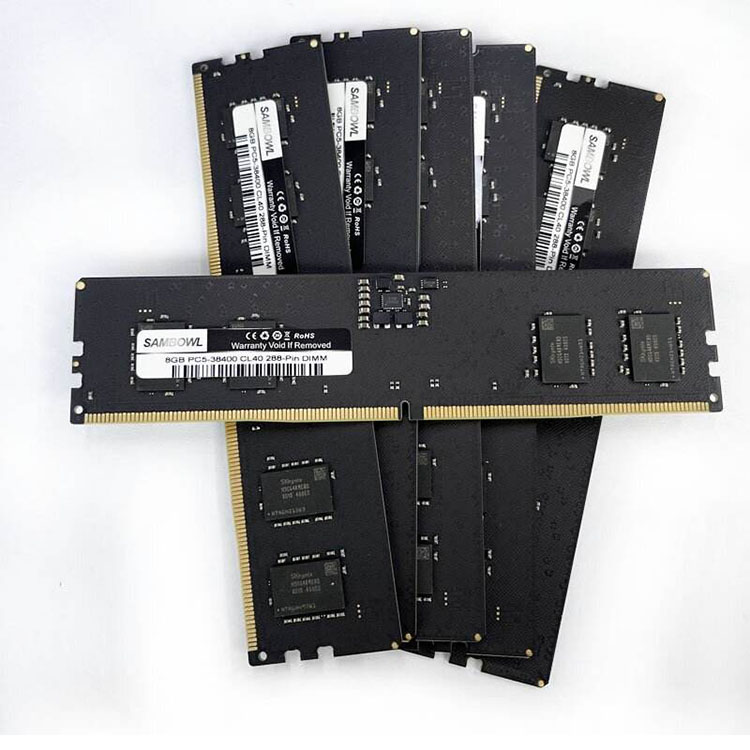
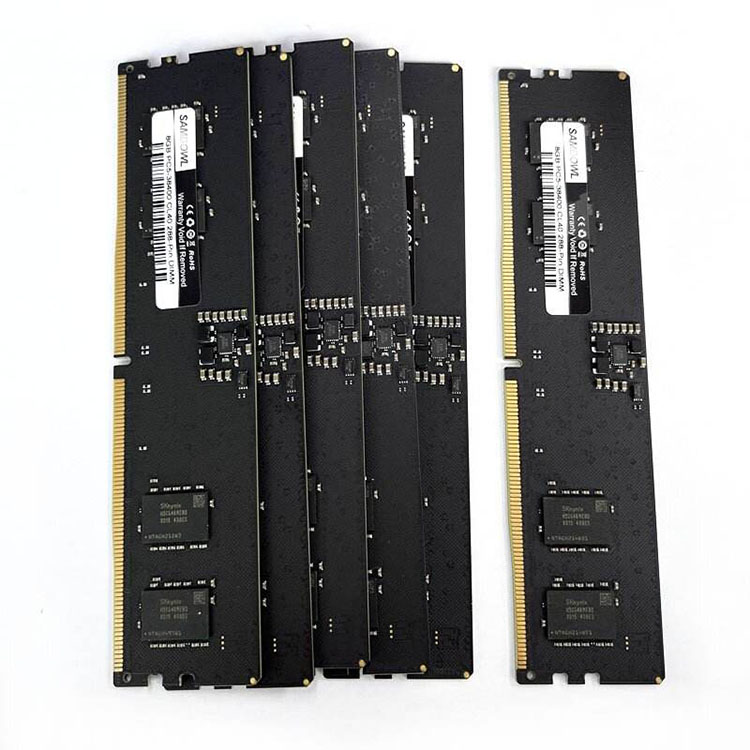
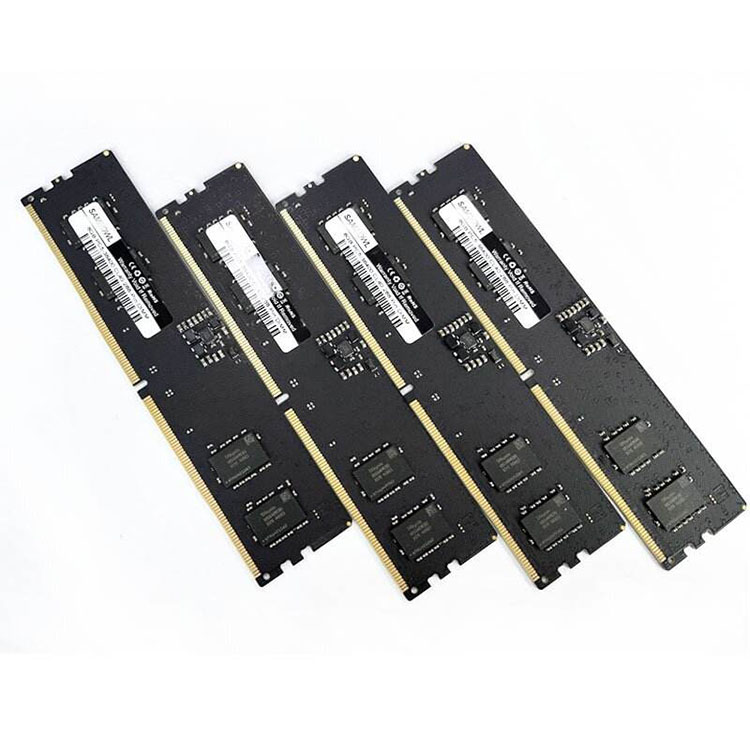
Higher-capacity DDR5 modules are showing up everywhere for one simple reason: the hardware stack finally rewards them. Denser dies, bigger memory ceilings, tighter rack economics, and AI-heavy workloads have turned 64GB, 96GB, and 128GB DDR5 DIMMs from premium oddities into rational defaults.
Memory got fatter, and I do not mean that in the lazy consumer-PC sense where every spec bump gets dressed up like progress; I mean the underlying economics of server design, virtualization density, AI inference, and per-socket memory planning now make small DDR5 DIMMs look like the false bargain they usually are. Why are people still acting surprised?
I have watched this industry repeat the same mistake for years. Buyers stare at unit price, ignore slot pressure, ignore platform ceilings, ignore what happens when 24 VMs turn into 140 VMs, and then act shocked when the “cheaper” DIMM forces a worse server bill six months later. That habit is dying now. Good.
Table of Contents
The boring silicon answer is the real answer
Three more words.
The chips changed shape, and that matters more than marketing slogans because DDR5 moved into denser 24Gb and 32Gb DRAM device classes, which is exactly why capacities like 96GB and 128GB stopped looking exotic and started looking manufacturable at scale. Why pretend this happened by magic?
According to Micron’s DDR5 DRAM overview, DDR5 supports 24Gb and 32Gb device densities, and Micron says 96GB module densities can raise maximum capacity in a high-performance server by 50% versus the prior setup logic. That is the unglamorous engineering reason high-capacity DDR5 RAM is becoming more common: the building blocks got bigger, so the modules did too.
And the jump is not theoretical. In May 2024, Micron said it began shipping 128GB DDR5 RDIMMs for AI data centers, claiming more than 45% better bit density, up to 22% better energy efficiency, and up to 16% lower latency than competing 3DS TSV products; Intel also said that module had completed compatibility qualification on 4th and 5th Gen Xeon processors. That is not a lab stunt. That is the supply chain moving.
64GB used to feel big. It does not anymore.
I’ll say the quiet part out loud: 64GB DDR5 module capacity is increasingly the “normal adult” choice for fresh server builds, not the deluxe option, because once platforms can address multi-terabyte pools, operators stop optimizing for the cheapest DIMM and start optimizing for the fewest compromises. Isn’t that what serious infrastructure teams should have been doing anyway?
AMD’s EPYC overview lists 12 DDR5 memory channels and up to 6TB on EPYC 9004 and 9005 families, while Reuters reported on April 16, 2026 that the big cloud players are expected to spend more than $600 billion on data centers this year. When platforms get larger and capex stays aggressive, higher DDR5 DIMM capacity stops being a niche and starts being the planning baseline.
Workloads stopped being polite
Short version? AI, analytics, and denser virtualization hosts are memory hogs.
I do not buy the old story that capacity demand is mainly about benchmark vanity, because the real push is operational: more VMs per host, bigger in-memory datasets, more inference services living close to the CPU, and less tolerance for wasting slots on low-density DIMMs that do nothing except increase population count and complicate future upgrades. Why keep building tomorrow’s bottleneck into today’s server?
Reuters reported in July 2024 that demand for DRAM used in data-center servers and devices running AI services was helping lift memory chip prices, and that TrendForce pegged Q2 DRAM price increases at roughly 13% to 18% quarter over quarter. That matters because pricing pressure is usually the smoke; real workload pull is the fire.
This is where the internal reading path on this site actually makes sense. If you want the migration argument, the DDR4 vs DDR5 server memory guide frames the choice around platform support, bandwidth, density, pricing pressure, and validation. If you want the capacity-planning angle, the virtualization host memory sizing guide makes the right point: what kills hosts is not assigned RAM on paper, but weak planning around working sets, failover headroom, and real platform behavior. That is exactly why bigger DDR5 memory modules are winning.
The live catalog is already telling you where demand sits
Look closer.
A catalog is not just a store shelf; on a B2B memory site, it is a demand signal, because suppliers do not keep surfacing dense parts unless buyers keep asking for them, validating them, and paying for them in repeat cycles. Why would any serious seller merchandise around dead demand?
I also think the site’s editorial structure gives the game away. ServerDimm’s own Which Server Memory Capacities and Types Are Most In Demand? argues that 64GB, 96GB, and 128GB DDR5 ECC RDIMMs are where new-server demand is landing, while the quality testing and warranty support workflow emphasizes compatibility review, ECC RDIMM validation, and pre-shipment screening. That is the adult version of the market: not “what is the smallest module I can get away with,” but “what density can I deploy safely and buy again later?”
Smaller DDR5 DIMMs are not dead. They are just less interesting.
This is the part vendors hate saying plainly.
16GB and 32GB DDR5 modules still have a place in lighter servers, edge nodes, and budget-limited builds, but once you are in mainstream two-socket compute, dense virtualization, analytics, or AI-adjacent environments, the conversation moves fast toward 64GB DDR5 modules, 96GB DDR5 modules, and then 128GB DDR5 DIMM capacity because that is where the socket math stops being stupid. Isn’t the point to leave upgrade room without torching your slot map?
What changed, exactly?
The table below is my blunt read of the shift.
Factor
Old habit
What DDR5 changed
Why buyers care now
DRAM building blocks
16Gb-class thinking dominated module planning
24Gb and 32Gb device densities made 96GB and 128GB-class modules far more practical
Higher-capacity DDR5 RAM is easier to build and easier to justify
Platform ceiling
Buyers could get away with smaller DIMMs on lower memory ceilings
Modern server CPUs expose 12 DDR5 channels and up to 6TB on major platforms
Bigger per-DIMM capacity makes per-socket scaling cleaner
Workload mix
General compute and modest VM density
AI inference, analytics, denser virtualization, and larger in-memory footprints
More capacity per DIMM reduces slot pressure and upgrade pain
Procurement behavior
Cheapest unit price often won
Repeatability, validation, and future expansion matter more
64GB, 96GB, and 128GB DDR5 modules fit long-cycle buying better
Catalog mix
16GB and 32GB dominated visibility
Sellers increasingly surface 64GB, 96GB, and 128GB DDR5 ECC RDIMMs
Merchandising follows buyer demand, not nostalgia
That table is synthesis, but not guesswork. It lines up with Micron’s published DDR5 density roadmap, Micron’s 128GB RDIMM shipment data, AMD’s published EPYC memory ceilings, Reuters’ reporting on AI-driven memory demand and pricing, and ServerDimm’s own live DDR5 catalog structure.
The hard truth buyers usually avoid
Here it is.
Higher-capacity DDR5 modules are becoming more common because buying smaller modules often creates a more expensive server outcome, not a cheaper one, once you factor in slot consumption, upgrade timing, validation work, rack consolidation, and the plain fact that memory demand rarely shrinks after a system goes live. Why do so many teams still optimize for the invoice instead of the lifecycle?
I have no patience for the fake thrift of under-sizing memory in a new platform. If you are deploying current-generation servers and you already know the host will grow, then buying the smallest DDR5 DIMM that boots is not discipline. It is procrastination with a PO number attached.
FAQs
Why are higher-capacity DDR5 modules becoming more common?
Higher-capacity DDR5 modules are becoming more common because DDR5 supports denser 24Gb and 32Gb DRAM dies, current server platforms expose much larger memory ceilings, and operators want more gigabytes per DIMM to reduce slot pressure, simplify expansion, and support AI, virtualization, and analytics workloads. That is the technical side. The market side is that suppliers now have real volume incentive to build and stock these parts, because buyers are no longer treating 64GB, 96GB, and 128GB DDR5 modules as edge-case purchases.
What is a 96GB DDR5 module?
A 96GB DDR5 module is a high-density DDR5 memory module made possible by denser DRAM device geometries, often used when buyers want more memory per DIMM than 64GB offers without jumping all the way to the premium and thermal profile of a 128GB configuration. In practice, 96GB is the sweet spot a lot of teams ignored at first and then quietly adopted when slot economy started to matter. ServerDimm’s catalog and Micron’s published DDR5 capacity guidance both point in that direction.
When does a 128GB DDR5 module make sense?
A 128GB DDR5 module makes sense when the workload needs a larger memory footprint per socket, the server platform supports the module cleanly, and the operator values slot efficiency, future headroom, and consolidation more than the lower entry cost of stuffing the board with smaller DIMMs. I would look hard at 128GB DDR5 RAM for dense virtualization clusters, analytics-heavy hosts, in-memory databases, and AI-adjacent server builds where fewer DIMMs and more headroom improve the total design. Micron’s 128GB RDIMM shipment and Intel qualification data made that use case much less speculative.
Are smaller DDR5 modules going away?
Smaller DDR5 modules are not going away, but they are losing strategic importance in mainstream server planning because larger modules now solve more operational problems per slot, while current platforms and workload profiles increasingly reward higher density over the temporary comfort of a lower per-module price. So yes, 16GB and 32GB DDR5 memory modules will stick around. But no, they are not where the interesting server-side momentum sits anymore, especially once you look at live catalogs and platform ceilings instead of old buying habits.
ServerDimm supplies new and used branded server memory for distributors, OEM buyers, resellers, and data center teams. We support DDR4 and DDR5 sourcing with tested inventory, compatibility checks, and responsive quote service.