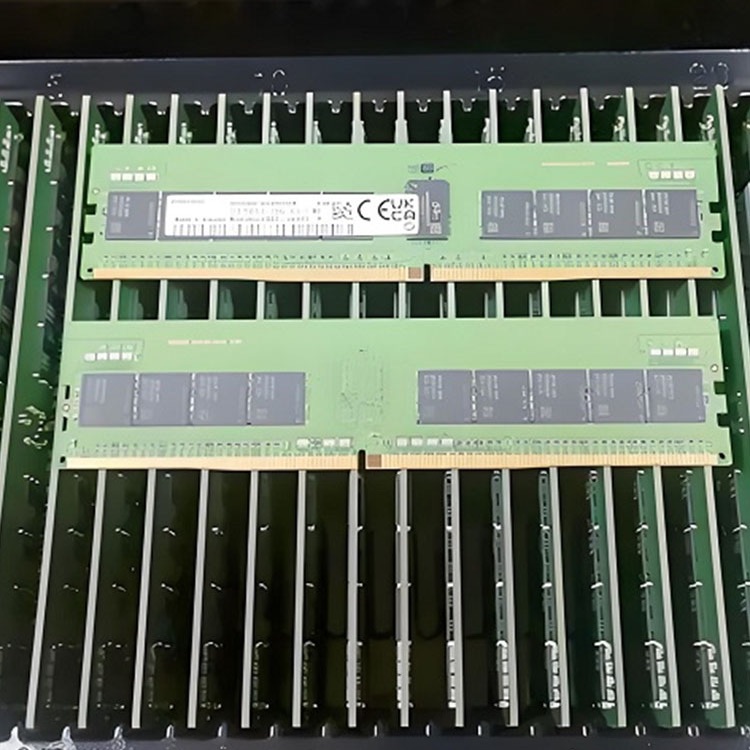
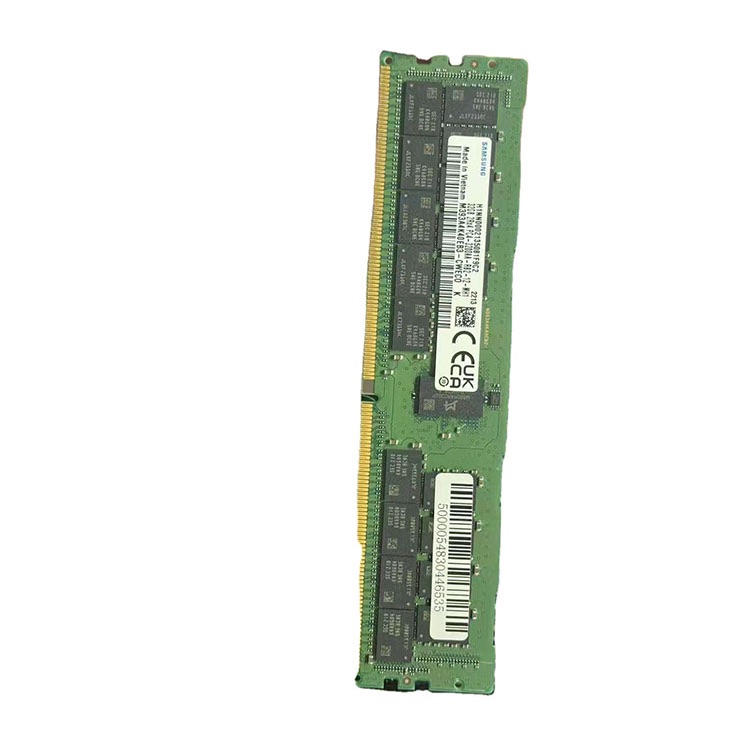
Why Some Legacy Server Memory Modules Are Getting Harder to Source
Legacy server RAM is not disappearing because old servers stopped mattering. It is disappearing because fabs, distributors, hyperscalers, recyclers, and procurement teams are all pulling in different directions at the same time.
I have watched procurement teams spend six figures keeping “boring” servers alive because the application stack, validation burden, licensing contract, or plant-floor control system made a full refresh politically impossible, financially stupid, or operationally dangerous.
So why is the cheapest-looking part suddenly the hardest one to buy?
Because legacy server memory modules sit in the ugliest corner of the hardware market: old enough that manufacturers no longer care, important enough that buyers still need them, and specific enough that a wrong substitute can turn a maintenance window into a blame meeting.
The primary issue is not just “shortage.” That word is lazy. The real issue is fragmented supply: discontinued server RAM, DDR3 ECC RDIMM memory, older DDR4 RDIMM lots, low-volume LRDIMM SKUs, OEM-pulled modules, and refurbished server memory are moving through a supply chain that was never designed for calm, transparent, long-tail availability.
And yes, I’ll say the quiet part: a lot of buyers created this problem by treating server memory modules like commodity USB cables.
They are not.
If you are maintaining older infrastructure, start with a supplier that understands memory generation, module class, rank structure, part-number identity, and bulk replacement planning. That is why I would anchor the buying workflow around a dedicated bulk server RAM supplier for enterprise and data center buyers instead of random marketplace listings with titles written by someone who thinks “32GB ECC” is enough detail.
AI Ate the New Memory Market, and Legacy Buyers Got the Bill
The money moved first. Then the stock vanished.
Reuters reported in December 2025 that DRAM supplier inventory fell from 13–17 weeks in late 2024 to just 2–4 weeks by October 2025, while memory makers shifted capacity toward higher-margin AI infrastructure demand and HBM production. The same report said SK Hynix expected the memory shortfall to last through late 2027, which is not exactly comforting if your “temporary” legacy server support plan was supposed to run another 24 months. Read the full Reuters memory-chip supply crisis report.
That pressure did not stay in fancy AI clusters. It bled into ordinary server memory modules.
Reuters also reported in November 2025 that Samsung raised prices on certain server memory chips by 30% to 60% compared with September, including a 32GB DDR5 module moving from $149 to $239 in two months. That is new memory, yes, but the effect rolls downhill: when DDR5 and current DDR4 pricing spikes, buyers delay refreshes, hold older systems longer, and raid the secondary market for replacement DDR3, DDR4 ECC RDIMM, and compatible pulled server RAM. See the Reuters report on Samsung memory price hikes.
Here is the nasty loop: new memory gets expensive, old servers stay in service, spare pools shrink, and legacy server memory modules become harder to source exactly when nobody budgeted for scarcity.
I have seen this movie.
A company delays a platform refresh because “the old boxes still run.” Six months later, they need 96 matching DDR3 ECC RDIMM modules for a controlled rollout, and suddenly the procurement team discovers that “available online” does not mean “available in matched, tested, warranty-backed lots.”
That distinction matters.
Why DDR3 ECC RDIMM Memory Is Becoming a Sourcing Trap
DDR3 is not dead. It is just badly supplied.
DDR3 server platforms still appear in industrial systems, lab environments, telecom infrastructure, embedded control networks, backup clusters, and small enterprise rooms where uptime matters more than fashion. But DDR3 ECC RDIMM memory has crossed into a market phase where reliable supply depends less on factory output and more on recovery channels, pull quality, testing discipline, and part-number matching.
That is where buyers get hurt.
A listing may say “16GB DDR3 ECC REG.” Fine. But is it 2Rx4 or 4Rx4? Is it PC3-10600R or PC3L-12800R? Is it Samsung, Micron, SK hynix, or an OEM relabel? Was SPD data read? Were ECC error logs checked? Was the lot pulled from working systems, or scraped together from five brokers and a warehouse bin?
Small details. Big outage.
For anyone buying discontinued server RAM, the safest habit is to decode the label before asking for a price. ServerDimm’s server memory part number guide is useful here because it pushes buyers toward exact manufacturer part numbers, rank notation, module type, and platform fit instead of the fantasy that capacity alone proves compatibility.
And capacity alone is a trap.
A 32GB DDR3 RDIMM and a 32GB DDR3 LRDIMM can look similar in a spreadsheet. They are not the same buying decision. A 2Rx4 module and a 4Rx4 module can both satisfy a casual keyword search. That does not mean the server’s memory controller, BIOS, or population chart will agree.
The Hidden Economics of Obsolete Server Parts
The secondary market has physics.
When a server generation ages out, its memory does not enter the market evenly. Some modules come from clean data center pulls. Some sit in systems for years before liquidation. Some are tested well. Some are wiped with a cloth, photographed under bad lighting, and sold with optimism as the warranty policy.
But the supply curve is brutal.
Market Force
What It Does to Legacy Server Memory Modules
What Buyers Should Do
Manufacturer phase-out
Reduces new production of older DDR3 and early DDR4 modules
Stop assuming reorder availability after the first purchase
AI-driven DRAM demand
Keeps current memory expensive and delays server refresh cycles
Build spare pools before emergency demand hits
Data center consolidation
Releases used memory in irregular waves, not steady supply
Buy validated lots when they appear, not when the server fails
OEM compatibility rules
Makes “same capacity” substitutions risky
Confirm RDIMM/LRDIMM, rank, speed, voltage, and platform support
Broker fragmentation
Increases mixed-lot and relabeled-stock risk
Require photos, full MPNs, SPD checks, test evidence, and written warranty
Cross-border logistics
Adds customs delay, RMA friction, and replacement uncertainty
Clarify freight, DOA handling, and replacement terms before PO approval
The Semiconductor Industry Association reported that global semiconductor sales reached $627.6 billion in 2024, with memory sales rising 78.9% to $165.1 billion and DRAM sales increasing 82.6%, the highest growth rate among major product groups. That is not a quiet market. That is a market where producers follow margin, not nostalgia. See the SIA/WSTS-backed 2024 semiconductor sales report.
This is the hard truth: nobody at a major DRAM producer is waking up excited to solve your eight-year-old server maintenance problem.
They are chasing AI, HBM, DDR5, high-density modules, 128GB RDIMMs, 256GB-class roadmaps, and customers with long-term allocation leverage. Your legacy server memory requirement is important to you. To the upstream market, it may be statistical dust.
So you need a better sourcing process.
A buyer handling obsolete server parts should use a repeatable intake checklist: platform model, CPU generation, current DIMM population, full part number, desired capacity, acceptable alternates, condition preference, lot quantity, warranty terms, and deployment timeline. The server memory sourcing checklist for procurement teams is the kind of internal link I would put in front of a purchasing manager before they send another “quote me 64 pcs” email with no server model attached.
Compatibility Is Where Cheap Memory Becomes Expensive
The logo lies.
I do not mean Samsung, Micron, or SK hynix are bad. They are not. I mean brand recognition does not rescue a bad specification match.
A buyer may ask, “Can we mix Samsung and Micron?” I usually ask a different question: are the modules the same DDR generation, same RDIMM or LRDIMM type, same ECC behavior, same rank profile, same voltage class, same supported population layout, and acceptable under the server vendor’s guide?
That question ruins easy answers. Good.
Server RAM compatibility is not an opinion contest. It is a population rule problem. ServerDimm’s guide on whether you can mix server RAM is worth using as a supporting internal link because it targets exactly the buyer mistake that causes failed boots, downclocked memory channels, and “but the listing said compatible” arguments.
A skeptical procurement team should ask for the boring evidence:
Full manufacturer part number, not only capacity
Module class: ECC UDIMM, RDIMM, LRDIMM, or 3DS LRDIMM
Voltage class where relevant, especially DDR3 vs DDR3L
Condition: new, tested used, pulled, refurbished, or OEM surplus
Lot consistency and quantity
Pre-shipment testing record
DOA and RMA procedure
Boring wins.
The U.S. Bureau of Industry and Security said in December 2024 that it had surveyed U.S. industry on mature-node semiconductor use in critical supply chains, including how companies source legacy chips. That was not written for your specific Dell PowerEdge R720 DIMM order, but the signal is obvious: legacy components are now a supply-chain security topic, not just a purchasing nuisance. Read the BIS release on mature-node semiconductor sourcing.
When governments start mapping old chips, serious buyers should stop treating old memory as casual surplus.
Refurbished Server Memory Is Not the Problem. Bad Validation Is.
I like tested used memory when it is handled properly.
There. I said it.
A clean, tested, correctly identified DDR3 ECC RDIMM or DDR4 RDIMM from a responsible supplier can be a rational choice for legacy infrastructure, lab expansion, spare-pool planning, and budget-controlled maintenance. The problem is not that the memory was previously installed. The problem is when nobody can prove what happened before shipment.
Refurbished server memory should not mean “mystery DIMM with a nicer adjective.”
It should mean identity verified, SPD data read, physical inspection passed, platform behavior checked, ECC errors reviewed, stress testing completed, lot packed correctly, and warranty terms written down. The page on how tested used server memory should be validated is a strong fit for this paragraph because it puts evidence ahead of sales language.
That is exactly where buyers should be ruthless.
If a supplier cannot explain how they test used ECC RAM, ask again. If they cannot provide part-number traceability, walk away. If they use “compatible” as a substitute for a supported replacement matrix, slow the deal down.
And if your organization is buying dozens or hundreds of legacy server memory modules, use a supplier with a visible server memory quality testing and warranty support process. Not because paperwork is fun. Because RMA chaos is worse.
The Part-Number Reality: Why “Same Spec” Is Not Enough
“Same spec” is where bad quotes hide.
A listing title can say 64GB DDR4 ECC RDIMM, but the module may differ by rank, DRAM organization, OEM firmware expectations, thermal design, speed bin, or validated platform history. In modern DDR5 buying, this issue becomes even sharper because 64GB, 96GB, and 128GB modules may look like simple capacity choices while actually representing different density, rank, and compatibility behavior.
For newer replacement planning, the live DDR5 server memory category gives buyers a useful view of how real module descriptions expose brand, capacity, speed, and rank. For older mainstream fleets, the DDR4 server memory category is a better path to think about 16GB, 32GB, and 64GB replacement demand.
But legacy sourcing is still harsher.
With discontinued server RAM, you are not only buying a DIMM. You are buying confidence that the module will behave inside an existing platform with existing BIOS, CPU, channel layout, and installed memory. That is why “best replacement memory for old servers” is not a single SKU answer. It is a validation workflow.
Here is my blunt hierarchy:
Server model and CPU family first
Supported DDR generation second
RDIMM, LRDIMM, or ECC UDIMM third
Rank and density fourth
Speed and voltage fifth
Exact MPN and supplier evidence sixth
Price last
Yes, last.
Cheap wrong memory is not cheap. It is just a delayed outage with a tracking number.
How to Find Discontinued Server RAM Without Getting Burned
Start with the machine, not the module.
That sounds obvious until you see how many buyers search “DDR3 ECC 32GB” before confirming the server model, CPU generation, maximum DIMM density, supported module class, and current slot population. That is backwards.
The safer process looks like this:
Step 1: Capture the installed memory population
Pull the current DIMM labels or management-controller inventory. Record every module by capacity, speed, rank, manufacturer, part number, and slot position. If the server is remote, get photos. Not “a photo.” Photos.
Step 2: Confirm the platform support matrix
Check whether the server supports RDIMM, LRDIMM, or both under separate configurations. Do not mix them because the price is attractive. Do not assume higher capacity works because the notch fits.
Step 3: Ask suppliers for exact replacement or approved alternates
A serious supplier should quote exact MPNs or clearly named alternates. “Compatible 32GB server RAM” is not enough for production work.
Step 4: Separate emergency buys from lifecycle buys
Emergency purchases favor speed and exact match. Lifecycle buys favor lot consistency, testing records, spare planning, and warranty terms.
Step 5: Pilot before broad rollout
Install a sample batch first. Watch POST behavior, memory training, logs, ECC counters, speed negotiation, and application behavior before you populate a rack.
This is not overkill. It is how adults buy infrastructure.
FAQs
Why are legacy server memory modules hard to source?
Legacy server memory modules are hard to source because original production has slowed or ended, remaining inventory is scattered across secondary channels, and demand persists from organizations keeping older servers in service. Buyers also need exact module type, rank, ECC behavior, and part-number compatibility, which makes generic substitutions risky and reduces usable supply.
The visible market may look large, but much of it is unusable for serious fleet maintenance. A random DDR3 ECC RDIMM listing does not guarantee matched lots, reliable testing, full MPN traceability, or replacement availability.
What is the best replacement memory for old servers?
The best replacement memory for old servers is the module that matches the server manufacturer’s supported memory rules, including DDR generation, ECC support, RDIMM or LRDIMM type, rank structure, speed, voltage, capacity limits, and slot population order. Exact manufacturer part-number matching is preferred when uptime matters.
In practice, I would rather buy a properly validated alternate than a famous-brand module that violates the platform guide. The server does not care about your favorite logo.
Is refurbished server memory reliable?
Refurbished server memory can be reliable when the supplier verifies the module identity, reads SPD data, performs stress testing, checks ECC behavior, groups lots properly, protects packaging, and provides written warranty or RMA terms. The risk is not prior use by itself; the risk is weak validation and vague replacement policy.
For legacy systems, tested used memory may be the only practical supply route. But buyers should demand evidence, not adjectives.
How do I find discontinued server RAM?
You find discontinued server RAM by starting with the server model, CPU generation, installed DIMM labels, full manufacturer part numbers, supported module classes, and memory population rules before asking suppliers for exact replacements or approved alternates. Search terms alone are not enough because similar listings can hide incompatible rank, voltage, or buffer differences.
The fastest bad method is searching only by capacity. The slower good method is building a compatibility file first, then sourcing against that file.
Can I mix legacy server memory modules from different brands?
You can sometimes mix legacy server memory modules from different brands when they share the same supported DDR generation, ECC behavior, RDIMM or LRDIMM class, rank profile, voltage, speed behavior, and server population rules. Brand mixing is less dangerous than specification mixing, but the configuration still needs validation before production use.
I do not love mixed lots for large rollouts. For emergency repair, maybe. For controlled fleet planning, matched and tested lots are cleaner.
Final Thoughts: Stop Buying Legacy Server Memory Like It Is Still 2016
Legacy servers are not the problem. Lazy sourcing is.
If your infrastructure still depends on DDR3 ECC RDIMM memory, discontinued server RAM, older DDR4 RDIMMs, or hard-to-find obsolete server parts, build a sourcing file now: server models, installed DIMMs, accepted alternates, spare targets, testing requirements, and warranty expectations.
Then send that file to a supplier that actually works in server memory modules, not a marketplace seller guessing from a title. Start with a compatibility-aware quote request through ServerDimm’s enterprise server RAM supply page, and make the supplier prove identity, fit, testing, and replacement terms before you approve the purchase order.
ServerDimm supplies new and used branded server memory for distributors, OEM buyers, resellers, and data center teams. We support DDR4 and DDR5 sourcing with tested inventory, compatibility checks, and responsive quote service.